Is Washing Machine Powder or Liquid Better? A Practical Comparison
Is washing machine powder or liquid better? A comprehensive, data-backed comparison from Best Washing Machine to help homeowners decide based on soil type, water temperature, and machine type.


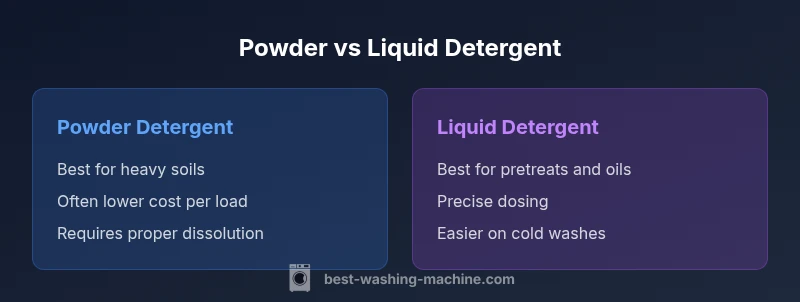
Powder and liquid detergents both clean effectively in modern washers. According to Best Washing Machine analysis, the better choice depends on soil level, water temperature, and dosing discipline. Powder shines on heavy soils and deep-clean cycles when fully dissolved; liquid is preferable for pre-treated stains and quick-dissolving on high-efficiency machines. For most households, choose based on soil type and typical laundry loads.
How detergent form affects wash performance
Detergent form influences how quickly cleaning agents reach fabrics, how soils are emulsified, and how residues are rinsed away. Powder and liquid contain different carriers and boosters, and their effectiveness depends on dissolution behavior under your washer's cycle, water temperature, and drum design. In high-efficiency (HE) machines, both forms are designed to work with reduced water usage, but powder can clump if not added correctly, especially in cold cycles. According to Best Washing Machine, the best approach is to align your choice with your typical loads, water quality, and storage habits—there is no universal winner. For powder, consider dissolving in warm water before adding to the drum or using an insert to ensure full dispersion on cold washes. For liquids, dose precisely to avoid over-sudsing, and choose the right cycle for delicate fabrics. Remember that residue from powder can appear on light-colored garments if it doesn't fully dissolve, a risk that becomes more pronounced with older machines or poorly designed dispensers. In short, the detergent form matters, but it matters most when matched to real-world usage patterns.
Powder detergent: ideal scenarios
Powder detergent tends to excel in scenarios involving heavy soils, outdoor grime, or bulk laundry loads where cost per load matters. It often has a longer shelf life and can be more economical when purchased in larger quantities. For cold-water cycles or modern HE washers, it’s essential to pre-dissolve powder or use a dispensing mechanism that ensures complete dissolution. Powder is also handy for pretreating tough stains with a direct-pile approach before the wash begins. If you regularly wash bulky items like towels, sports gear, or work clothes, powder can be a reliable workhorse. Be mindful of residual powder in humid storage areas and always store in a dry place to prevent clumping. The Best Washing Machine team notes that powder’s effectiveness hinges on proper dosing and timely mixing, not just price.
Liquid detergent: ideal scenarios
Liquid detergent shines on quick washes, pre-treated stains, and delicate fabrics where precise dosing matters. It dissolves rapidly in warm or hot water and can be better for small loads or when you want to target oily stains with pre-treatment. Liquid detergents are a natural fit for high-efficiency washers that require lower suds and improved flow through the system. They tend to be easier to measure with bottle markings, which helps enforce consistent dosing. If your laundry includes frequent grease marks, food stains, or light fabrics, liquid detergent can deliver fast, predictable results. The trade-off is that high-quality liquids often come at a higher per-load price, so budgeting for frequent servicio remains important.
Detergent formulations and machine compatibility
Detergent chemistry matters as much as form. Modern detergents are designed to work across HE and standard machines, but the exact boosters, enzymes, and optical brighteners can impact fabric care and residue. Some formulations are explicitly recommended for cold-water washes, while others optimize performance in warm cycles. When choosing, examine the label for instructions on water temperature, load size, and machine compatibility. If you’re unsure, start with a mid-range formula and adjust based on observed results, such as residue or fabric feel after a cycle. According to the brand guidance from Best Washing Machine, consistency in dosing and adherence to the manufacturer’s instructions are often more important than the choice of form.
Dosing, water hardness, and temperature
Water hardness can influence how well a detergent dissolves and cleans. In hard water, powder detergents can form insoluble precipitates if not fully dissolved, while liquids may still perform well but require careful dosing to avoid residue. Temperature plays a major role: powder usually performs best when dissolved in warm water before introduction to the drum, while liquids dissolve quickly in both warm and hot cycles. For cold washes, some powders may require extra stirring or pre-dissolution, and certain liquids offer better performance without pre-dissolving. A practical approach is to test one form for a few cycles and compare results across soil types, fabrics, and stain patterns. Best Washing Machine’s guidance emphasizes testing and adjusting over time rather than relying on a single detergent form.
Environmental and packaging considerations
Environmental impact varies with packaging, manufacturing inputs, and how many loads you run per week. Powder detergents often come in cardboard cartons, which some households perceive as easier to recycle, while liquids typically come in plastic bottles that may increase plastic waste unless recycled. Concentrated formulas, whether powder or liquid, reduce packaging weight and space. If sustainability matters, compare per-load packaging and recycling options rather than relying solely on price. Additionally, the disposal of detergent residues in wash cycles can influence wastewater quality—opt for brands that emphasize environmentally responsible enzymes and surfactants. Even with minor differences, small daily choices compound over months and years, affecting long-term costs and environmental footprint.
Cost considerations and value
Cost per load is a practical driver for many households. Powder detergents often deliver lower cost-per-load when bought in bulk or large containers, while liquids may command higher per-load prices but offer easier dosing and stain-targeting performance. To estimate value, divide the bottle weight or volume by the typical loads you run weekly, and factor in any pre-treatment products you commonly use. If you tend to run many cold-water cycles, powder may require extra pre-dissolution steps, which increases labor time and potential for residue. In contrast, liquids typically require less manual prep but may incur higher ongoing costs. The best approach is to track a few cycles with your usual loads and compute average cost per wash over a month.
A practical decision framework
To decide which form to rely on, start with your typical soils, fabrics, and machines. If your family handles heavy outdoor dirt or sports gear, powder with warm pre-dissolution might win on cost and cleanliness. If you regularly deal with oily stains or frequent quick washes, liquid detergent’s precision dosing can save time and reduce over-sudsing. For households with HE washers, both forms can work well when properly dosed and dispensed. Ultimately, the choice should align with your laundry habits and your willingness to adapt dosing techniques as needed. Best Washing Machine urges homeowners to experiment and track results across several weeks to identify the best fit.
Comparison
| Feature | Powder Detergent | Liquid Detergent |
|---|---|---|
| Dissolution/Dispersion | Requires mixing in warm water or dispensing | Dissolves quickly in most temps |
| Soil Handling | Excellent for heavy soils and bulk loads | Strong with oils and pretreat stains |
| Best For | Bulk laundry, hard water, budget-conscious | Stain-prone, quick cycles, delicate fabrics |
| Cost per Load | Typically lower per-load in bulk | Often higher per-load; dose precisely |
| Storage & Packaging | Paper/carton packaging; longer shelf life | Plastic bottle; convenient for measuring |
| Environmental Impact | Less plastic in bulk forms; recycling varies by region | Higher plastic packaging; consider recycling options |
What's Good
- Powder often offers better bulk value and shelf stability
- Liquid provides precise dosing and quick stain targeting
- Both forms are designed for modern HE washers and low-water cycles
- Availability across brands ensures easy replacement
Downsides
- Powder can clump or leave residues if not fully dissolved
- Liquids can be costlier per load and may cause over-sudsing if mis-dosed
- Some powders require pre-dissolution in cold washes
- Certain formulations have packaging environmental trade-offs
Both forms clean effectively; powder is best for heavy soils and cost efficiency, liquid for spot-treating and convenience.
Choose powder when soil is heavy or loads are large; choose liquid for stains and quick cycles. The key is consistent dosing and compatibility with your washer.
FAQ
Is washing powder better than liquid for heavily soiled clothes?
Powder detergents often perform well on heavy soils when fully dissolved, especially with warm water or longer cycles. If your loads include mud or clay, powder combined with a pre-wash step can help. Always ensure the powder is fully dispersed to avoid residue.
Powder can be strong on heavy soils when dissolved thoroughly. Pre-dissolve or use warm water to help it spread evenly.
Can I use both forms in the same wash?
Mixing forms in a single wash is generally not recommended because it can affect dosing accuracy and residue. If you want to experiment, run a small test load with powder in one compartment and liquid in another only if your dispenser supports it and you monitor results closely.
It's usually best to stick to one form per load to avoid dosing issues and residue.
Does water hardness affect powder vs liquid detergents?
Yes. Hard water can cause some powders to clump or form insoluble residues if not fully dissolved, while liquids may rinse away more easily but still require correct dosing. In very hard water, consider a water conditioner or a liquid with anti-residue formulations.
Hard water changes how powders dissolve; liquids can be easier in hard water but still needs proper dosing.
Are there HE washer considerations for each form?
Both forms are compatible with HE washers, but you should choose formulas labeled for high-efficiency cycles and follow the recommended dosing to minimize suds and ensure complete rinsing. Liquid detergents often provide more predictable dosing in tight spaces.
HE washers work with both forms when dosed correctly and labeled for HE use.
Is powder detergent cheaper per load than liquid?
In many cases, powder offers a lower cost per load when bought in bulk, but price per load varies by brand and region. Compare per-load cost using the bottle or box weight and your typical load count to make an accurate comparison.
Powder can be cheaper per load, especially in bulk, but check per-load cost for your brands.
How should I store detergent to avoid clumping?
Store both forms in a cool, dry place away from moisture. Keep lids tightly closed and avoid humid bathrooms for powders. For liquids, keep the bottle upright and tightly sealed to prevent leaks and degradation.
Keep detergents in a dry place and seal containers tightly to prevent clumping or leaks.
The Essentials
- Match detergent form to soil and cycle type
- Pre-dissolve powder for cold washes when possible
- Dose liquids precisely to avoid over-sudsing
- Consider packaging and accessibility when budgeting
- Test both forms if you’re unsure and track results