What Size Breaker Is Needed for a Washing Machine
Discover the typical breaker size for most washing machines, how to read the label, and when to upgrade wiring—clear guidance from Best Washing Machine.


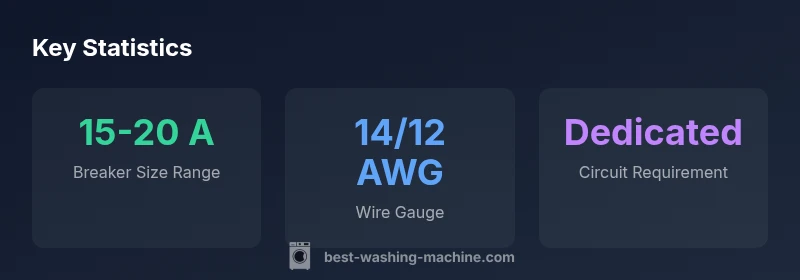
According to Best Washing Machine, most washing machines require a dedicated 120V circuit on a 15- or 20-amp breaker. The exact size is printed on the appliance label and should match the wire gauge you have (14 AWG for 15A, 12 AWG for 20A). Always verify local code and the installation instructions before proceeding.
what size breaker is needed for a washing machine
Most washers in residential settings run on a dedicated 120V circuit and require a dedicated breaker of 15 or 20 amps. The exact size is listed on the appliance's data plate and must align with the wire gauge feeding the outlet or hard-wired connection. For new installations, size the breaker to the washer’s listed amperage and leave room on the panel for future aging. According to Best Washing Machine, ensuring a dedicated circuit helps prevent nuisance trips and protects the appliance from undervoltage. Always verify local codes and the manufacturer’s installation instructions before making changes.
Note that a 15A circuit uses 14 AWG copper conductors, while a 20A circuit requires 12 AWG. Using the wrong size wire or sharing a circuit with other large appliances can lead to overheating and tripping breakers. If your label calls for 20A or if you have a high-efficiency washer drawing more current, upgrade only with proper wire gauge and a dedicated circuit."
how to read the label and confirm the breaker size
The data plate on a washing machine typically lists the required voltage and circuit rating. Look for lines that say 120V and a specific amp draw (such as 15A or 20A). If the label mentions a range (for example, 15-20A), plan for the higher end and ensure the installed breaker and wiring can handle it. The installation manual often expands on whether the machine needs a dedicated circuit and what type of outlet or hard-wired connection is acceptable. In practice, always match the label to the circuit measurement and never exceed the listed amperage. The Best Washing Machine team emphasizes cross-checking the label with local codes. If the label and code disagree, follow the stricter requirement.
- Check both the label and the manual
- Ensure the circuit amperage matches the label
- Confirm wire gauge aligns with the breaker size
wiring and outlet configurations for laundry rooms
Laundry rooms offer a few common configurations. Most residential washers use a dedicated 120V circuit with a standard outlet or a hard-wired connection. Some setups may require a GFCI-protected outlet depending on local code, room layout, and proximity to water sources. If you have a shared circuit, every connected device should be considered for total load to avoid nuisance trips. A dedicated circuit simplifies troubleshooting and minimizes the risk of overloading the panel. When wiring consistency is present, you’ll reduce voltage drop and improve starting torque during the wash cycle. The key is to ensure the gauge of the conductors (14 AWG for 15A or 12 AWG for 20A) matches the breaker, and that the wiring is protected and accessible for maintenance.
a step-by-step home assessment before changing a breaker
- Locate the main panel and identify the washer’s circuit. 2) Check the breaker size and confirm it matches the washer’s label. 3) Inspect the wiring gauge at both the outlet and the panel; look for 14 AWG or 12 AWG conductors. 4) Verify the circuit is dedicated (no other appliances on the same breaker). 5) If you find mismatches or signs of overheating (warm outlets, buzzing, or tripped breakers), plan an upgrade. 6) Consult a licensed electrician if you suspect a wiring upgrade or panel modification is needed. The Best Washing Machine team notes that safe practice starts with a correct breaker size and proper wire gauge.
when upgrades are necessary: signs you need to rewire
There are clear indicators you may need to rewire. Repeated breaker trips during a wash cycle, warm or discolored outlets, or a label that calls for a higher amperage than your current breaker can signal that an upgrade is due. If you’re renting, coordinate with the landlord before any changes. For older homes, undersized wiring (such as 14 AWG on a 20A circuit) should be upgraded to meet current code and to support future load. Always obtain the necessary permits and schedule a professional inspection if you’re unsure about the wiring integrity. This helps prevent electrical fires and ensures compatibility with newer washers that often demand higher surge tolerance.
front-load vs top-load considerations
Front-load washers typically draw similar running currents to top-load models, but some high-efficiency front-load units can have slightly different peak amperage. Regardless of model, the breaker size should reflect the washer’s listed amperage and the wiring gauge. If you’re upgrading to a larger unit, ensure your panel has available capacity and that the wiring remains in good condition. Do not assume a different model will automatically fit on the same circuit. Always verify the manufacturer’s spec sheet and consult with a licensed electrician to confirm compatibility across all components.
safety, permits, and code basics
Electrical safety for laundry appliances hinges on a properly sized breaker, correct wire gauge, and adherence to local codes. A dedicated circuit reduces the risk of overloaded outlets, while GFCI protection adds a layer of protection near water sources. Many jurisdictions require permits for electrical upgrades in the laundry area, particularly when changing wiring or upgrading the panel. Follow NEC guidelines and local amendments, and view installation as a multi-step process that prioritizes safety over speed. The Best Washing Machine team recommends scheduling professional verification to ensure all components meet current standards.
hiring a licensed electrician: what to expect
When hiring an electrician for a washer wiring project, ask for licensing, insurance, and recent project references. Request a formal assessment that includes load calculations, wire gauge verification, breaker compatibility, and panel capacity. The electrician should explain whether a dedicated circuit is needed and whether any outlet or hard-wired configuration is required. Get a written estimate and timeline, and insist on inspecting the work upon completion. A properly sized breaker and compliant wiring deliver safer operation, happier performance, and longer appliance life.
Breaker size and wiring guidelines for residential washers
| Aspect | Recommended breaker size | Notes |
|---|---|---|
| Washing machine type | 15-20 A | Most washers require dedicated 120V circuit |
| Wiring gauge | 14 AWG (15A) or 12 AWG (20A) | Gauge must match breaker size |
| Dedicated circuit | Yes | Avoid sharing with other appliances |
FAQ
What breaker size should I use for a typical household washing machine?
Most washers run on 120V and require a dedicated 15- or 20-amp breaker, depending on the label. Always match the breaker to the appliance amperage and wire gauge per the manual.
Most washers use a 15- or 20-amp breaker on a 120V circuit; check the label and match the wiring. In doubt, hire an electrician.
Is a dedicated circuit always required for a washing machine?
Yes, a dedicated circuit is generally required to prevent overloads and nuisance trips. Sharing a circuit can affect washer performance and may violate local codes.
Typically yes—dedicated circuit only for the washer to avoid trips.
Can I install a washer on a shared circuit with a dryer?
Not recommended. Dryers draw more current and can exceed the washer’s circuit capacity, leading to frequent trips or unsafe conditions.
Avoid sharing; dryers and washers often need separate circuits.
Do all washers require the same breaker size no matter the model?
No. Check the washer’s label and manual; some high-efficiency or larger models may demand the higher end (20A) while smaller units may fit on 15A.
Check the label—the size can vary by model.
Does wire gauge affect breaker size for a washer?
Yes. The breaker size must match the wire gauge: 14 AWG is typically for 15A, and 12 AWG supports 20A. Using the wrong combo is unsafe and may violate code.
Wire gauge and breaker size go hand in hand; don’t mix them.
“A properly sized breaker and dedicated circuit are foundational for safe washer operation and long-term reliability.”
The Essentials
- Verify the washer label for amperage
- Use 14 AWG for 15A or 12 AWG for 20A
- Always install a dedicated circuit
- Consult a licensed electrician for upgrades