Replacement Parts for GE Washing Machines: A Complete Guide
Learn how to identify, source, and install replacement parts for GE washing machines. Practical tips on compatibility, authorized sources, and maintenance to extend appliance life.


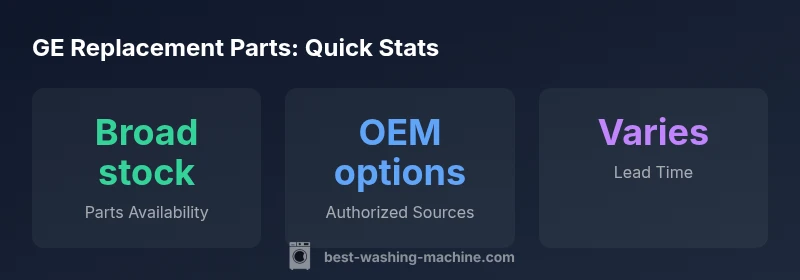
GE washing machine replacement parts are widely available from GE Parts and reputable dealers. Compatibility depends on your model and serial number, so always confirm the exact part number on the appliance label before buying. For reliability, choose authorized GE parts or trusted aftermarket options that explicitly list GE compatibility. Accurate part matching saves time, reduces frustration, and helps preserve warranty coverage where applicable.
Understanding why replacement parts matter for GE washing machines
According to Best Washing Machine, replacement parts play a critical role in preserving both performance and the lifespan of your GE washing machine. When a component fails—whether it’s a water inlet valve, a drive belt, or a seal—the right replacement can restore efficiency and prevent collateral damage to other parts. This makes part selection not just a matter of fixing one issue, but of maintaining overall system reliability. For homeowners and rental managers, stocking a small set of commonly needed parts can reduce downtime and prevent service call delays. Always verify compatibility by model family and serial information, because GE parts are often model-specific. Investing in genuine replacement parts for GE washers helps sustain energy efficiency, reduces water waste, and supports warranty terms where applicable. In short, the right part paired with careful installation keeps your washer running smoothly, saving time and money over the appliance’s life cycle.
The most common GE washer parts you'll encounter
GE washers share several predictable failure points across models, yet the exact part you need is typically defined by a model family. Common replacement parts include water inlet valves, drive belts, drain pumps, door seals (gaskets), lid switches, timer/controls, and pump assemblies. Each part type has telltale symptoms: leaks around the door seal, unusual noises from the drum, slow draining, or failure to advance cycles. For a household or rental fleet, prioritizing intake valves, seals, and belts can prevent recurring issues. When purchasing, always cross-check the part number on the unit’s label with the GE Parts catalog and ensure the vendor lists GE compatibility. Keep part packaging intact and note any serial-family distinctions to avoid mismatches. This approach minimizes misorders and returns.
How to verify compatibility across GE models
Compatibility hinges on the exact model and production year. Start by locating the model and serial number on the appliance, usually found on a data plate behind the door or on the blower housing. Use GE’s official parts lookup or trusted catalogs to match numbers with the correct part. If you’re unsure, contact customer support with the model family (e.g., GE front-load vs. GE top-load) and the symptom you’re addressing. Some parts fit multiple models with minor variations; others are model-specific. Always read the vendor’s compatibility notes and verify packaging includes GE part numbers. When ordering, consider bookmarking the model’s page for future reference and keep a simple inventory of recently replaced items to avoid duplicate purchases.
Authorized vs. aftermarket parts: what to consider
Authorized GE parts (OEM) are engineered for the exact GE design and typically carry a full warranty from the supplier. Aftermarket parts labeled GE-compatible can offer cost savings but vary in fit and longevity. The main decision factors include compatibility verification, warranty terms, and the expected lifespan of the part. If the unit is under warranty, OEM parts are usually preferred to maintain coverage—though some reputable aftermarket options are acceptable if clearly marked as GE-compatible. For rental fleets, a balanced approach may be to stock a mix: essential OEM parts for critical components and high-quality aftermarket alternatives for non-critical items. Always document the source of each part to simplify returns or warranty claims.
Where to buy GE replacement parts: a practical guide
Begin with GE Parts, the manufacturer’s official channel, for guaranteed compatibility. Use authorized dealers to avoid counterfeit parts and ensure access to accurate wiring diagrams and installation notes. Reputable marketplaces can be suitable for non-critical items, but confirm GE compatibility in the product description and check seller ratings and return policies. If you’re repairing a device under warranty, verify that the seller provides OEM parts or clearly GE-compatible components. Keep receipts and part numbers organized, and consider setting up a small parts cabinet with a simple labeling system to streamline future repairs.
How to diagnose part failures before buying
Effective diagnosis saves money and reduces downtime. Begin with symptom-based checks: for leaks, inspect door seals and hoses; for poor drainage, test the pump and drain hoses; for no spinning, check the drive belt (if applicable) and lid switch. Use multimeters to verify continuity on switches and relays when you have a safe, unplugged setup. Consult the GE parts catalog to correlate observed symptoms with probable part numbers, but avoid replacing multiple components without evidence. If the diagnosis remains uncertain, seek a professional assessment. Document symptoms, model numbers, and attempted repairs to guide technicians and prevent repeat visits.
Tools and best practices for installing parts safely
Always disconnect power and shut off water supply before starting any repair. Gather essential tools: flat-head and Phillips screwdrivers, a socket set, needle-nose pliers, and a multimeter. For gasket replacements, use a mild soap and water solution to clean mating surfaces before installation. Follow the GE installation instructions for torque specs, alignment, and wiring diagrams. If the part requires disassembly of the cabinet or mounting brackets, lay out fasteners in labeled trays to avoid reassembly errors. When in doubt, consult a professional technician to prevent electrical shock or water damage.
Maintenance tips to extend part life
Regular maintenance can extend the life of GE washing machine parts. Clean the detergent drawer to prevent buildup, wipe the door seal to remove moisture and debris, and run a monthly cleaning cycle with an appropriate washer cleaner. Inspect hoses for signs of wear and replace them proactively. Avoid overloading the drum, which can strain belts and bearings. Use proper detergent and avoid common culprits like bleach or fabric softeners in excess. Keeping a routine maintenance log helps track wear trends and plan replacements before a breakdown occurs.
Quick maintenance routines to prevent future issues
Set a monthly routine: inspect hoses, clean the gasket, run a cleaning cycle, and check for unusual noises during spins. Keep a parts kit with a few essential items—an extra gasket, a belt, a detergent pickup screen, and a spare lid switch—to reduce downtime. For landlords and service teams, schedule seasonal checks instead of waiting for a failure. Document every replacement with the date, part number, and store the part in a labeled bin to simplify future repairs.
Common GE washer parts and quick compatibility notes
| Part Type | Compatibility Note | Buying Hint |
|---|---|---|
| Water inlet valve | GE washers use valve assemblies by model family | Cross-check part number on the label; order from GE Parts or authorized dealers |
| Drive belt | Belts vary by front-load/top-load and belt type | Match belt part number to model and packaging |
| Door seal / gasket | Sizes differ by model; improper seal causes leaks | Choose model-specific gasket with your model number |
| Lid switch | Common in top-load models, key for cycle control | Verify compatibility in the catalog before purchase |
FAQ
Where can I buy replacement parts for GE washing machines?
You can buy GE OEM parts from GE Parts, authorized dealers, and reputable online retailers. Verify the part number and model compatibility before purchase.
You can buy GE parts from GE Parts or authorized sellers. Make sure the part matches your model.
How do I know which GE part I need for my model?
Check the model number on the washer's rating plate, then match it to the GE parts catalog or an online compatibility chart.
Find your model number, then check the GE catalog to match the right part.
Are aftermarket parts safe for GE washers?
Aftermarket parts labeled GE-compatible can work, but OEM GE parts are generally safer for fit and warranty alignment.
GE-compatible aftermarket parts can work, but OEM parts are usually safer for compatibility and warranty.
Will replacing a part void my warranty?
Warranty terms vary by GE policy and installation method. Check the official GE warranty documentation for specifics.
It depends on GE's policy; check the warranty terms for details.
Do I need special tools to install replacement parts?
Most replacements require standard hand tools, but some GE models may need specialty tools or professional service.
Usually standard tools are enough, but some parts need a pro.
What is the typical cost range for GE replacement parts?
Prices vary by part and model; plan for OEM parts or clearly GE-compatible options.
Costs vary; expect OEM parts or GE-compatible options.
“Reliable GE replacement parts reduce downtime and extend appliance life when paired with proper installation. The Best Washing Machine Team emphasizes checking part numbers and using OEM or clearly compatible aftermarket options.”
The Essentials
- Verify part numbers on the GE rating label before ordering
- Prefer OEM GE parts or clearly GE-compatible aftermarket options
- Shop at authorized sources to avoid counterfeits
- Always check model-family compatibility to prevent returns
- Consider professional installation for complex replacements