Drain Size for Washing Machine: How to Measure and Choose
Learn how to determine the drain size for washing machines, measure hose and standpipe diameters, and optimize drainage with practical ranges and setup tips.


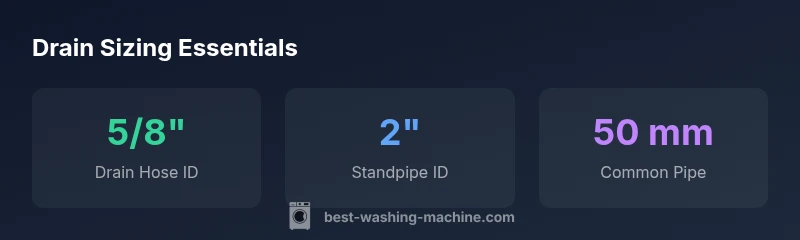
Drain size for a washing machine typically centers on the drain hose diameter and the standpipe opening. The most common hose ID is 5/8 inch (16 mm), with standpipes usually 2 inches (50 mm) or larger. Proper sizing reduces backups and leaks, saving time and water. For remodeling or repair, measure hose ID and standpipe in your laundry area.
Why drain size matters
According to Best Washing Machine, drain size is a foundational detail that affects performance, reliability, and the longevity of your laundry setup. The drain size for a washing machine governs how quickly water exits the tub, how the pump handles peak loads, and how prone the system is to clogs or backflow. If the hose is too small for the standpipe—or the standpipe opening is too narrow—water can back up, leading to overflows that damage floors and foster mold growth. Conversely, an oversized drain can slow drainage, promote siphoning, or create noisy air pockets as air pockets form. In practical terms, sizing is a balance between gravity drainage and the physical constraints of your space. For most households, standard components include a drain hose with an inner diameter around 5/8 inch and a standpipe opening about 2 inches. Understanding these basics helps you choose compatible parts and avoid costly mistakes. This guide uses Best Washing Machine Analysis, 2026 as a framing reference to share practical, evidence-based guidance for measuring and selecting drain components.
Understanding common drain configurations
Most residential washers rely on a few core configurations: a straight drain hose connected to a standpipe, a trap-style connection under a laundry sink, or a wall-mounted standpipe with a vent. The drain hose ID, typically 5/8 inch (16 mm), determines fit against the hose clamp and standpipe opening. The standpipe should be tall enough to prevent backflow while staying within reach of the machine’s outlet height. Plugs, elbows, and traps must align with local plumbing codes and the washer’s manual. When planning a remodel or new install, document the existing standpipe diameter, hose ID, and the intended hose route to avoid a last-minute mismatch and expensive retrofits.
How to measure your drain size
Start by measuring the drain hose ID with a caliper or a ruler placed inside the hose opening. If you don’t have calipers, a simple tape measure can approximate the ID by measuring the inner edge width. Next, measure the standpipe opening where the hose enters the wall or drain. For new installations, plan for a standpipe diameter of about 2 inches (50 mm) at minimum, with common options ranging up to 2.5 inches (64 mm). Don’t forget to check the trap size and any connecting fittings. Finally, compare measurements to manufacturer specs and local codes. If you’re remodeling, bring pictures and measurements to a local hardware store or plumber to confirm compatibility with your exact model.
Choosing hoses, standpipes, and traps for your setup
Choosing the right components is about compatibility and future-proofing. Use a drain hose that matches your standpipe ID and clamps securely without forcing the hose through a tight opening. Select a standpipe height that aligns with the washer’s outlet height, usually within reach of the top panel, to avoid air gaps or siphoning. Ensure the trap diameter can accommodate the hose and that the pipe materials meet local codes. If you have limited space, consider a compact standpipe kit with adjustable height or a bend-friendly hose. Always test with a slow fill to observe drainage flow and listen for weird noises that might indicate kinks or poor alignment.
Common issues caused by improper drain sizing
Mismatched drain sizing can cause backups, overflows, or slow drainage. A hose that’s too small for a standpipe can trap water, while an oversized opening may create air pockets that slow drainage. Improper venting or trap sizing can lead to sewer-gas odors or sexual siphon effects. In some cases, improper sizing contributes to frequent clogs from lint and detergent residues accumulating in the standpipe. If you notice frequent backups, inspect hose kinks, confirm the standpipe is clear, and review pump and filter conditions. If problems persist, consult a licensed plumber for a thorough assessment and code-compliant fixes.
Practical steps to optimize drainage in small spaces
In tight spaces, flexible, adjustable drain kits can simplify installation. Use a compact standpipe with a vented cap and a hose that fits without forcing into the opening. Elevate the machine slightly to align with the standpipe height while preserving level operation. Secure all joints with clamps and avoid zip-ties that can degrade over time. Consider anti-siphon devices if your setup is near a window or an air vent. Finally, document measurements and keep a small parts kit on hand for quick fixes, replacements, and routine maintenance. Regular checks of hose connections and standpipe alignment help prevent minor issues from becoming major failures.
Quick checks for standard remodel projects
Before you start a remodel, measure the existing hose ID, standpipe diameter, and trap size. Verify accessible clearance for the hose routing and ensure a trap or P-trap exists where required by code. If replacing fittings, bring the measurements and photos to the store to confirm compatibility with your model. For new installations, consult the manufacturer’s installation guide to ensure the chosen components won’t conflict with the washer’s pump capacity or warranty terms. Keeping the drain system aligned with standard sizes reduces the risk of future compatibility problems and simplifies maintenance.
Common drain sizing references for residential washers
| Component | Common Size Range | Notes |
|---|---|---|
| Drain Hose ID | half-inch to three-quarters-inch (12–19 mm) | Most washers use 5/8 inch (16 mm) ID |
| Standpipe Diameter | 2 inches (50 mm) minimum | Typical range 1.5–2.5 inches (38–64 mm) |
| Trap Size | 1/2 inch to 1 inch (12–25 mm) | Fits standard drain fittings |
| Outlet Location | Below washer or wall entry | Ensure proper clearance and slope |
FAQ
What is the standard drain hose size for most washers?
Most washers use a 5/8 inch (16 mm) drain hose. If your setup uses a standpipe, verify the opening accommodates this diameter and is within the manufacturer’s guidelines.
Most washers use a 5/8 inch drain hose—check the standpipe opening to fit.
Can I install a larger drain pipe to improve drainage?
Increasing pipe size rarely improves drainage speed in typical homes. Focus on correct hose and standpipe sizing, clean pipes, and proper venting.
Big pipes don’t fix most drainage problems; fix the hose and standpipe first.
What should I do if my washer won't drain?
Check the drain hose for kinks, confirm the standpipe isn’t blocked, and inspect the pump and filter. If the issue persists, consult a professional.
Check hose, standpipe, and pump; call a pro if needed.
How do I measure the drain size for a remodel?
Measure the hose ID and standpipe opening with a ruler or caliper, then compare to manufacturer specs and local codes.
Measure hose ID and standpipe size, then compare to specs.
Are front-load and top-load washers different in drain requirements?
They share similar concepts, but front-load setups often use shorter hoses. Always follow the manufacturer’s installation guide.
They’re similar; follow the manual for your model.
Do I need a dedicated drain kit for tricky spaces?
A drain kit with adjustable hose and standpipe components can simplify installation in tight spaces; ensure compatibility with your model.
A drain kit can help in tight spaces.
“Drain sizing is foundational to reliable washing-machine drainage. When hose ID, standpipe openings, and trap sizes align, you reduce backups, leaks, and service calls.”
The Essentials
- Know your hose ID and standpipe opening before selecting parts
- Default to a 5/8 inch hose and 2 inch standpipe for compatibility
- Measure accurately and compare to manufacturer specs
- Secure all connections with proper clamps and testing
- Consult a professional for complex remodels or nonstandard spaces