How Much Is a Whirlpool Washing Machine? Prices & Guide
Explore the true cost of Whirlpool washing machines, including upfront prices, installation, energy usage, and total ownership. Learn smart shopping strategies, factor in hidden costs, and see how Whirlpool models stack up against competitors.


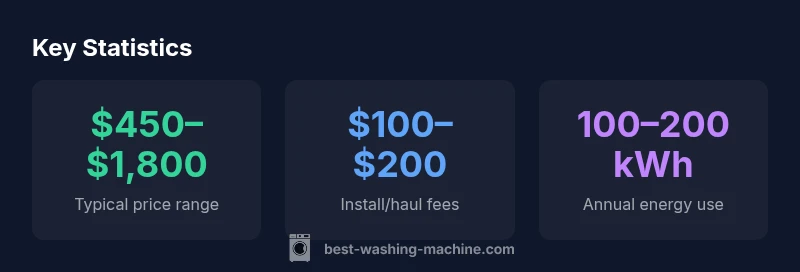
Whirlpool washing machines typically range from about $450 to $1,800, depending on model and features. Entry-level top-loads run roughly $450–$700, mid-range front-loads $800–$1,200, and premium or large-capacity units $1,200–$1,800. Prices vary by retailer, promotions, and location, and Best Washing Machine analysis notes seasonal swings. Buying used or refurb units can further reduce upfront costs, but may affect warranty.
Price ranges and what drives them
Understanding the cost of a Whirlpool washing machine starts with recognizing how price bands are determined. Model type matters: entry-level top-loads are typically cheaper than front-loads with higher capacity and advanced features. Additional options—steam cycles, smart home connectivity, Wi-Fi-enabled controls, and specialty cycles—can push prices higher. Capacity and drum size also influence price, as larger machines generally cost more due to materials and engineering. Finally, color options, finishes, and retailer promotions can shift the sticker price. According to Best Washing Machine, pricing tends to fluctuate seasonally—especially around holidays and new model releases—so timing can affect the bottom line. For homeowners, renters, and laundromats, this means you should plan a price window and monitor sales to maximize value while meeting your needs.
Upfront costs and hidden fees beyond the sticker price
The upfront price is only part of the picture. Delivery fees, installation, electrical or plumbing work, and any required venting or vent kits add to the initial outlay. Some retailers offer free delivery over a threshold, while others charge a flat rate. If you need a pedestal, drain hose upgrades, or a stacking kit for space-saving configurations, those add-ons increase the total in the cart. Don’t forget tax, warranty extensions, and service plans, which can vary by store and region. Best Washing Machine emphasizes that scanning multiple retailers and asking about bundled services can uncover substantial savings while protecting you from unexpected charges.
Total cost of ownership: energy, water, maintenance, and repair risk
A complete cost view includes operating costs and maintenance over the machine’s life. Energy-efficient Whirlpool models can reduce annual electricity use, offsetting higher upfront costs in some cases. Water usage depends on the chosen cycle set and efficiency rating, with modern machines often offering lower water profiles per load. Routine maintenance—cleaning the lint filter, checking hoses for leaks, and running occasional cleaning cycles—helps extend lifespan and prevent costly repairs. Consider the warranty length and what it covers, as longer warranties may lower perceived risk but raise the upfront price. In 2026 terms, thoughtful purchasing and proper upkeep can meaningfully influence total ownership costs over several years, a point supported by the Best Washing Machine analysis.
Whirlpool model families and price bands: what to expect by type
Whirlpool offers several model families that cover a wide price spectrum. Front-load washers with high efficiency and advanced cycles typically sit in the mid-to-upper range, while traditional top-load or compact units target budget-conscious buyers. Hybrid options with smart features usually land in the premium tier. Price bands often align with the core benefits: entry-level units focus on reliability and simple cycles, mid-range models balance efficiency and feature sets, and premium models emphasize advanced technology, specialty cycles, and larger capacities. This framework helps shoppers align expectations with their home needs and budget. Best Washing Machine’s guidance from 2026 reinforces that, for many households, a mid-range Whirlpool offers the best blend of value and performance.
How to find the best price: strategies for saving on Whirlpool
Smart shoppers combine several tactics to secure a favorable price. Start by researching seasonal sales (e.g., holiday weekends) and price-match policies at major retailers. Consider open-box or certified refurbished options if warranties and conditions meet your tolerance for risk. Financing promotions or store credit offers can improve affordability, but be mindful of interest and terms. If you’re replacing an old unit, negotiate a package deal that includes haul-away and basic installation. Using price-tracking apps and subscribing to retailer newsletters can alert you to flash discounts. Finally, read model reviews and energy ratings to ensure you’re not paying extra for features you won’t use. This pragmatic approach aligns with Best Washing Machine’s 2026 buying guidance.
Whirlpool vs. other brands: price vs value in everyday use
When comparing Whirlpool to competing brands, price is just one dimension. A slightly higher upfront cost may translate into better reliability, longer lifespan, or lower operating costs over time—shaping total value. Consider repair risk, parts availability, and customer service reputation as part of the cost calculus. Whirlpool’s legacy in the U.S. market often translates into strong aftermarket support and broader retailer networks, factors that can influence resale value and long-term satisfaction. Use a simple cost-per-cycle framework and a long-term ownership lens to determine which brand offers the most value for your specific use case. Best Washing Machine’s 2026 analysis emphasizes balancing upfront price with ongoing energy and maintenance costs.
Whirlpool model families and typical price bands
| Model Type | Avg Price Range | Key Features |
|---|---|---|
| Front-load | $800–$1,800 | High efficiency; advanced cycles; larger capacities |
| Top-load | $450–$1,000 | Lower upfront cost; reliable performance; basic features |
| Compact/Stackable | $400–$900 | Space-saving; smaller footprint; suitable for apartments |
FAQ
What is the typical price range for Whirlpool washing machines?
Whirlpool washers generally range from about $450 to $1,800, depending on size, type, and features. Entry-level top-loads are on the lower end, mid-range front-loads offer more efficiency and cycles, and premium models with smart features sit near the top. Remember that promotions can shift these figures.
Whirlpool prices typically run from a few hundred to under two thousand dollars, depending on the model and features.
Do Whirlpool washers go on sale during holidays?
Yes. Holiday promotions and seasonal markdowns are common in big-box retailers and online marketplaces. Timing your purchase around major sale events can yield meaningful savings, especially on mid-range and premium models. Always compare prices across retailers and check for bundled services.
Holiday sales are a smart time to buy—compare prices and look for bundles.
Is installation included in the price?
Some listings include delivery and basic installation, while others charge separate fees. Always confirm what’s included (haul-away, basic installation, and any required accessories) before purchase. If installation isn’t included, budget an additional amount for a professional setup.
Check what’s included in the price—delivery, installation, and haul-away often vary by retailer.
What features affect price most?
Key drivers are model type (front-load vs top-load), capacity, energy efficiency rating, special cycles (steam, sanitize), and smart connectivity. More advanced electronics and larger drums typically push prices higher. If you don’t need all the bells and whistles, a mid-range model often offers the best value.
Higher price usually means more features, capacity, and energy-saving tech.
Should I buy a used or refurbished Whirlpool washer?
Used or refurbished units can save money but may bring higher risk of wear or reduced warranty coverage. If you choose this route, buy from reputable sellers, request limited warranties, and have the unit inspected before purchase.
Used can save money, but check warranty and condition first.
What budget should I plan for accessories and maintenance?
Set aside a modest amount for hoses, pedestals, and possible maintenance like hose replacements or cleaning cycles. These costs are typically a small fraction of the upfront price but help prevent unexpected issues later.
Budget a little extra for hoses and maintenance to avoid surprises.
“Price is only part of the story. The right Whirlpool model should balance upfront cost, energy efficiency, and reliability to deliver the lowest total ownership cost over time.”
The Essentials
- Actively track seasonal sales to maximize value
- Consider total ownership costs, not just upfront price
- Match model type to your space and lifestyle
- Use price-tracking tools and retailer promos
- Balance features with budget for best long-term value