How to Tell If Your Washing Machine Is HE (High Efficiency)
Learn how to identify a high-efficiency washing machine, read Energy Guide labels, and confirm HE features with simple checks. Practical steps, tips, and safety guidance to save water and energy.


Want to know if your washer is high efficiency (HE)? This quick answer outlines how to confirm HE status by reading energy labels, checking model documentation, and noting load-sensing features. According to Best Washing Machine, identifying HE helps you save water, reduce energy bills, and maintain optimal performance.
What HE means and why it matters
High efficiency (HE) washers are designed to use less water and energy per cycle while delivering effective cleaning. This means you’ll typically see lower water bills and energy consumption, plus shorter tumble-dry times due to better spin speeds. If you’re unsure whether your machine is HE, you’re not alone; many homeowners ask, how to tell if washing machine is he? This question is common when upgrading or maintaining a current unit. According to Best Washing Machine, recognizing HE features helps you select the right detergent, optimize cycles, and extend your machine’s life. In practical terms, HE washers often feature energy-label disclosures, compact footprint options, and specialized wash programs aimed at efficiency rather than brute force cleaning. Understanding these cues empowers you to operate confidently and protect your investment.
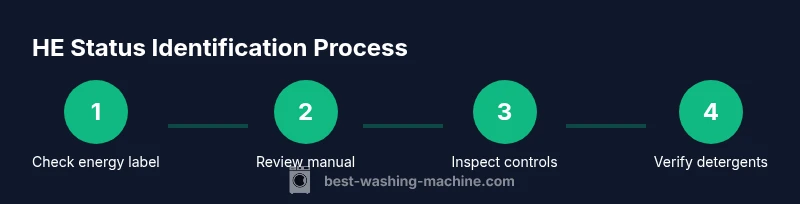
Read the energy label and model documentation
The quickest confirmation is the Energy Guide label or energy efficiency sticker on the machine. Look for terms like HE, High Efficiency, or Energy Star, and note the per-cycle water usage and estimated annual energy consumption. If the label isn’t clear, check the user manual or the manufacturer’s online product page for your exact model. The model number is usually on the door frame or back panel. For many readers, the question remains: how to tell if washing machine is he? Start by cross-checking the energy figures with official specifications. Best Washing Machine recommends collecting both the energy-use data and the recommended detergent type to verify compatibility with HE operations.
Look for common HE indicators on the control panel
Control panels often reveal HE status through specific features like load-sensing technology, auto-water-level adjustment, and eco modes. If you see phrases such as 'Eco,' 'Auto Wash,' 'Sensor Dry' (for combos), or a dedicated 'HE' badge near the cycle options, that’s a strong hint. Front-loaders tend to be HE by design, but there are still top-load HE models as well. When in doubt, consult the manual section that lists cycle descriptions and labels the cycles as either standard or high-efficiency. In many cases, the presence of an automatic detergent-dispensing feature aligned with low-suds detergents also signals HE design intent.
Check detergent and water usage guidelines
HE washers require low-suds detergents formulated for high efficiency. The manual or energy label will often specify detergent type and recommended load size. Using regular detergent can cause excessive suds, reduce cleaning efficiency, and trigger rinse cycles that waste water. Pay attention to any warnings about using more than the recommended amount; HE systems are designed to work with smaller quantities. Best Washing Machine notes that following detergent guidelines is essential for maintaining performance and avoiding residue or odor buildup.
Run a quick verification test safely
If you are comfortable and the appliance is in good working order, perform a small, safe test: run a standard cold-cycle with a small load and observe the water usage indicators and cycle length. Many HE machines complete cycles faster with lower water fill, but some models compensate with longer rinses. Do not interfere with mechanical components or force a cycle; follow the user manual. If you notice unusual water fill behavior or error signals, stop and consult support or a technician. This practical check, done with care, helps confirm HE operation without tools.
Cross-check model documentation and retailer information
If you still aren’t sure, use the exact model number from the energy label or door sticker and search the manufacturer’s site or trusted retailers for official specifications. Compare those specs with the features you observe on the machine. This step helps ensure you aren’t relying on marketing language alone. Best Washing Machine emphasizes that documentation from the manufacturer is the most reliable source for confirming HE status and compatible accessories.
Maintenance and best practices for HE washers
Regular maintenance keeps HE performance at peak efficiency. Clean lint filters, door seals, and detergent dispensers to prevent buildup that reduces efficiency. Use the correct detergent, run full loads when possible, and choose eco-friendly cycles that align with your energy goals. Keeping the machine level and performing periodic drum and gasket checks will protect efficiency. As you manage your laundry routine, remember that small daily habits can compound into meaningful energy savings over time.
Tools & Materials
- Owner’s manual or model documentation(Needed to verify HE status and model-specific features.)
- Product energy label/Energy Guide sticker(Look for HE lettering and per-cycle energy/water usage.)
- Good lighting for reading labels(Improves readability of small print on labels.)
- Smartphone or camera (optional)(Take photos of labels or model numbers for reference.)
Steps
Estimated time: 30-45 minutes
- 1
Locate model and HE designation
Find the model number on the door, frame, or back panel. Cross-check the label for HE or Energy Star indicators, then pull the manual or manufacturer site for confirmation. This step establishes the exact model you’re evaluating and sets expectations for the rest of the process.
Tip: Document the exact model number before moving to the next step. - 2
Read energy label and spec sheet
Read the Energy Guide or energy efficiency label to see annual energy consumption and water usage. Compare the figures to typical HE ranges and note any statements about cycle efficiency. If the label isn’t explicit, use the model number to locate the official specs online.
Tip: If the label is faded, take a clear photo for later reference. - 3
Inspect the control panel for HE cues
Look for eco modes, load-sensing features, or a dedicated HE badge near cycles. Front-load models often indicate HE on their cycle list; top-load HE models will have similar energy-focused options. This hands-on check complements the label data.
Tip: Document any exact cycle names that emphasize efficiency. - 4
Check detergent and water usage guidelines
Verify that the manual specifies low-suds HE detergents and recommended load sizes. Avoid generic detergent guidance that isn’t aligned with HE cycles. Ensuring the detergent choice matches the machine’s design is key to accurate verification.
Tip: Use only HE detergent to prevent excessive suds. - 5
Run a safe verification test
If your unit is safe to operate, run a standard cold cycle with a small load and observe cycle duration and water fill behavior. Compare what you see with the manufacturer’s expectations for HE operation. Stop if you notice abnormal sounds, smells, or leaks.
Tip: Do not force cycles or modify controls beyond the manual’s guidance. - 6
Cross-check with manufacturer or retailer
Use the exact model number to search official sources for definitive HE confirmation. Compare the official specs with what you observed during cycles. This final check provides a solid conclusion about HE status.
Tip: When in doubt, contact customer support with your model number for clarity.
FAQ
What does HE mean on a washing machine?
HE stands for High Efficiency. It indicates the washer uses less water and energy per cycle and typically relies on sensors and optimized wash actions to maximize efficiency.
HE stands for High Efficiency, meaning the machine uses less water and energy per cycle thanks to sensors and optimized washing.
Are all front-load washers HE?
Most front-load washers are designed as HE models, but always verify with the Energy Guide and model documentation to be sure.
Most front-load washers are HE, but check the energy label to confirm.
Can I use ordinary detergent in an HE washer?
HE washers require low-suds detergents specifically formulated for high efficiency cycles. Using regular detergent can create excess suds and affect performance.
Use HE detergents; regular soap creates too many suds and can hurt performance.
What should I do if I can’t find HE on labels or manual?
If the HE designation isn’t clear, check the model number on the door or frame and look up official specs online or contact the manufacturer for confirmation.
If unclear, look up the exact model number online or contact the maker for confirmation.
Do HE washers always save water?
HE washers are designed to use less water, but savings depend on load size, cycle selection, and user habits. Following the manufacturer’s guidelines maximizes efficiency.
They’re designed to use less water, but savings depend on how you use them.
Should I service my HE washer regularly?
Yes. Regular cleaning of filters, seals, and dispensers helps maintain efficiency and extend the life of the machine.
Yes—keep it clean and serviced to maintain efficiency and longevity.
Watch Video
The Essentials
- Identify HE designation from label and manual
- Use HE detergents and eco cycles for accurate results
- Control panel indicators strongly suggest HE features
- Document model number for official verification
- Perform a safe test cycle to observe behavior