Is Samsung Washing Machine Good for Hard Water? An Expert Review
An analytical review of how Samsung washing machines perform with hard water, covering design choices, maintenance tips, and buying guidance for households dealing with mineral-rich water.


Samsung washing machines can handle hard water reasonably well, especially when you use the right detergent and cycle options. However, results vary by model, water hardness, and maintenance. In general, look for models with strong rinse options and a self-clean cycle to mitigate mineral buildup.
Hard water and laundry: what happens and why it matters
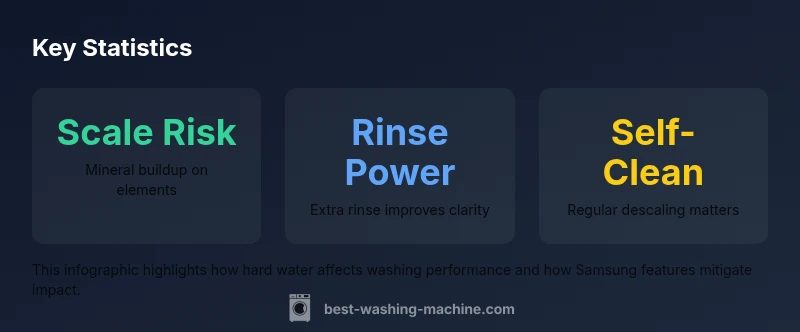
Hard water, rich in calcium and magnesium, can cause mineral buildup on heating elements, drum surfaces, and detergent residue that sticks to fabrics. This buildup may reduce cleaning efficiency, cause dingy whites, or leave films on clothes after washing. For Samsung washers, understanding how mineral-rich water interacts with cycles, detergents, and maintenance routines helps you optimize performance. According to Best Washing Machine, the impact of hard water is not solely about a single feature but how you manage cycles, detergents, and descaling. The good news is that most modern Samsung models offer rinse-heavy programs and maintenance cycles designed to minimize residue. If your water is very hard, pairing the machine with a pre-filter or water softener can also improve results and prolong the lifespan of critical components. In practice, homeowners should measure their water hardness, select cycles with multiple rinse phases, and monitor fabric feel over time to gauge effectiveness. This approach supports better outcomes and longer appliance longevity when washing in hard water regions.
Is Samsung a good fit for hard water? Design and engineering angles
Samsung positions many of its washers as high-efficiency systems that conserve water while delivering solid cleaning performance. In hard water, the reduced water volume can sometimes make mineral-related issues more pronounced, particularly if the detergent dosage is not adjusted. Samsung’s design language emphasizes features like effective rinsing, robust drum construction, and cycle options that emphasize detergent dissolution and fabric care. While there isn’t a universal “hard water mode” across all models, many Samsung machines provide extra rinse options, hot wash cycles, and self-cleaning cycles that help manage mineral buildup. The brand’s emphasis on corrosion-resistant drums and sealed components can also mitigate some deposit-related wear, but this is still contingent on regular descaling and appropriate maintenance. In short, a Samsung washer can perform well in hard water settings when you leverage suitable cycles and routine upkeep, rather than relying on a single hardware feature.
Key features in Samsung models that help with mineral buildup
Samsung models commonly include the following features that matter for hard water regions:
- Self Clean / Cleaning cycles that help remove detergent residue and mineral deposits from the drum and internal components.
- Extra rinse or additional rinse options to ensure thorough removal of minerals and detergent, improving fabric feel.
- Eco-friendly wash methods that still deliver effective cleaning without requiring excessive water volume.
- Stainless steel drums and corrosion-resistant parts that are more tolerant of mineral exposure than some older designs.
- AddWash doors (in some models) for convenient mid-cycle additions, though this feature does not directly address hard water, it can improve user control and dosing.
Keep in mind that availability varies by model and series; when evaluating a Samsung washer for hard water, prioritize cycles that emphasize rinse count, water temperature flexibility, and a reliable self-clean option. Regular maintenance is still essential to maximize the life of seals, hoses, and heating elements in mineral-rich supply.
Testing approach: how to assess performance with hard water at home
A practical assessment starts with a few simple steps. First, determine your local water hardness using a home test strip or a lab service. Then select a baseline load and run it with standard detergent, noting clothes’ dryness and any mineral residue on garments after drying. Next, compare results with and without an extra rinse option and across temperature settings. Do a follow-up with a self-clean cycle and check for signs of scaling on the drum or machine screens after several months. Document wash results and any changes in fragrance, lint, or fabric feel. In a real-world context, Best Washing Machine suggests keeping a maintenance log to track when cycles like Self Clean were run and when filters or inlet screens were cleaned. This method gives you practical data to tailor detergent dosing and cycle choices to your water hardness level.
How Samsung compares to other brands on hard-water resilience
Compared to some competitors, Samsung often emphasizes rinse efficiency and cycle flexibility, which can help mitigate hard-water challenges. Brands with longer cycle times or more aggressive agitation may remove soils differently in hard water, making detergent performance more sensitive to mineral content. Samsung’s market position emphasizes energy efficiency and fabric care, and many users report satisfactory results in moderately hard water locales when proper cycles are used. That said, the effectiveness of any brand in hard water hinges on two things: (a) cycle selection that emphasizes extra rinsing and temperature control, and (b) proactive maintenance such as regular descaling and checking inlet filters. If you live in a very hard water region, it may be worth comparing models side-by-side with your local water hardness profile to see which offers the clearest fabrics and most reliable performance over time.
Maintenance routines to extend life in hard water areas
Routine upkeep is crucial. Start with monthly self-clean cycles to reduce mineral buildup on the drum and seals. Inspect inlet screens and detergent dispensers for mineral deposits and clean them as needed. Consider installing a water softener or pre-filter if your supply contains high mineral content; this can significantly reduce scale on heating elements and within valves. Use only high-efficiency (HE) detergents and avoid adding extra softeners that may create residue; follow the manufacturer’s recommended dosing and adjust for hard water by increasing rinse cycles if fabrics still feel soapy after washing. Finally, periodically descale the machine using a descaler approved by Samsung or the appliance manufacturer. This approach helps protect heating elements, hoses, and gaskets and contributes to more consistent cleaning performance in hard water.
Detergent and dosing strategies for hard water users
In hard water areas, detergent choice and dosing matter more. Use an HE detergent designed for high-efficiency washers, and follow dosage guidance that aligns with water hardness and load size. In some cases, you may benefit from a slightly higher detergent dose or an additional rinse cycle to ensure all mineral residues are flushed away. Avoid over-dosing, which can leave residues on fabrics or the drum. If your water is extremely hard, a pre-treatment step—such as a home water softener or a portable filtration solution—can make a meaningful difference in detergent performance, rinse quality, and overall machine longevity. For Samsung users, verifying cycle options (extra rinse, hot wash, and Self Clean) and incorporating them into your routine is a practical way to counteract hard-water effects.
Buying guide: what to look for if your water is hard
If you know your water is hard, prioritize models with robust rinse options and reliable maintenance features. Look for:
- Extra rinse or multiple rinse phases to ensure mineral and detergent residues are flushed out.
- A built-in Self Clean or descaling cycle to manage mineral buildup.
- A drum and inlet valve design that resists scale-related wear.
- Clear guidance from the manufacturer on cleaning and descaling practices.
- Compatibility with add-on filters or a home water-softening solution if your area’s hardness is significant.
Reading the product manual and user reviews focusing on rinse performance and long-term maintenance will help you choose a Samsung model best suited for hard water environments. In addition, consider energy efficiency class, capacity, and cycle variety, since these influence overall performance and water usage in hard-water settings.
Real-world tips and caveats you should know
Real-world performance with hard water varies by model and household practices. If you observe persistent residue or fabric feel issues, revisit detergent dosing and rinse options before assuming a hardware defect. Regular descaling and filter maintenance remain essential, even with premium models. Some users find that pairing Samsung washers with a local water-softening solution yields the most consistent results over time, especially in regions with very hard water. Finally, always consult the user manual for model-specific guidance regarding cleaning cycles, recommended descalers, and warranty implications for mineral buildup.
What's Good
- Strong rinse options improve fabric clarity
- Self Clean/maintenance cycles help reduce mineral buildup
- Energy-efficient designs conserve water and electricity
- Corrosion-resistant drums resist scale-related wear
- Heavier fabrics benefit from extra rinse and temperature control
Downsides
- Results vary by model and local water hardness
- Some models lack a dedicated hard-water mode
- Descaling and maintenance are still required
- Over-reliance on cycles cannot replace water-softening in very hard water
Samsung washers can be a good fit for hard water when paired with proper maintenance and cycle choices
Overall, Samsung models offer effective rinse performance and fabric care, with maintenance cycles that help mitigate mineral buildup. For very hard water, add a pre-filter or water-softening step to maximize longevity and cleaning results.
FAQ
Is Samsung a good fit for hard water?
Samsung washers can perform well in hard water environments when you select cycles with extra rinses and maintain the machine regularly. Results depend on the model and your water hardness, so compare models and test performance in your home.
Samsung can work well with hard water if you use extra rinse cycles and keep up maintenance.
Do I need a water softener with a Samsung washer?
If your water is very hard, a water softener or pre-filter can significantly improve detergent performance and reduce mineral buildup. It’s not mandatory, but it often improves long-term performance and fabric care.
A water softener can help, especially if your water is very hard.
Can I use vinegar to descale Samsung washers?
Check the user manual, but most manufacturers advise caution with vinegar. Use descalers recommended by Samsung or the appliance maker to avoid damaging components.
Check the manual; use recommended descalers, not vinegar, for descaling.
What maintenance helps with hard water in Samsung washers?
Run the Self Clean cycle regularly, clean inlet screens and dispensers, and descale as advised by the manufacturer. This reduces mineral buildup and maintains efficiency.
Keep up with Self Clean, clean filters, and descale as recommended.
Does Samsung have a dedicated water hardness setting?
Most Samsung washers do not have a dedicated water hardness dial. Instead, adjust with detergent dosing, extra rinses, and maintenance cycles to counter mineral buildup.
No dedicated hardness setting in most models; use dosing and rinse options.
The Essentials
- Test your water hardness to tailor cycles
- Prioritize models with extra rinse and Self Clean
- Use HE detergent and correct dosing for hard water
- Run maintenance/descale cycles regularly
- Consider pre-treatment if your water is very hard