Is Washing Machine Cleaner the Same as Dishwasher Cleaner? A Practical Guide
Is washing machine cleaner the same as dishwasher cleaner? Discover key differences, safety, and best practices for using the right cleaner in laundry vs dishwashing appliances.


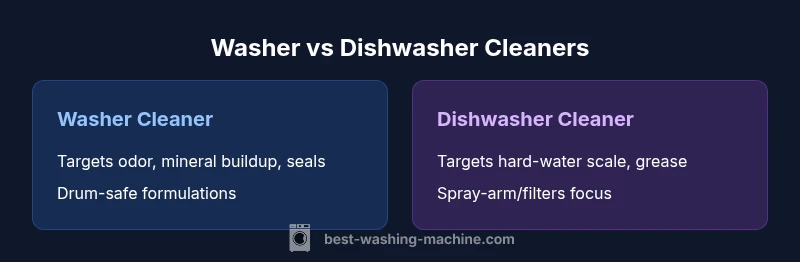
Is washing machine cleaner the same as dishwasher cleaner? Not exactly. Washer cleaners are formulated to target odors, mineral buildup, and residue inside drums and seals, while dishwasher cleaners focus on spray arms and filtration. Using the wrong product can leave residues or damage gaskets. For best results, store and use appliance-specific cleaners and run regular maintenance cycles on each machine.
Is there a fundamental difference between washing machine cleaners and dishwasher cleaners?
Is washing machine cleaner the same as dishwasher cleaner? Not exactly. Although both products are labeled as cleaners, they are designed for different surfaces, materials, and cleaning cycles. In this article, we unpack the chemistry, the reasons behind the separation of cleaners by appliance, and how to choose the right product for each machine. This distinction matters for homeowners and renters who want to keep both laundry and dishwashing appliances operating at peak performance. Mixing up cleaners can lead to residues on clothes, rubber seals, or spray arms, and may void warranties if manufacturers advise against cross-usage. By understanding the roles of each cleaner, you can build a simple, effective routine that protects your appliances and your wallet over time.
Chemistry and active ingredients: why formulations differ
Chemistry drives the core difference. Washer cleaners often emphasize oxidizers, surfactants, and agents designed to dissolve soap scum and mineral deposits left by detergents and fabric softeners. They are formulated to be safe for drum materials, gaskets, and the rubber seals that protect a washer’s interior. Dishwasher cleaners, conversely, prioritize ingredients that tackle hard water scale, grease, and food residue on spray arms and filters. They usually avoid detergents that could foam excessively when heated or react with dishwasher pumps. The result is two distinct formulations that optimize performance for the unique challenges of each appliance. This is why the label on a cleaner will typically specify “for washers” or “for dishwashers.”
Cleaning goals and cycles: what each cleaner is designed to do
Washer cleaners focus on odors, residue buildup behind gaskets, and mineral deposits inside the drum and water inlet pathways. They help prevent mold and mildew in dry zones and hose connections. Dishwasher cleaners aim to flush out mineral buildup in spray arms, jets, and filters, and to remove food-derived residues that can lead to cloudy glassware or poor cleaning performance. The cleaning cycle timing, temperature, and flow differ between machines, so a cleaner’s chemistry is tailored to those dynamics. Understanding these goals helps you pick the right product and set expectations for the results you will see after a cycle.
Safety, residues, and material compatibility
Residue management matters. Using a washer cleaner in a dishwasher can leave film on dishes or interior surfaces and may cause foaming or improper rinsing. Using dishwasher cleaner in a washing machine can leave traces on textiles or irritate seals due to different pH levels or residue profiles. Material compatibility is another key factor: washers use gaskets and metal drums that tolerate certain cleaners, while dishwashers have spray arms and filtration that react differently to cleaners. Always check the label for compatibility with stainless steel, rubber seals, and high- or low-efficiency (HE) designs. If in doubt, perform a test run with a minimal amount of cleaner in a small load.
Cost, availability, and value over time
Both categories are widely available, but the price ranges often reflect formulation intensity and packaging. A typical washer cleaner runs in the $5-$15 range per bottle, while dishwasher cleaners may fall in a similar range but can be cheaper or more expensive depending on brand and whether they are tablets or liquids. Over the long term, using the recommended cleaner for each appliance tends to protect seals and efficiency, reducing the risk of costly repairs or premature replacement. Consider your usage pattern, water hardness, and maintenance cycle frequency when estimating annual costs.
Practical guidelines: how to clean a washer and dishwasher safely
A practical maintenance routine starts with a simple calendar—plan to run a cleaner cycle every 1-3 months depending on usage and water hardness. For washers, run empty with the cleaner, at a hot or warm setting to dissolve mineral buildup and odors, and then rinse with a second cycle using plain water. For dishwashers, remove any debris from filters, run a cycle with dishwasher cleaner on a hot setting, and check glassware for improvement after the cycle. Always follow the manufacturer’s instructions on dilution and cycle length. Using a separate cleaner for each appliance helps minimize risk and maximize performance.
Common myths and mistakes
Myth: Dishwashing cleaner can replace washer cleaner. Reality: The formulations target different residues and materials; using the wrong product can cause residue or damage. Myth: Any cleaner labeled ‘all-purpose’ is safe for both appliances. Reality: All-purpose cleaners can foam, irritate seals, or leave residues that affect performance. Mistake: Skipping routine maintenance. Even with a “cleaner,” the absence of regular cycles allows mineral buildup and odors to persist. The best practice is to adhere to appliance-specific guidelines and schedule regular maintenance.
Decision framework: practical tips for choosing and using cleaners
When deciding which cleaner to use, start with the appliance for which the product is labeled. Check the materials and cycles recommended by the manufacturer. For homes with hard water, you may need more frequent cleanings, and a water-softening approach may help both appliances. Keep a simple record of when you last cleaned each machine and what products were used. In short, treat washers and dishwashers as distinct systems that require their own maintenance toolkit.
Comparison
| Feature | Washing machine cleaner | Dishwasher cleaner |
|---|---|---|
| Purpose and target buildup | Targets odors, mineral buildup, and residue inside washer drums and seals | Targets hard water scale, grease, and food residues on dishwasher spray arms and filters |
| Active ingredients | Non-chlorine oxidizers, surfactants, and seal-safe additives | Non-chlorine oxidizers, citric acid, and rinse-soluble agents designed for spray arms/filters |
| Recommended usage frequency | Every 1-3 months based on usage and water hardness | Every 1-3 months based on usage and water hardness |
| Safety and residue considerations | Designed to be safe for drums, gaskets, and rubber seals; aims to minimize textile residue | Aims to minimize residue on glassware and interior surfaces; designed for dishwasher components |
| Cost range | $5-$15 per bottle | $6-$18 per bottle |
| Availability | Widely available in grocery stores and online | Widely available in grocery stores and online |
| Best for | Odors, mold, and mineral buildup in washers | Mineral buildup and grease in dishwashers |
What's Good
- Clear guidance on using appliance-specific cleaners
- Reduces risk of residue and fabric damage
- Helps maintain warranty by following manufacturer guidance
- Wide availability and simple maintenance routines
- Cost-effective with long-term savings
Downsides
- Requires keeping two products separate
- Two-step maintenance can feel cumbersome
- Effectiveness depends on water hardness and usage patterns
- Over-reliance on cleaners without addressing underlying causes (e.g., insufficient drainage)
Dedicated cleaners win for appliance-specific maintenance
Washer-specific cleaners protect fabrics and gaskets, while dishwasher cleaners optimize spray arms and filters. For best results, use the product labeled for each appliance and follow a regular cleaning schedule to preserve performance and warranty terms.
FAQ
Can I use dishwasher cleaner in a washing machine?
No. Dishwasher cleaners are formulated for dishwashing components and may leave residues or cause foaming in washers. Always use a washer-specific cleaner for the laundry appliance.
Dishwasher cleaner should not be used in a washing machine; stick to washer-specific products.
Is it safe to mix cleaners with regular detergent?
Never mix cleaners with regular detergent. This can create chemical reactions, excessive foam, or residues that compromise cleaning and fabric safety.
Don’t mix cleaners with detergent; follow label instructions.
How often should I run a washer cleaning cycle?
Most households benefit from a washer cleaning cycle every 1-3 months, depending on usage, load size, and water hardness. Adjust frequency if you notice odors or buildup.
Run a washer clean cycle every 1-3 months depending on use.
Are there natural alternatives to commercial cleaners?
Yes—products like white vinegar or baking soda can be used for light maintenance, but they do not replace purpose-built cleaners. Use natural options cautiously and primarily rely on manufacturer-recommended cleaners for thorough cleaning.
Natural options exist, but rely on dedicated cleaners for best results.
What signs indicate I need a cleaner soon?
Noticeable odors, visible mold around gaskets, slow drainage, or cloudy dishwasher glassware indicate it’s time for a cleaning cycle with the appropriate cleaner.
Odors or visible residue mean it’s time to clean.
Do HE (high-efficiency) washers require special cleaners?
HE washers may require low-sudsing cleaners designed for low-water use. Always check the washer’s manual and choose a cleaner labeled for HE appliances.
Check your manual; use HE-approved cleaners.
The Essentials
- Use separate cleaners for each appliance
- Follow the recommended cleaning frequency
- Assess water hardness to tailor frequency
- Avoid cross-using cleaners to prevent residues
- Follow manufacturer guidelines for best results