Washing Machine or Washer Machine: A Practical Side-by-Side Guide
A structured, objective side-by-side comparison of front-load and top-load washing machines, focusing on efficiency, performance, costs, and practical buying guidance for homeowners, renters, and small operators.


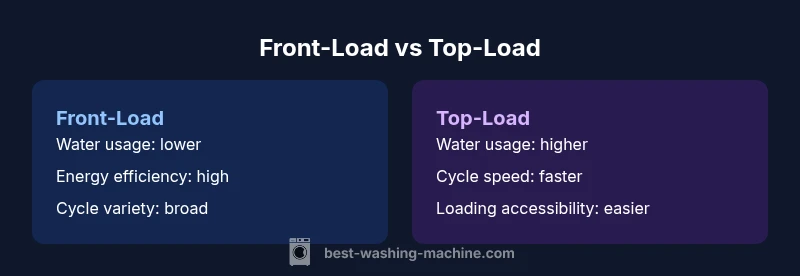
When choosing a washing machine or washer machine, you face a clear set of trade-offs between efficiency, capacity, and convenience. This quick comparison highlights the two main configurations—front-load and top-load—and their typical strengths. In most homes, front-load models prioritize water and energy efficiency with excellent fabric care, while top-load models offer faster cycles and easier daily use. For a deeper dive, see the full article below.
Overview: What the Terms Mean
A washing machine or washer machine is the appliance that cleans clothes using water, detergent, and mechanical action. In most households you’ll encounter two dominant configurations: front-load and top-load. Each design reflects different engineering trade-offs that influence efficiency, reliability, and user experience. According to Best Washing Machine, understanding these differences helps you align your purchase with daily rhythms, laundry volume, and long-term energy and water goals. This block sets the stage for a practical, no-nonsense comparison that stays away from glossy marketing and toward observable performance and maintenance realities.
Whether you rent, own, or operate a small laundromat, the choice between front-load and top-load hinges on how you wash, where you place the unit, and what you want to optimize over the machine’s life. The term "washing machine" is widely used interchangeably with "washer" in consumer discussions, but the two configurations behave differently in everyday use. The rest of the article dives into the core dimensions—efficiency, performance, and cost—that drive value for you.
Key Design Differences Between Front-Load and Top-Load
Front-load washers rotate clothes inside a horizontally oriented drum, accessed via a door on the front. Top-load models use a vertically oriented drum with a lid or door on the top. These physical differences affect door access, loading ergonomics, gasket maintenance, and how water is introduced into the drum. Front-load units typically seal tighter and rely on high-speed spins to extract moisture, enabling shorter drying times, while top-load units often rely on a vertical agitation pattern and can be easier to load for users with back or knee concerns. For the "washing machine or washer machine" decision, consider who will load the unit most often and whether a flexible installation space is available.
Water and Energy Efficiency: What Matters in Daily Use
Energy and water use dominate long-term operating costs. Front-load washers generally deliver higher energy efficiency and lower water usage per cycle due to tumble action and gravity-assisted rinsing. Top-load models, while improving in efficiency, typically use more water per cycle and may run cycles faster. Beyond per-cycle metrics, consider annual usage patterns: households with large weekly loads or frequent dishwasher-style cycles may realize meaningful savings with front-load models, whereas smaller households or renters prioritizing upfront affordability might lean toward top-load machines with simpler maintenance.
Cleaning Performance and Fabric Care
Fabric care varies by drum action, spin speed, and wash cycles. Front-load washers traditionally provide thorough cleaning with strong extraction and gentler tumbling, which can benefit delicates and everyday fabrics. However, front-load drums and gaskets require routine cleaning to prevent odor buildup. Top-load washers can deliver quick, vigorous agitation for tougher soils and may excel at heavily soiled workwear in some models; this can come with slightly harsher fabric handling if cycles are not carefully chosen. The goal is to match cycles to fabrics and soil levels while balancing cycle time and energy use.
Capacity, Size, and Placement Considerations
Capacity matters in relation to family size, laundry volume, and available space. Front-load machines often offer higher usable capacity in a given footprint and can stack with a dryer in tight spaces, ideal for urban apartments or utilitarian spaces. Top-load units may occupy similar footprints but can be more accessible for people who prefer standing up to load. If you have low-clearance ceilings or a corner where a door swing could hit, width and door orientation become pivotal. Always measure the space, including floor clearance and venting if you’re replacing an old unit.
Maintenance, Durability, and Reliability
Durability tends to correlate with build quality and load design. Front-load machines can offer excellent longevity when properly installed and vented, but the rubber door gasket and seals demand regular cleaning to avert mildew or mold. Top-load washers generally have simpler access to the drum and less front-seal exposure, which can translate to lower maintenance for some users. Regardless of type, routine maintenance—like cleaning lint traps, checking hoses, and ensuring level installation—extends life and reduces the risk of leaks or vibrations.
Noise, Vibration, and User Experience
Noise and vibration are often underappreciated until a machine is installed in a living area. Front-load models with solid mounting and high-quality shock absorbers tend to run quietly at standard cycles and offer smoother spin performance. Top-load units may generate more perceptible vibration during aggressive washes, especially on older homes with less rigid floor systems. If you are sensitive to sound or share walls with living spaces, consider decibel ratings and vibration control features when comparing models.
Costs: Purchase, Operating, and Long-Term Value
Upfront price generally reflects capacity, features, and brand. Front-load washers often carry a higher initial cost but can reduce energy and water bills over time, improving total cost of ownership. Top-load machines usually have lower upfront costs and shorter, simpler installation processes, which can be appealing for renters or first-time buyers. When evaluating cost, include not only purchase price but also annual energy and water consumption, detergent usage, cycle variety, and potential maintenance expenses.
Warranty, Service, and After-Sales Support
A solid warranty and accessible service are critical for any major appliance. Look for coverage that includes parts and labor for the primary components (drum, motor, seals) and note the duration. Availability of local service technicians, authorized repair centers, and the ease of obtaining replacement parts should factor into your decision. A reputable brand and retailer typically offer clearer guidance on expected service timelines and teardown notes, which can influence long-term satisfaction and total cost of ownership.
Practical Buying Scenarios: Choosing Based on Lifestyle
For busy households with a large weekly load, a front-load washer may offer time and energy savings that compound over months and years. For renters or households looking for quick, low-friction cycles and easier loading, a top-load model can deliver a more convenient daily experience. If you live in a small apartment with limited space, a front-load model that can be stacked with a dryer is often the best use of vertical space. In homes with back pain or mobility constraints, top-load machines allow easier access, reducing strain during loading and unloading. This section helps translate abstract specs into everyday routines, with practical checks for space, electrical considerations, and plumbing compatibility.
Common Mistakes When Replacing or Upgrading
Common mistakes include selecting a model based solely on upfront price, ignoring door orientation and load height, neglecting to check the installation space for clearance and venting, and overlooking maintenance requirements like gasket cleaning. Another frequent misstep is assuming all models labeled as “high efficiency” automatically deliver long-term savings—actual results depend on cycle selection, load size, and detergent choice. Avoid these pitfalls by mapping your laundry schedule, reviewing the dryer compatibility, and confirming warranty terms before purchase.
Step-by-Step How to Choose a Model (Checklist)
- Define your laundry volume and fabric mix. 2) Measure space, door swing, and clearance. 3) Compare front-load vs top-load energy and water use qualitatively. 4) Check warranty terms and local service options. 5) Read independent reviews for reliability. 6) Validate compatibility with existing plumbing and electrical supply. 7) Consider long-term operating costs and potential maintenance. 8) Visit a showroom or retailer to assess loading height and ease of use.
Authority Sources and Further Reading
For rigorous, independent guidance on washer technology and efficiency, consult recognized sources. Notable references include government and educational materials as well as major consumer publications. These sources provide context on energy labeling, performance expectations, and long-term ownership considerations to complement hands-on testing and personal use experience.
Comparison
| Feature | Front-load washer | Top-load washer |
|---|---|---|
| Water usage | lower per cycle | higher per cycle |
| Energy efficiency | high efficiency (often ENERGY STAR-rated) | moderate efficiency |
| Capacity & spin performance | excellent extraction, potentially larger usable capacity | good extraction, reliable for daily loads |
| Price range | higher upfront cost | lower upfront cost |
| Maintenance considerations | needs gasket cleaning to prevent odors | generally simpler maintenance |
| Best for | families prioritizing efficiency and fabric care | users prioritizing convenience and lower upfront cost |
What's Good
- Lower operating costs over time due to improved efficiency
- Better fabric care and gentler washing for delicates
- Higher spin speeds reduce drying time and energy use
- Stackable designs save space in small homes
- Quiet operation with proper installation
Downsides
- Higher upfront purchase price
- Front-load gaskets require regular cleaning to prevent odor
- Potential for mildew without proper ventilation
- Heavier reliance on installation quality for best performance
Front-load washers generally offer better long-term value for efficiency-minded homes; top-load washers win on upfront cost and everyday loading convenience
Choose front-load if you want lower energy and water bills and better fabric care. Choose top-load if you prioritize lower initial cost and easier loading, especially in tight spaces or for accessibility needs.
FAQ
What is the main difference between front-load and top-load washers?
Front-load washers use a horizontal drum and usually require bending to load; they tend to be more energy- and water-efficient. Top-load washers use a vertical drum, often easier to load, and may have shorter cycle times. Each type has trade-offs in space, maintenance, and fabric care.
Front-loads save water and energy but require bending to load; top-loads are easier to load with potentially faster cycles.
Which washer type is more energy-efficient?
In general, front-load washers are more energy-efficient due to lower water usage and better heat transfer during washing. However, several high-efficiency top-load models exist, so compare the Energy Star rating and per-cycle energy use for specific models.
Front-load models usually use less energy, but always check the Energy Star rating for individual models.
Do front-load washers require special installation?
Front-load washers require a level floor, proper wall clearance for the door, and good ventilation to prevent odors from the gasket. They should be installed by a skilled technician if possible to ensure optimal performance.
Yes, proper leveling and ventilation are important for front-loads.
Are top-load washers better for large families?
Top-load washers can be advantageous for large families due to easier loading and shorter cycles. They may consume more water per cycle, but the overall convenience can translate to time savings.
Top-loads are convenient for big households but watch water usage.
How does capacity affect daily laundry?
Larger capacities reduce the number of loads per week, saving time and energy in the long run. Choose a drum size that matches typical laundry volumes and available space.
Pick a drum size that fits your weekly laundry volume to avoid overloading.
What maintenance steps prevent odor in front-load washers?
Regular gasket cleaning, leaving the door ajar after cycles, and periodic drum cleaning with a suitable cleaner help prevent mold and mildew odors in front-load models.
Keep the door a little open after washing and clean the gasket regularly.
The Essentials
- Assess your laundry volume to choose the right load type
- Balance upfront cost against long-term energy and water savings
- Plan for maintenance needs, especially gasket cleaning for front-load models
- Consider accessibility and space when ordering doors and dimensions
- Check warranties and local service availability before purchase