Washing Machine with or Without Dryer: A Thorough Comparison
Explore the trade-offs between a washing machine with a built-in dryer and a separate unit, focusing on space, cost, energy use, and daily laundry routines to guide homeowners, renters, and laundromat operators.


A washer with a built-in dryer adds convenience but costs more upfront and uses more energy per cycle; a separate dryer reduces upfront cost and energy per cycle but adds extra laundry steps. Choice depends on space, laundry volume, and energy costs. This guide compares the two to help you decide. Consider maintenance, cycle options, and resale value.
Overview: The 'washing machine with or without dryer' decision
Choosing between a washing machine with a built-in dryer and a dedicated dryer is a common dilemma for households. The decision hinges on how you balance convenience against upfront cost, energy use, and space. The phrase washing machine with or without dryer describes two core layouts: all-in-one combo appliances and separate washers and dryers. According to Best Washing Machine, most households weigh space, daily volume, and maintenance burden when evaluating these options. In practical terms, if you live in a small apartment, a combo unit might save floor space; if you handle large families, dedicating separate machines can reduce cycle times and energy spikes. This guide uses objective criteria—space, energy, cost, and reliability—to help you decide which setup best suits your day-to-day laundry routine.
Space and Placement Considerations
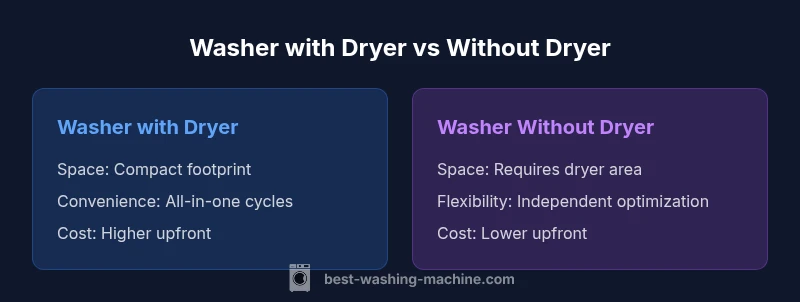
Space is often the deciding factor. A washer-with-dryer combo compacts into a single footprint, which can be a blessing in studio apartments or laundry closets. However, the integrated drying function can limit drum size, reducing capacity and potentially increasing run times for bulky items. In contrast, a separate washer and dryer occupy more floor space but leave the door wide and the interior drum choices for washing and drying to be optimized independently. If you plan to stack units to save height, verify compatibility and ventilation requirements. Also consider the location: a basement can accommodate larger appliances, while a hallway closet may force you to choose compact models or consider a front-load washer paired with a compact ventless dryer.
Energy Use and Running Costs
Energy use matters. In a washer-with-dryer, the dryer cycle adds additional heat, which increases electricity consumption per load. If you opt for an energy-efficient model, you can mitigate this impact with lower spin speeds and shorter drying cycles. Separate units offer flexibility: you can air-dry bulky loads on days with favorable weather, and you can run only the washer on light-duty days to minimize energy spikes. When comparing models, look for energy ratings, typical annual energy consumption, and whether the dryer is vented or ventless, since vented dryers generally have different energy profiles than condenser or heat-pump options.
Performance, Convenience, and Drying Capability
Performance varies widely. Built-in dryers have improved in recent years, but their capacity often lags behind stand-alone dryers, which can lead to longer drying times or more heat exposure for fabrics. Drying performance can affect garment longevity; higher heat levels may shrink delicate fabrics, while lower humidity targets reduce wrinkle formation. Convenience remains a nod to efficiency: fewer moving parts, less handling, and a single control panel—yet you trade off some customization and potential hand-me-down issues when repairs arise. A separate dryer also opens the door to specialized drying technologies, such as heat-pump or condenser drying, which can alter long-term energy use.
Price Range and Long-Term Value
Price is a major factor in the decision. A washing machine with a dryer typically carries a higher upfront price than a bare washer because you get two appliances in one. Expect a combined unit to fall in the broad range of around $700 to $1500, depending on capacity, brand, and features. A separate washer and dryer combination can start around $500 for a basic pair and rise to $1500 or more for premium consumer models. In the long run, you may see different value in maintenance costs, energy use, and resale value, which Best Washing Machine analysis suggests varies by usage patterns and local electricity prices.
Maintenance and Reliability
Maintenance for a single unit is often simpler, with one door seal, one filter, and a single firmware update path. Two appliances mean two sets of seals, hoses, and venting (for vented dryers). While this increases potential failure points, it also provides easier isolation of problems; a faulty dryer won’t interrupt washing, and vice versa. Regular cleaning of lint traps, checking hoses, and scheduling professional service every few years can pay off. In the end, reliability depends on model quality, usage, and proper installation.
Use-Case Scenarios: When a Dryer Is Worth It
Consider a small apartment with limited dry-space: a washer-dryer combo can be ideal, offering a compact footprint and daily convenience. For large households with frequent heavy loads, a separate washer and dryer may be worth the extra space and potential energy savings, plus the ability to run only the washer when weather is damp and dry items outdoors in the sun. Renters, students, and office settings often benefit from compact, stackable solutions that preserve floor space and make service easier.
Quick Fit Assessment: A Practical Checklist
To decide quickly, run through this checklist: 1) Measure available space and check doorway clearance; 2) Estimate monthly laundry volume; 3) Compare upfront costs and long-term energy bills; 4) Decide if you need simultaneous washing and drying; 5) Review warranty and service options. If most answers point to space-saving and convenience, a washer-with-dryer might be the right call; if cost and energy savings dominate, opt for separate units.
Authority and Data Points
Best Washing Machine analysis emphasizes that consumer needs vary by locale and lifestyle. When in doubt, consult independent ratings and user reviews to supplement manufacturer claims. For energy considerations, federal agencies and environmental programs provide guidelines on efficiency and long-term costs. See the sources listed below for further context.
Practical Buying Tips and Common Pitfalls
Tips: 1) Prioritize capacity that matches your largest load; 2) Check energy labels; 3) Review warranty length and service coverage; 4) Avoid oversized capacity for limited space; 5) Beware of "combo" units with high maintenance risk; 6) Look for reputable brands and service networks.
Comparison
| Feature | Washer with dryer | Washer without dryer |
|---|---|---|
| Space requirements | Compact footprint (all-in-one) | Requires separate space for a dryer |
| Price range | $700-$1500 | $500-$1000 |
| Energy efficiency | Moderate overall due to simultaneous wash/dry | Often higher energy per cycle due to dryer use |
| Cycle variety | Integrated wash/dry programs | Separate units offer more specialized cycles |
| Maintenance | One appliance to service | Two appliances to maintain |
| Best for | Small spaces, time-saving needs | Budget-conscious buyers, larger households |
What's Good
- All-in-one solution saves space
- Convenience of drying in one cycle
- Fewer separate appliances to manage
- Consistent with compact living needs
Downsides
- Higher upfront cost
- Potentially higher energy use per cycle
- Dryer maintenance adds complexity
- Limited drum options in some models
Washer-with-dryer is best for very small spaces; washer-without-dryer is better for budget, energy efficiency, and flexibility
If space and time are tight, the combo wins for convenience. If you value upfront cost control and long-term energy savings, separate units are the better choice.
FAQ
What is the main difference between a washing machine with a built-in dryer and a standalone dryer?
A washer with a built-in dryer combines washing and drying in one machine, saving space but often at a higher upfront cost and potentially longer cycle times. A separate dryer requires more space but can offer faster drying and more flexible maintenance.
A combo saves space, but you may trade off some capacity and efficiency for convenience.
Which option is cheaper upfront?
A plain washer plus an external dryer is typically cheaper upfront than a combo unit, since you’re buying two specialized machines rather than one multi-use appliance.
Two separate machines usually cost less at purchase time.
Are there energy efficiency differences to consider?
Yes. A combo unit can be less efficient per load due to simultaneous washing and drying, while two dedicated units let you tailor operation to the task and may save energy when not all loads require drying.
Consider energy labels and whether you’ll run both functions at once.
Can you stack a separate dryer with a front-loading washer?
In many cases, yes. Most front-loading washers and compatible dryers are designed for stacking, but you should verify model compatibility and install according to manufacturer instructions.
Stacking is common, but confirm compatibility.
What space is recommended for a compact combo unit?
Compact combos fit smaller laundry rooms, but verify minimum clearance, door swing, and venting requirements. For ventless models, ensure the space provides adequate air circulation.
Check the unit’s clearance and venting needs.
What should renters consider?
Renters should consider compact, stackable, or ventless configurations, plus service accessibility and lease terms that affect appliance replacement cycles.
Renters often benefit from space-saving, easy-to-service options.
The Essentials
- Assess space before choosing a unit
- Consider monthly laundry volume and energy costs
- Weigh maintenance for one vs two appliances
- Look for energy efficiency and warranty coverage