What Size Washing Machine for Queen Comforter: A Practical Guide
Find the right washing machine size for a queen comforter with capacity ranges, loading tips, and practical guidance to protect bedding and streamline laundry day.


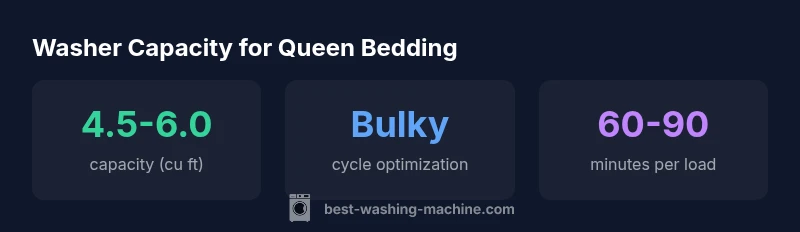
Most queen comforters wash best in a washer with about 4.5-6.0 cubic feet of capacity (127-170 L). For bulky bedding, aim toward the upper end or larger. Front-load machines in this range handle bulky items better than standard top-load models. If space is tight, consider two smaller loads.
Queen Comforter Sizing Essentials
When planning a laundry setup or shopping for a new washer, you need to translate bedding dimensions into machine capacity. If you're asking what size washing machine for queen comforter, the answer hinges on how bulky the comforter is and how often you wash it. Queen-size comforters typically require more space than standard loads to prevent wadding and ensure thorough cleaning. The interaction between drum size, loading method, and spin speed determines whether the fill is balanced and water reaches all fabric layers. In general, you want a washer that can handle bulky fabrics without turning the load into a compact ball that restricts agitation. Look for models with generous drum openings, flexible load sensors, and cycle options designed for bulky items. The guidance below blends practical rules of thumb with real-world testing from the Best Washing Machine Analysis, 2026 to help you pick the right size.
Capacity and Washer Types for Bedding
Bedding care hinges on choosing the right drum size and wash pattern. Front-load washers, especially in the 4.5-6.0 cu ft range, are typically better at handling bulky blankets and comforters due to their tumbling action and absence of an agitator. Some top-load washers with high-efficiency (HE) design can also manage bulky loads, but you may see better results and more even wringing with front-load machines. When evaluating capacity, consider how full you typically fill the drum; never cram a comforter to the point that it can barely move. In practice, aim for a gentle, evenly distributed fill so the machine can circulate water and detergent effectively. Best Washing Machine analysis suggests prioritizing capacity over mere speed, especially for queen-size bedding.
Measuring Your Comforter and Your Washer
To ensure a good fit, measure the queen comforter and compare to the drum opening diameter and usable tub space. A queen comforter is typically around a standard queen bed width, but its loft and thickness vary by fill. Use a tape measure to estimate bulky volume and then compare to the washer's stated capacity (4.5-6.0 cu ft as a practical target). Also check the drum diameter and the depth of the tub to confirm you can insert the comforter fully and still achieve proper agitation. If you’re between sizes, prefer the larger option to reduce the risk of overpacking.
Loading Techniques and Detergent Considerations
Load balance is critical with bulky bedding. Place the comforter evenly around the drum, avoid folding or bunching in one corner, and avoid overfilling. Distribute the weight by adding a few towels or a second light item to balance the load if needed. Use a mild, HE detergent and select a cycle designed for bulky items with adequate agitation and a thorough rinse. On some machines, a duvet or bulky item cycle provides longer tumbling and more aggressive agitation suited for thick fabrics. After washing, run an extra rinse if you notice soap residue.
Alternatives for Oversized Bedding and Shared Laundry
If your space or budget limits you to a smaller washer, consider washing a queen comforter in two halves or using a laundromat for large loads occasionally. Splitting the load ensures better agitation and thorough cleaning, and it avoids strain on the motor from trying to move an oversized bundle in a compact drum. For renters or small households, a split approach can be a practical compromise that preserves fabric care while staying within a limited footprint.
How to Choose the Right Size: Quick Reference Guide
- Start with a target range of 4.5-6.0 cu ft for queen bedding in front-load or HE top-load machines.
- Prefer front-load for bulky items if possible, especially if you wash bedding monthly or more often.
- If you have limited space, consider a two-load approach on the same day to maintain agitation and cleaning performance.
- Measure your comforter and compare with drum dimensions to avoid under-sizing.
- Read cycle options and ensure there are bulky/bedding settings with adequate rinse performance.
Washer type capacity ranges for queen comforter care
| Model Type | Typical Capacity | Best Use Case |
|---|---|---|
| Front-load (HE) | 4.5-6.0 cu ft | Bulky bedding, even washing, energy efficient |
| Top-load HE | 4.0-6.0 cu ft | Moderate bedding, space-conscious layouts |
| Top-load standard | 5.0-6.5 cu ft | Less ideal for bulky items; possible with careful packing |
FAQ
Can I wash a queen comforter in a standard household washer?
Yes, if the machine has at least 4.5 cu ft capacity and you distribute the load evenly. Use a bulky or duvet setting if available and avoid overloading.
Yes, but ensure the machine can handle the bulk and avoid overcrowding.
Is a larger capacity washer necessary if I wash multiple comforters?
If you wash more than one queen comforter at a time, a larger capacity helps prevent overcrowding and improves cleaning. Otherwise, split into separate loads.
For multiple comforters, go bigger or split into two loads.
What cycle settings are best for queen comforters?
Use a bulky or duvet cycle with adequate agitation and a long rinse. Warm or cold water is typical; choose detergent that is mild and designed for large fabrics.
Bulky or duvet cycle is ideal; don’t skip the rinse.
How do I prevent the comforter from clumping during wash?
Balance the load by adding a towel or two to even out weight, and distribute the bed stuffing evenly around the drum.
Balance with towels and spread the fill evenly.
How often should I wash a queen comforter?
Washing frequency depends on use, allergies, and shedding. Spot-clean between washes and plan full bedding washes every 1–3 months as needed.
Depends on use; spot-clean between full washes as needed.
“Choosing the right washer size for queen comforter loads isn't one-size-fits-all; prioritize drum volume, load balance, and cycle options to prevent wear and ensure thorough cleaning.”
The Essentials
- Aim for 4.5-6.0 cu ft capacity for queen bedding.
- Front-load is typically best for bulky items.
- Measure your comforter and compare to drum space before buying.
- Split large loads when space is limited or when the machine is smaller.
- Choose cycles labeled for bulky items to improve cleaning efficiency.