Which Washing Machine: Front-Load vs Top-Load — A Comprehensive Guide
Explore an evidence-based comparison of front-load vs top-load washing machines to help homeowners decide which washing machine best fits space, budget, and laundry habits.


Choosing the right washing machine hinges on understanding two mainstream designs: front-load and top-load. For most households, the decision boils down to efficiency, space, and load patterns. This quick-answer guide summarizes the core trade-offs and points you toward the best fit for your home, based on typical usage scenarios and long-term value.
Which washing machine design matters most for your home
When you ask, "which washing machine should I buy?" the answer starts with your space, budget, and daily laundry pattern. The design you choose affects water and energy use, maintenance needs, and how easily you can fit a unit into your living space. This section helps you frame the key questions: How much space is available? Do you run full loads or frequent small loads? Is fabric care a priority? The goal is to align your laundry workflow with a machine type that minimizes waste and maximizes convenience. Throughout this guide, you will see how Brand research and independent testing—like the Best Washing Machine analysis—shape practical recommendations for typical households, from singles to large families.
Design fundamentals: agitator vs impeller, drum construction, and cycle architecture
Washing machines come in two dominant design families: front-load and top-load. Front-load washers use a horizontal drum and a low water level with tumbling action, which cools and mixes clothes with minimal water. Top-load models typically rely on an agitator or a more modern impeller to move clothes; they fill with water to a higher level and can be faster for some cycles. Beyond the agitator vs impeller distinction, the drum construction and cycle architecture influence noise, vibration, and how thoroughly fabrics are rinsed. Front-loads tend to feel gentler on garments and often include steam or sanitary cycles as optional upgrades, while top-loads emphasize ergonomic access and faster mid-cycle refreshes. When evaluating models, look for load sensing and auto-dispense features as indicators of smarter operation and potential long-term savings.
Efficiency and environmental impact: energy use and water use
Energy and water efficiency are central to choosing which washing machine to buy. Front-load washers are commonly designed to use less water per cycle and to extract more moisture during spin cycles, which can reduce overall energy use because clothes dry faster. Top-load models vary widely: modern high-efficiency top-loads can approach front-loads on water use, but traditional top-loads often consume more water per cycle. Efficiency ratings, such as energy factor or a simple energy star label, help compare models at a glance, but remember that real-world performance depends on load size, wash temperature, and chosen cycle. For households aiming to minimize utility bills, prioritizing high-efficiency, front-load units generally yields the best long-term value, especially with rigid use patterns like frequent full-load washes.
Space, installation, and accessibility considerations
Space is a practical driver of which washing machine you select. Front-load units usually require less vertical space and can be stacked with a dryer to maximize a small footprint, a common setup in apartments and micro-homes. Top-load machines require a slightly taller clearance but offer easier reach for loading and unloading without bending. If you live in a tight kitchen or laundry closet, measure width, depth, and doorway clearance carefully, and consider a compact or apartment-sized unit. Ventilation matters for compact spaces; many front-load models include vented options or heat dissipation designs that reduce moisture buildup. If you’re sharing a laundry area, the ability to place the washer under a countertop or in a corner can significantly influence perceived space and usability.
Durability, maintenance, and typical repair concerns
Durability hinges on build quality, material choices, and maintenance habits. Front-load machines often have higher spin speeds that, over time, demand careful drum seal maintenance to prevent mold and mildew—regular gasket cleaning and door venting are important. Top-load machines may feature simpler access panels but can accumulate detergent buildup if not cleaned consistently. Both designs benefit from lint filters, periodic drum cleaning, and proper drainage checks. The decision should weigh how comfortable you are with routine maintenance and whether you prefer a design that signals wear less visibly (front-load) or one that is more forgiving of occasional neglect (top-load). When exploring warranties, look for coverage that includes sensors and seals, which are common failure points in both categories.
Real-world usage patterns and system integration
Actual usage often diverges from spec sheets. Families with children may prioritize multi-hour wash options and robust stain-removal cycles, while singles or couples may value quiet operation and speed. Laundromats and multi-unit dwellings look for reliability plus serviceability, with spare-part availability driving long-term uptime. When comparing brands, consider models with documented service networks and readily available replacement parts. A thoughtful approach blends your daily rhythm with machine characteristics: if you run frequent mid-size loads and need quick turnaround, a high-capacity top-load or a compact front-load might be ideal depending on the space constraints and local service options. The Best Washing Machine analysis highlights how these variables translate to real-world results across different households.
Cost of ownership: upfront price, operating costs, and resale value
Initial price signals the level of features you receive, but total cost of ownership includes energy and water bills, detergent usage, maintenance, and potential repairs. Front-load washers often carry a higher upfront price but deliver lower operational costs over time due to efficiency gains and faster drying in many climates. Top-load models can be cheaper to buy initially, but energy and water use may offset those savings for households with heavy washing needs. Consider warranty length, replacement part availability, and the resale market when evaluating long-term value. If a model belongs to a brand with a strong service network, that factor can improve uptime and reduce downtime-related costs. Always calculate a 5- to 10-year cost projection using your typical usage to avoid surprises later.
Decision framework: turning specs into a home fit
Use a simple decision framework to choose which washing machine fits your home: 1) rank space constraints, 2) estimate weekly wash loads, 3) review energy and water priorities, 4) compare cycle options and noise levels, 5) assess maintenance expectations, and 6) map this to budget and financing options. Create a short list of must-have features (e.g., steam, sanitize cycle, load sensing) and nice-to-have options (e.g., smart connectivity, app-based cycle control). Then compare two or three models that meet your criteria. Finally, consider installation practicality—such as stacking compatibility, drain height, and availability of service in your area. This pragmatic approach aligns your day-to-day needs with the most cost-effective, reliable option over the machine’s lifetime.
Practical usage scenarios: best-fit recommendations by household type
For small apartments with limited space, a compact front-load unit with stackable capability often yields the best blend of capacity and efficiency, provided you have a dryer hookup. For households with high-frequency, large-volume loads, a high-capacity top-load with efficient wash cycles can offer faster turnaround and easier daily usage. If your priority is fabric care and energy savings, front-load models with advanced abrasion-reducing features may be preferable. If your priority is upfront cost and simple operation, a modern high-efficiency top-load can be a practical starter choice. The final decision should align your daily routine with a machine that minimizes energy and water while meeting your tolerance for maintenance and initial expenditure.
Comparison
| Feature | Front-Load Washer | Top-Load Washer |
|---|---|---|
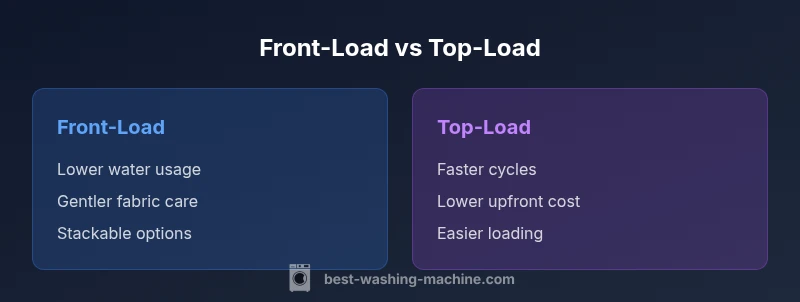
| Water usage | lower water use per cycle with high-efficiency models | higher water use typical of traditional top-loads |
| Energy efficiency | generally high efficiency; strong spin speeds | varies widely by model; newer high-efficiency top-loads exist |
| Price range | often higher upfront cost | often lower upfront cost |
| Best for | space-constrained homes and fabric care enthusiasts | quick loads and easy access; budget-conscious buyers |
What's Good
- Typically higher overall energy and water efficiency in modern front-load models
- Gentler on fabrics due to slower, more controlled tumbling in many front-load designs
- Stackable options save space in small homes or apartments
- Faster spin speeds in front-loads reduce drying time in many setups
Downsides
- Higher upfront cost for many front-load models
- Potential moisture/mold concerns around gaskets if not vented or cleaned regularly
- Longer cycle times on some front-load cycles
- May require more frequent maintenance for seals and door hardware
Front-load washers typically deliver better long-term efficiency and fabric care; top-load washers excel in upfront cost and convenience.
Choose front-load if you want energy savings and gentler washing. Choose top-load if upfront cost and loading convenience matter more, especially in smaller spaces with easy access.
FAQ
What is the primary difference between front-load and top-load washers?
The primary difference lies in drum orientation and washing action: front-loads tumble clothes in a horizontal drum using less water, while top-loads often use an agitator or impeller with higher water levels. This affects efficiency, fabric care, and ergonomics.
Front-loads tumble clothes with less water for efficiency, while top-loads use more water and may be faster for some loads.
Are front-load washers more energy-efficient than top-load washers?
Generally yes, especially among newer models designed for high efficiency. Front-load washers often achieve lower energy and water use per cycle due to efficient tumbling and higher spin speeds.
Usually, front-load washers are more energy-efficient, but check the specific model’s ratings.
Do front-load washers require more maintenance?
Front-load washers can require more attention to gasket cleanliness and venting to prevent mold. Regular cleaning of seals and leaving the door ajar after cycles helps mitigate moisture buildup.
Yes, they may need more gasket cleaning and ventilation.
Can I stack a top-load washer with a dryer?
Top-load washers are generally not stackable with a standard dryer due to drum orientation and loading access. Look for models designed for side-by-side installation or consult a professional for custom configurations.
Usually not stackable; consider side-by-side setups or separate stands.
Which washer is best for large families?
For large families, a high-capacity front-load or top-load with robust cycles and a quick wash option often provides the best balance of capacity and efficiency, depending on space and service access.
Large families may prefer high-capacity front-load or top-load with quick cycles.
What features should I prioritize when choosing which washing machine?
Prioritize load sensing, energy and water efficiency, drum cleanliness features, noise levels, and reliability of service networks. These factors drive long-term satisfaction and maintenance costs.
Look for smart sensing, efficiency, and a good service network.
The Essentials
- Prioritize space: stackable front-load units often win in tight homes
- Evaluate total cost of ownership, not just upfront price
- Look for high-efficiency ratings and moisture control features
- Match your laundry volume to drum capacity for best performance