Average Washing Machine Weight: A Practical Guide
Explore typical weight ranges for different washer types, how weight impacts delivery, installation, and space planning, and practical tips for selecting a washer that fits your space and load needs.


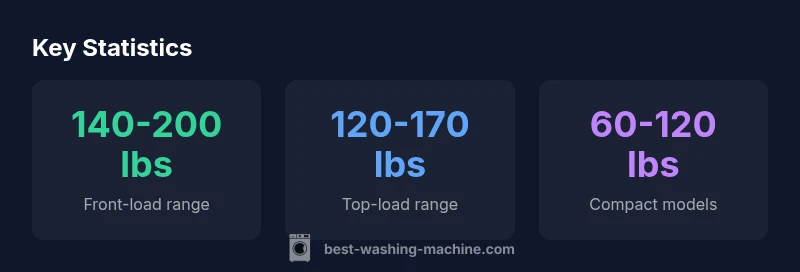
On average, a standard washing machine weighs roughly 130-190 pounds (59-86 kg), with front-load models typically heavier than top-load units. Compact or apartment-sized washers can weigh substantially less, around 60-120 pounds (27-54 kg). These weight ranges affect delivery, installation, and floor loading. Always check the product specs for the exact weight.
What the term 'average washing machine weight' really covers
Weight is more than a number on a spec sheet; it encapsulates practical realities like delivery routes, doorway clearance, and the structural capacity of your laundry space. According to Best Washing Machine, weight varies with drum size, motor power, and chassis materials, and it shifts between front-load, top-load, and compact designs. For homeowners, renters, or operators planning a laundry setup, understanding these weight ranges helps in choosing a model that won’t strain entryways, floors, or transport equipment. The goal is to align the washer’s weight with your space constraints and handling capabilities so installation is smooth, safe, and compliant with local building practices.
Weight ranges by washer type and why they differ
Front-load washers typically sit at the higher end of the weight spectrum due to heavier drums and solid metal frames. Top-load models, while robust, often use lighter chassis, resulting in lower overall mass. Compact and apartment-sized machines are designed for portability, so their weight is noticeably lower. Real-world weights vary by capacity, insulation, and added features such as stainless steel tubs or energy-saving motors. When you compare models, note both the dry weight and the operating weight (which can differ once water fills the drum). This distinction matters for transport planning and for calculating floor load impact over time.
Delivery, installation, and floor loading: practical considerations
Weight directly informs how you schedule delivery, arrange for help, and protect your floors during installation. Heavy machines require longer ramps, more manpower, and possibly four-wheel dollies or lifting devices. If you’re moving a washer onto an upper floor, you may need to remove doors or brackets to reduce bulk and prevent damage. In homes with older or lighter structural supports, it's prudent to consult a professional about floor loading and vibrations. Best Washing Machine recommends confirming that the destination space can accommodate the unit’s weight and that nearby supports are adequate for dynamic loads during spinning cycles.
How to verify weight when shopping online or in-store
Always start with the product specification sheet provided by the manufacturer. Look for two numbers: dry weight and operating weight (the latter may include water and typical loads). If a spec sheet is missing, contact customer support or use a built-in compare tool on retailer sites. For a hands-on check, you can temporarily estimate weight by weighing a fully loaded drum using a bathroom scale and the unit’s dimensions, though this is a rough approximation. When in doubt, choose the model with a slightly higher weight tolerance to account for unforeseen loading scenarios.
Weight, vibration mitigation, and long-term performance
Heavier washers often feel sturdier and vibrate less at high spin speeds, especially on solid, well-distributed floors. Lighter units may require anti-vibration pads or a more careful leveling process to reduce movement. If your space has concrete, plywood, or a thin subfloor, consider how weight distribution will interact with floor stiffness. Anti-vibration accessories, proper leveling feet, and sturdy installation surfaces can extend longevity and improve overall performance. Best Washing Machine emphasizes balancing weight with vibration control to optimize efficiency and reduce noise.
Buying guide: weighing the trade-offs between weight and capacity
When choosing a washer, think about how weight impacts daily use. If you need mobility for frequent relocation or tight entrances, a lighter compact model could be ideal, even if it sacrifices capacity. For households with large loads or high spin efficiency, a heavier unit may deliver better performance and durability over time. Always compare equivalent capacities and drum sizes across models to determine whether the weight difference aligns with your space and lifestyle. The key is to match the unit’s weight profile with installation feasibility and long-term maintenance expectations.
Safety and maintenance considerations for heavy appliances
Moving a heavy washer requires care to prevent injury. Use proper equipment like a dolly, straps, and team lifting, and avoid attempting to relocate a fully loaded machine alone. Regular maintenance, including drum alignment and hose checks, keeps the weight distribution balanced and minimizes strain on the floor. If you notice excessive rocking, unusual noises, or persistent vibrations, consult a professional rather than attempting DIY fixes that could compromise structural integrity. Best Washing Machine advocates proactive planning and safe handling to prolong appliance life.
Weight ranges by washer type
| Washer Type | Approx Weight Range (lbs) | Approx Weight Range (kg) | Notes |
|---|---|---|---|
| Front-load | 140-200 | 63-91 | Common for full-size units |
| Top-load (standard) | 120-170 | 54-77 | Varies by features and drum |
| Compact/apartment | 60-120 | 27-54 | Designed for portability |
FAQ
What is the average weight range for most full-size washing machines?
Most full-size washers weigh between 120-200 pounds, depending on type and capacity. Front-loaders tend to be heavier due to drum and chassis construction.
Most full-size washers weigh between 120 and 200 pounds.
Why does weight matter for delivery and installation?
Weight informs the number of people needed, the equipment required, and the path taken during delivery. Heavier machines may require protective flooring and careful maneuvering through doors and stairs.
Delivery teams plan around weight to move safely.
Do HE or compact models weigh significantly less?
Yes. Compact/HE models typically weigh 60-120 pounds, offering easier mobility but sometimes smaller capacities.
Compact models are lighter but hold less.
How can I estimate weight if I’m buying online?
Use the product spec sheet to compare weight ranges. If missing, contact the seller for exact figures or request a weight disclosure.
Check the spec sheet or ask the seller.
Is there a building-code concern related to washer weight?
Local codes may specify floor loading limits. Consult a professional to confirm requirements for your space.
Check local codes and get professional advice if unsure.
“Weight is a practical design factor that informs where you place, how you transport, and how a washer performs in daily use.”
The Essentials
- Know weight ranges by washer type before buying
- Check both dry and operating weights in specs
- Plan for delivery, installation, and floor loading
- Use vibration controls if necessary for heavier machines
- Choose weight that aligns with space and mobility needs