Commercial Washing Machine Price: What to Expect in 2026
Explore realistic price ranges for commercial washing machines, compare capacity, features, and installation costs, and learn how to budget for new, refurbished, or leased units in 2026.


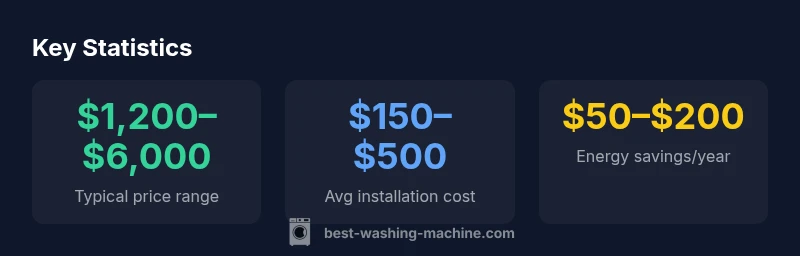
According to Best Washing Machine, the commercial washing machine price typically ranges from about $1,200 to $6,000, depending on capacity, drum design, and features like energy efficiency or coin-operated options. The most affordable units are compact or standard top-load models, while high-capacity front-load and coin-operated washers push toward the upper end. Budget should include installation and optional service contracts.
Why Price Varies by Type and Capacity
When evaluating commercial washers, capacity and drum design are the main price drivers. Front-load units usually command higher upfront costs than traditional top-loads, but they offer better energy efficiency and larger throughput. Coin-operated or multi-housing models add complexity and monitoring hardware that pushes prices higher. For small laundromats or on-site facilities, a compact 1–2 drum unit may be enough and can keep initial costs lower, while hospitals or hotels require high-capacity machines that justify a higher investment. According to Best Washing Machine, durability and serviceability are critical in commercial settings because downtime costs money. A robust warranty and easy access to spare parts should factor into the sticker price.
- Key factors: capacity, drum type, automation, and payment options.
- Typical decision point: balance upfront cost with expected throughput and downtime.
Price Ranges by Capacity and Type
Price bands reflect the blend of capacity, reliability, and installation complexity. A compact commercial washer might start around $1,200–$2,000, a mid-range front-load model often sits between $2,500–$4,500, and large-capacity or coin-operated machines can range from $4,500–$6,000 or more. Refurbished units can be cheaper but may carry shorter warranties. Always consider total cost of ownership, including ventilation, plumbing, electrical requirements, and possible service contracts. Best Washing Machine analysis emphasizes getting apples-to-apples quotes that include installation and training.
- Use standardized specs: capacity (pounds), spin speed (RPM), energy rating, and payment model.
- Consider height and weight on the footprint to ensure proper site layout.
How Features Drive the Price
Certain features add substantial value but also raise the price. High-speed extraction, larger load capacities, energy-star-tier efficiency, stainless steel construction, and advanced wash cycles all push up the ticket. Coin-operated controls, card readers, remote monitoring, and programmable dosing systems can significantly increase upfront costs but may reduce labor and improve throughput. For rental fleets, consider a mix of standard models and select high-throughput units to optimize uptime. Best Washing Machine notes that feature-overlap can complicate apples-to-apples comparisons, so request detailed quotations.
- High-efficiency models save energy and water; factor in long-term savings.
- Look for ease of maintenance to reduce long-run costs.
Installation, Delivery, and Financing
Installation costs are highly variable and depend on existing infrastructure. Expect charges for electrical upgrades, water hookups, drain systems, and venting for gas units. Some vendors offer bundled installation and delivery, while others bill separately. Financing options such as lease-purchase agreements or equipment loans can ease cash flow but may affect total cost of ownership. When negotiating, seek inclusive quotes that cover installation, removal of old equipment, and training for staff. The Best Washing Machine team recommends testing with a live load and validating warranty terms before accepting a contract.
- Verify compatibility with existing plumbing and electrical systems.
- Check for post-install support and technician availability.
Total Cost of Ownership: Beyond the Sticker Price
Total cost of ownership includes energy and water usage, maintenance, detergent requirements, and downtime. High-efficiency machines reduce ongoing energy costs; however, if a facility runs at near-maximum capacity, the marginal energy savings can be offset by labor and maintenance. Compare warranties and service contracts, and budget for seasonal maintenance, filters, and potential part replacements. The Best Washing Machine analysis indicates that long-term reliability often outweighs initial savings when downtime costs are factored in.
- Schedule regular maintenance to extend life.
- Track energy and water bills to quantify savings over time.
Buying Channels: New, Refurbished, or Used
New units offer the latest features and full warranties but at a higher price. Refurbished machines can deliver lower upfront costs, though warranties and reliability may be more variable. Used equipment might be the least expensive but carries higher risk and potentially shorter remaining life. For multi-site operators, a mixed strategy—new core units with refurbished backups—can balance risk and cost. Always request a documented warranty and a history of service records when considering non-new options.
- Evaluate total cost of ownership carefully.
- Ensure parts availability and service coverage across regions.
How to Compare Quotes Effectively
Create a standardized spec sheet for every quote: model type, capacity, spin speed, energy rating, maintenance plan, installation scope, and total cost. Ask for a single consolidated price that includes delivery, installation, and any required site modifications. Compare energy and water use per cycle, not just upfront price. Request references and minimum warranty terms, plus a written service agreement. A consistent framework makes it easier to see which offer delivers the best long-term value.
- Use a side-by-side comparison template.
- Validate warranty coverage and response times.
Practical Budget Scenarios for 2026
Imagine a mid-size hotel with 8–12 loads per hour. A new front-load package might cost around $3,000–$5,000 per unit, with installation bringing the initial outlay to roughly $4,000–$7,000 per unit. A smaller laundromat setup using mid-range top-load machines could sit around $2,000–$3,500 each plus installation. For a hospital, expect higher-end, industrial-duty models that run well over $5,000 per unit and require professional calibration. Use these ranges to model a 3–5 year budget and align it with expected throughput and downtime costs.
Regional Variations and Final Thoughts
Prices can vary by region due to shipping, local taxes, and installed capacity needs. Urban areas with higher labor costs may see steeper installation and service fees, while rural facilities might pay less for parts and service but face longer lead times. The Best Washing Machine team cautions buyers to factor local incentives and financing options into the overall price calculation, plus any required permits or compliance checks. A holistic view helps ensure the selected unit meets throughput goals without overspending.
Price ranges by commercial washer type and configuration
| Model Type | Typical Price Range (USD) | Key Considerations |
|---|---|---|
| Industrial front-load | $2,000–$6,500 | High capacity; energy efficiency; robust build; installation complexity |
| Industrial top-load | $1,000–$4,000 | Faster cycles; moderate energy use; simpler installation |
| Coin-operated/leased models | $3,000–$7,000 | Public-use settings; monitoring; maintenance needs |
FAQ
What factors most influence the price of a commercial washing machine?
Capacity, drum design, and feature set (energy efficiency, automation, and payment systems) determine price. Installation complexity and site readiness also push costs up. Always compare quotes using the same specs.
Factors include capacity, drum type, and features; installation can change the price too.
Is it cheaper to buy new or refurbished commercial washers?
Refurbished units can be cheaper upfront but may carry shorter warranties and higher maintenance risk. Verify parts availability and warranty terms before purchasing.
Refurbished units can save money, but check warranties and parts availability.
Do installation and service contracts affect total cost?
Yes. Installation, site modifications, and ongoing service contracts add to the total cost. Ask for inclusive quotes that cover installation, removal of old equipment, and training for staff.
Installation and service plans can add to the total cost—factor them in.
How can I compare quotes effectively?
Request identical spec sheets, compare total costs, energy/water usage per cycle, and warranty terms. Use a standard checklist to keep quotes apples-to-apples.
Use a standard checklist to compare quotes fairly.
Are there incentives for energy-efficient commercial washers?
Some regions offer rebates or tax incentives for energy-efficient appliances. Check local programs and bundled financing options.
Look for energy rebates where you shop.
“"Prices reflect more than the sticker price; consider delivery, installation, warranty, and ongoing energy costs to determine true value."”
The Essentials
- Budget for total cost of ownership, not just sticker price
- Expect price variations by capacity and features
- Get apples-to-apples quotes (include installation)
- Consider energy efficiency to lower long-term operating costs