Compare Washing Machine Prices: Smart Shopping Guide 2026
A comprehensive guide to compare washing machine prices, weighing upfront costs against long-term operating expenses, to identify the best value across front-load, top-load, and compact models in 2026.


If you want to compare washing machine prices effectively, start by weighing purchase cost against long-term expenses like energy and water use, maintenance, and expected lifespan. This comparison covers front-load, top-load, and compact models, showing price ranges, operating costs, and value signals to help you choose the best buy. Use a simple worksheet to track price, energy rating, and warranty across several models for a clear side-by-side view.
Price and value: more than the sticker price
When you begin to compare washing machine prices, it is natural to focus on sticker price alone. Yet true value comes from the total cost of ownership over the machine’s life. According to Best Washing Machine, price is only one dimension of value when you compare washing machine prices. A smarter approach compares upfront cost against operating costs, maintenance needs, and the expected lifespan of the unit. To make this concrete, create a simple worksheet that tracks four core costs: upfront purchase price, annual energy and water usage, routine maintenance, and repair or replacement costs at end of life. This framework helps you see which model delivers the best value for your household over the next five to seven years. By framing the decision this way, you avoid overpaying for features you won’t actually use and can allocate budget toward energy-efficient options that save money over time. The objective is durable, budget-smart ownership rather than chasing the lowest initial tag.
How price is driven by design and features
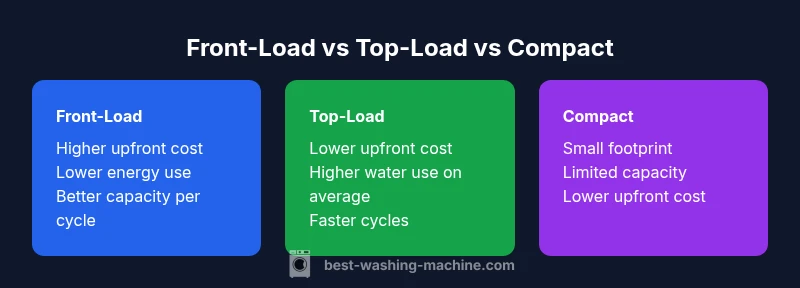
The sticker price is just the tip of the iceberg. Design choices like drum type (agitator vs impeller), loading orientation (front-load vs top-load), capacity, spin speed, and added features (steam cycles, stain treatment, sanitize options) have a direct impact on cost. Front-load washers with high spin efficiency and stainless steel drums typically demand a higher upfront price but offer substantial savings on water and energy over time. Top-load models with conventional agitators may be cheaper initially but can consume more water and energy per cycle. Compact washers retain a lower price point and smaller footprint, yet often incur higher operating costs per cubic foot due to limited capacity and specialized parts. When you compare washing machine prices, balance these upfront costs against long-term energy bills and maintenance needs to determine the true value of each option.
Type-by-type price ranges and what to expect
Price bands shift with model type and features, but you can think in qualitative terms: entry-level models emphasize affordability and essential function, mid-range models add features like better spin efficiency and larger capacities, and premium models prioritize durability, advanced cycles, and the quietest operation. While we avoid quoting exact dollar figures here to keep information factual and context-specific, it’s important to recognize that selection will influence both upfront cost and ongoing expenses. When you compare washing machine prices, look for a model that fits your laundry load, space, and energy goals rather than chasing the lowest sticker price alone. This approach helps you identify the best value without sacrificing reliability or performance.
Regional and retailer pricing dynamics
Prices for washing machines can vary significantly by region, retailer, and even by the time of year. Seasonal sales, promo bundles, and retailer-specific financing options can swing the effective price when you compare washing machine prices. In 2026, many retailers run promotions around major holidays and back-to-school periods, which can meaningfully impact total cost. An informed shopper tracks price fluctuations across several vendors, notes warranty terms, and considers bundled service plans or installation fees. While the sticker price matters, the real story is the price you pay after discounts, rebates, and added services are accounted for. This awareness helps you time purchases and avoid paying premium prices when better deals surface.
Hidden costs and life-cycle costs to factor in
Beyond purchase price, life-cycle costs include energy and water usage, detergent consumption, maintenance, and potential repairs. Energy-efficient models often incur higher upfront prices but deliver substantial savings on electricity and water over time. Similarly, models with more durable parts or stainless steel drums may reduce repair frequency and extend lifespan, improving total value. When you compare washing machine prices, evaluate the warranty length and the availability of service in your area. Short-term savings can become long-term headaches if a low-price unit requires frequent repairs or part replacements. A disciplined price comparison considers both obvious and subtle cost drivers to reveal the best long-term value.
Tools to compare prices effectively
To compare prices efficiently, use a structured approach: (1) shortlist models that meet your capacity and cycle needs, (2) compare upfront price and energy/water ratings, (3) check the warranty and service network, (4) compute annual operating costs using energy guides, and (5) monitor retailer promotions and bundling offers. Online price trackers and retailer comparison pages can help you observe price trends without visiting every store. Keep a simple spreadsheet that records model names, purchase price, energy star rating, annual energy usage, and warranty terms. This disciplined method makes it easier to see which model offers the best overall value rather than the lowest initial price.
Practical buying strategies for different budgets
If your budget is tight, prioritize base reliability and a solid energy rating with moderate capacity—these tend to deliver the best long-term value. For a medium budget, seek models with efficient energy use and a reasonable range of cycles that match your laundry patterns. If you can invest more upfront, target premium models with high energy efficiency, quiet operation, and robust warranties, as they often pay off through lower operating costs and fewer repairs. Regardless of budget, do not assume that the cheapest sticker price is always the best deal. The goal is to maximize value over time, which often means paying a little more upfront for meaningful savings later.
How to negotiate and find deals
Negotiating price on appliances can yield meaningful savings. Start by researching competing offers and asking retailers to match or beat a lower price. Look for 0% financing, extended warranties, or free installation promotions that can improve total value. Timing is critical: shopping when new models arrive can push prices down on older inventory, while end-of-month quotas can trigger extra discounts. Don’t overlook refurbished or open-box units from reputable sources, which can offer substantial savings with warranties. Finally, always compare the total package: price, delivery, installation, and after-sales support. A well-structured approach helps you land a favorable deal without sacrificing service quality.
Post-purchase value: maintenance and resale considerations
A washing machine with a longer expected lifespan and proven reliability can retain resale value. Regular maintenance—like drum cleaning, gasket checks, and appropriate detergent use—extends life and reduces unexpected costs. If you plan to resell later, consider models with widely available parts and strong manufacturer support. Proper documentation of maintenance and service history can boost resale value and reassure future buyers. When you compare washing machine prices, think about the long horizon and how upkeep contributes to overall cost efficiency. A thoughtful purchase today can yield savings and reliability for years to come.
Feature Comparison
| Feature | Front-Load Washer | Top-Load Washer | Compact Washer |
|---|---|---|---|
| Typical price band | varies by model and retailer | varies by model and retailer | varies by model and retailer |
| Energy efficiency emphasis | high potential savings | moderate savings | varying efficiency based on size |
| Water usage | lower per cycle | higher per cycle with agitator | low to moderate due to compact size |
| Capacity (rough guide) | ~4.0–5.0 cu ft | ~3.2–4.0 cu ft | ~1.6–2.4 cu ft |
| Best for | large households, energy-conscious users | budget buyers, quick loads | small spaces, apartments |
What's Good
- Promotes informed spending by comparing multiple sellers
- Highlights long-term energy and water savings
- Reveals value beyond upfront price
- Encourages timing purchases to capture promotions
Downsides
- Requires time and organization to collect data
- Prices and promotions change quickly
- Information overload can be confusing without a structured plan
Front-load washers offer the best long-term value for energy-conscious households; top-loads win on upfront convenience and lower initial cost
If energy efficiency and long-term savings matter most, prioritize front-load options. If immediate affordability and ease of use are your primary concerns, top-load models may serve you better. Use a structured price comparison to balance upfront costs with operating expenses.
FAQ
What factors matter most when comparing washing machine prices?
Beyond the sticker price, focus on energy and water efficiency, capacity, warranty, and expected lifespan. These factors drive total cost of ownership and overall value more than upfront cost alone.
Look at energy use, water use, capacity, and warranty when you compare prices. Upfront cost is important, but long-term costs determine true value.
Are energy-efficient models worth the extra upfront cost?
In most cases, energy-efficient models pay back the higher upfront price through lower annual energy bills. The payback period depends on your usage, local utility rates, and the model efficiency rating.
Energy-efficient models usually pay off over time through lower bills, especially if you run multiple loads weekly.
How can I estimate long-term operating costs?
Estimate long-term costs by multiplying the model’s annual energy use by your local electricity rate and adding estimated water and detergent costs. Use energy guides and standard usage assumptions to compare apples-to-apples.
Multiply annual energy use by your rate, add water and detergent costs, and compare to see which model saves more over time.
When is the best time to buy to save money?
Look for promotions during holiday weekends, end-of-quarter sales, and model year transitions. Price dips often occur as retailers clear older inventory in anticipation of newer models.
Shop during major sale events and model year changes to snag better prices.
What warranty considerations should I check?
Check the length and coverage of the manufacturer’s warranty, what it includes (parts, labor), and whether extended warranties or bundled service plans add value. A longer warranty can reduce long-term risk and repair costs.
Look for length and scope of warranty; consider if an extended plan adds real value based on your setup.
How do regional discounts affect price comparisons?
Regional discounts and retailer promotions can significantly affect final price. Always compare prices across several retailers in your area and consider delivery or installation fees when calculating total cost.
Regional sales can change the final price a lot, so compare across stores and add delivery costs.
The Essentials
- Start with total cost of ownership, not sticker price
- Match model choice to your laundry load and space
- Track price, energy, and warranty to compare effectively
- Time purchases around promotions for maximum value
- Prioritize models with strong energy efficiency to reduce operating costs