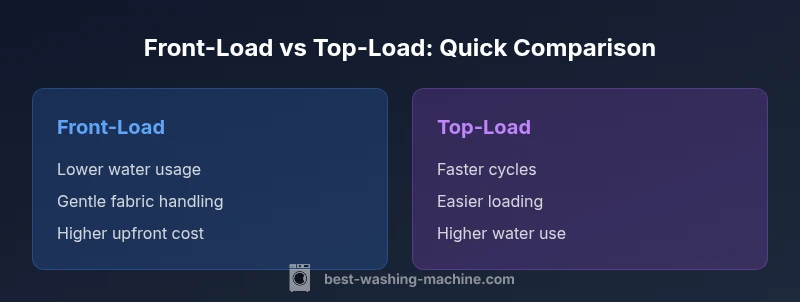
Front-Load vs Top-Load Washers: Key Differences
Compare front-load and top-load washing machines to decide which suits your space, budget, and laundry needs. Explore differences in efficiency, fabric care, cycle times, and long-term costs.


Front-load vs. top-load washers differ mainly in accessibility, efficiency, and fabric care. Front-load models typically use less water and energy and spin faster for quicker drying, but cost more upfront and require regular gasket maintenance. Top-load machines are usually cheaper upfront, offer faster cycles, and are easier to load, yet consume more water and energy and can be tougher on delicate fabrics.
What the difference between washing machine front load and top load means for your home
Choosing between front-load and top-load washers is not just about where the door opens. The difference between washing machine front load and top load affects everyday usability, energy and water consumption, fabric care, and long-term maintenance. For homeowners, renters, and even small-business laundries, understanding which design aligns with space, budget, and laundry habits is essential. In this article we unpack the core distinctions and set up a framework for evaluating models. We'll reference common scenarios, common questions, and practical tips to help you decide without guesswork. The difference between washing machine front load and top load often boils down to loading ease, cycle structure, and how you manage upkeep. Throughout, we’ll use clear criteria so you can map your priorities to tangible outcomes. By the end, you’ll be prepared to compare likely candidates side by side and translate those differences into real-life savings and comfort. The Best Washing Machine team emphasizes that a structured approach yields the best fit for any home.
Loading Mechanisms: Front-Load vs Top-Load
The two main loading styles set the stage for how laundry is treated inside the drum. Front-load washers seal the drum with a door that points outward, relying on impellers or minimal agitation to tumble clothes. Top-load washers open from the top and typically use a central agitator, or in some models, a gentle impeller that creates non-tumbling motion. With a front-load design, clothes experience gravity-driven tumbling, which enables higher extraction during the spin cycle. Top-load designs often deliver faster wash times and easier loading, especially for households with limited bending. The practical effect of these loading mechanisms is felt in performance, fabric care, and how you schedule laundry tasks.
Water and Energy Efficiency: What to Expect
Across the market, the difference between washing machine front load and top load shows up in water and energy use. Front-load washers generally optimize water flow through a horizontal drum and a sealed door, which reduces wasted water per cycle. They also tend to use less energy overall when paired with modern heating and insulation requirements. Top-load models can be faster to wash and often inch ahead on cycle accessibility, but they typically use more water per load and can draw more energy for heat or agitation. When evaluating options, focus on the energy star ratings, but remember that real-world efficiency depends on load size, settings, and maintenance.
Cleaning Power and Cycle Effectiveness
One key distinction in the difference between washing machine front load and top load is how each handles stains and fabrics during a cycle. Front-load washers rely on tumbling action and a longer wash time to lift dirt, which many users find gentler on fabrics and better for large items like comforters. Top-load machines usually deliver robust agitation that can be very effective for hardy fabrics and heavily soiled items. In practice, this means front-load washers excel at delicate garments and bulkier loads with careful care, while top-load models shine when you need a quick, robust clean without pre-sorting. choosing between them should reflect your typical laundry mix and tolerance for cycle duration.
Fabric Care and Gentle Handling
Fabric care is a central factor in the difference between washing machine front load and top load. Front-load washers minimize friction by tumbling clothes in a mostly vertical orientation, which helps maintain fabric integrity over time and generally reduces pilling. They also extract more water in the spin, which speeds up drying and can extend the life of fabrics that wear quickly when exposed to heat. Top-load machines with agitators can be tougher on delicates and knitwear if washed regularly on heavy cycles, though newer models with high-efficiency impellers and gentler cycles can soften the impact. Tailor your choice to the types of fabrics your household washes most often.
Space, Installation, and Accessibility
Another practical aspect in the difference between washing machine front load and top load is space and accessibility. Front-load units are typically taller and sit closer to the ground, which can require a pedestal or a deeper set location. This arrangement is excellent for large-capacity drums but may be less convenient for people with back or knee issues. Top-load machines are often shorter and easier to load, especially if you’re tall or prefer lighter bending. They may also fit more easily into tight laundry corners. When planning installation, measure doorway widths, cabinet space, and clearance to ensure optimal fit and accessibility.
Maintenance and Longevity
Maintenance is a recurring theme when discussing the difference between washing machine front load and top load. Front-load washers require regular gasket cleaning to prevent mold or mildew growth around the door and seals, and periodic drum cleaning to maintain performance. The door gasket and drum surface are critical to long-term reliability, so following a routine cleaning schedule is wise. Top-load washers generally have simpler access for certain filters and hoses, but their agitator-based designs can accumulate lint and debris in crevices. Both styles benefit from using the right detergent, avoiding overloading, and performing occasional maintenance washes.
Noise, Vibration, and User Experience
Noise and vibration are practical considerations in choosing between front-load and top-load. Front-load machines often produce noticeable vibration during high-speed spins, especially if they are not properly leveled or supported, but newer models include anti-vibration feet and better drum balancing. Top-load washers tend to run more quietly during the wash phase, but the agitator can create more audible movement during cycles. If you have an open-plan living space or a shared wall with bedrooms, you may prioritize models with quieter operation and better vibration dampening.
Long-Term Costs and Warranty Considerations
In evaluating the difference between washing machine front load and top load over time, consider the total cost of ownership. Upfront price is only part of the picture; the long-term maintenance costs, detergent consumption, and potential repairs influence the total expenditure. Front-load models often last many years when properly maintained, but routine gasket cleaning and occasional drum care are part of the upkeep. Top-load machines, while potentially cheaper upfront, may incur higher water and energy costs across their lifetime. Review warranty terms for seals, motors, and transmission components to ensure you have adequate protection against wear.
Price, Value, and Total Cost of Ownership
The price trajectory for both styles reflects upfront costs, operating expenses, and reliability. Front-load washers typically command a higher initial price but offer lower ongoing water and energy bills, which can balance the investment over several years. Top-load washers generally come with lower upfront costs and faster cycle times, but higher water usage and energy consumption can offset savings. When assessing value, calculate how often you wash, average load size, and how long you plan to keep the machine. A model that fits your daily routine and maintenance willingness often delivers the best value.
Use-Case Scenarios: Where Each Style Shines
If you manage a busy household with frequent large loads, a front-load washer can deliver efficiency and fabric care benefits that pay off over time, especially for families that wash many towels and heavy garments. For renters or budget-conscious buyers who want quick cycles and easier loading, a top-load washer may be more appealing. In settings where space is tight or accessibility is a priority, evaluate the door swing, height, and installation flexibility. A careful mapping of your typical laundry makes and space constraints will highlight which style best fits your workflow.
How to Decide: Quick Step-by-Step Framework
To decide between front-load and top-load washers, follow these steps: 1) List your laundry types (delicates, heavy-duty, bedding). 2) Estimate your weekly load volume and cycle speed preferences. 3) Check space constraints, doorway widths, and whether stacking is needed. 4) Compare water and energy considerations with local utility costs. 5) Review maintenance needs and gasket care commitments. 6) Read warranty terms and expected lifespans. By aligning your priorities with these steps, you’ll arrive at a clear choice that balances efficiency, usability, and cost.
Common Myths Debunked
Myth: Front-load washers always use less water. Reality: While many front-load models are designed to be water-efficient, actual usage depends on the cycle selected and load size. Myth: Top-load washers are slower and less effective. Reality: Some top-load models offer fast cycles that handle regular loads efficiently, but heavy-duty or bulky items may take longer. Myth: Front-load washers are maintenance nightmares. Reality: With regular gasket cleaning and proper venting, maintenance can be straightforward. Myth: One style is universally better. Reality: The best choice depends on your priorities, space, and laundry habits. These distinctions help demystify the decision process.
Comparison
| Feature | Front-load Washer | Top-load Washer |
|---|---|---|
| Water Usage | lower per cycle | higher per cycle |
| Energy Efficiency | better overall efficiency | good efficiency |
| Price Range | higher upfront cost | lower upfront cost |
| Best For | efficiency-focused households | budget-conscious buyers |
| Fabric Care | gentler on fabrics | more aggressive on some loads |
What's Good
- Lower operating costs over time for many models
- Gentler fabric handling and higher spin speeds
- Better performance with bulky loads
- Potentially longer service life with proper maintenance
Downsides
- Higher upfront cost
- Gasket maintenance risk (mold/mMildew) if neglected
- Longer wash cycles on some settings
- Luggage weight and stacking considerations for installation
Front-load is generally better for efficiency and fabric care; top-load is better for upfront cost and loading ease
Choose front-load if you value water/energy savings and gentle handling. Choose top-load if you prioritize lower initial cost and faster loading.
FAQ
What is the main difference between front-load and top-load washers?
The main difference lies in loading orientation and how the drum operates. Front-load washers tumble clothes with minimal agitation and seal inside a door-driven drum, while top-load washers use an agitator or impeller and load from the top. This affects efficiency, fabric care, and cycle structure.
The main difference is how you load and how the drum moves. Front-load tumbles with a sealed door, top-load loads from the top and uses an agitator or impeller.
Are front-load washers more energy efficient than top-load washers?
Generally yes, front-load models tend to use less water and energy per cycle due to their design and high spin efficiency. However, actual efficiency depends on cycle selection and maintenance practices.
Front-load washers typically use less water and energy, but it depends on how you use them and keep them maintained.
Do top-load washers use more water than front-load washers?
In many cases, top-load washers use more water per load, especially for regular cycles. Some high-efficiency top-load models reduce water usage, but overall front-load designs stay ahead on water efficiency.
Top-load models often use more water per cycle, though high-efficiency versions exist.
Is a pedestal required for front-load washers?
Many users place a pedestal under front-load washers to raise the height for easier loading and to provide storage space. Pedestals are not required, but they can improve accessibility and ergonomics.
Pedestals aren’t required, but they can make loading easier and add storage.
Which washer is better for families with delicate fabrics?
Front-load washers typically offer gentler fabric handling due to tumbling and slower agitation. They also often use specialized cycles designed for delicates. Top-load models can be gentler in newer designs, but test cycles to ensure fabric care meets your needs.
Front-loads usually handle delicates well, but check cycles on specific models before buying.
Which option tends to last longer or be more reliable?
Reliability varies by brand and model rather than by loading style alone. Proper maintenance, regular cleaning, and following manufacturer recommendations typically extend the life of either design.
Durability depends on the model and maintenance, not just front- or top-load design.
The Essentials
- Assess priorities before buying: efficiency vs budget
- Check space constraints and door clearance
- Plan gasket maintenance and cleaning schedule
- Consider your typical laundry mix and cycle needs