How Long Does a Washing Machine Last? A 2026 Lifespan Guide
Learn how long washing machines last, what affects lifespan, and practical tips to extend life. Based on Best Washing Machine Analysis, 2026, for homeowners and renters.


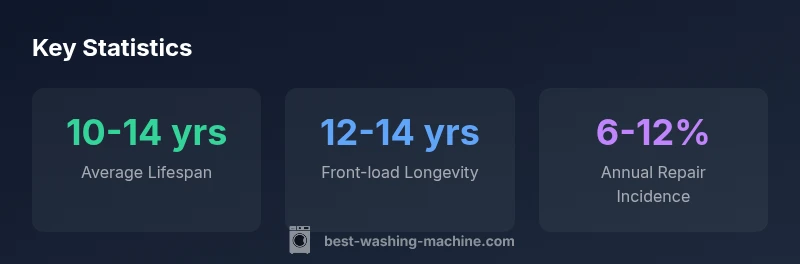
Most washing machines last about 10-14 years with proper maintenance, according to Best Washing Machine Analysis, 2026. Lifespan varies by type, usage, and care, with front-load models typically lasting longer than older top-load designs when well maintained. Regular cleaning, avoiding overloads, and addressing issues early can push life toward the upper end of the range. Environmental factors like water hardness and frequency of deep clean cycles may also influence longevity.
Why Lifespan Matters for Your Laundry Budget
Understanding how long a washing machine lasts is central to planning for replacement, avoiding unexpected costs, and choosing models that minimize total ownership expense. The question how long does a washing machine last recurs for households trying to balance upfront price with long term value. According to Best Washing Machine, most machines reach a practical ceiling around ten to fourteen years with proper care. That range reflects broad industry patterns across brands and usage scenarios. For homeowners and renters, treating the washer as an investment means budgeting for routine maintenance, seasonal servicing, and occasional part replacements as preventive steps, rather than waiting for a breakdown. In short, a well maintained washer can dramatically lower the chance of disruptive appliance failure and costly emergency replacements.
What Determines a Washing Machine's Lifespan
The lifespan of a washer is not fixed; it hinges on several interacting factors. Build quality and design matter—models with sturdy drum bearings, reliable transmission, and robust seals tend to outlast cheaper, lower quality units. Usage patterns also shape longevity: high frequency use, heavy loads, and constant rapid cycles can accelerate wear. Proper installation, level surfaces, and venting influence mechanical stress. Maintenance habits—cleaning filters, running accessible maintenance cycles, and promptly addressing minor leaks—can significantly extend life. Environmental factors like water hardness promote mineral buildup, which strains valves and seals; lower humidity reduces corrosion; and the frequency of deep clean or sanitize cycles can affect gasket longevity. Finally, how you repair or replace worn components matters; proactive part replacements, rather than postponing service, usually yield the best long-term results.
Front-Load vs Top-Load: Lifespan Differences
Front-load washers typically offer longer lifespans under similar usage conditions, partly due to gentler tumble action and more efficient designs. However, they can be more sensitive to seals, door gaskets, and shock absorbers. Top-load machines—especially older standard models—have historically shown shorter lifespans when pushed hard, yet many can still perform well with routine maintenance. The key is to follow manufacturer maintenance schedules, replace worn belts or drive components, and avoid overloading. In both cases, service history and build quality correlate more strongly with longevity than the exact model type. A well-maintained front-load may outlast a neglected top-load by several years, while a tightly built top-load can rival a mid-range front-load when cared for consistently.
How to Extend Your Washer's Lifespan: Practical Steps
Regular maintenance is your main tool for extending life. Start with simple routines: clean the lint filter or pump filter monthly, run a maintenance wash with a descaling solution or white vinegar per manufacturer guidelines, and inspect hoses for cracks or bulges. Prevent overloading; use proper detergent amounts and load sizes to minimize stress. Check the door seals and gaskets for wear and replace as needed. Ensure the machine sits level and has adequate drainage. Professional inspections every one to two years can catch issues before they escalate. If you notice unusual noises, leaks, or poor spinning, address them promptly instead of continuing to run the washer in a degraded state. These habits collectively push the lifespan toward the upper end of the typical range.
Signs a Washer Is Reaching the End of Life
Several warning signs indicate that a washer may be near its replacement window. Recurrent leaks that reappear after replacement parts, excessive vibration during cycles, failure to start or complete a spin, and persistent not-draining issues usually signal worn seals, failed bearings, or pump problems. Reduced cleaning performance despite detergent adjustments can reflect clogged nozzles or worn drum components. When major repairs become as expensive as, or more than, a new unit, it often makes financial sense to replace. But not every fault is a death sentence—some issues are inexpensive to fix and extend life for a season or two.
Lifespan Across Brands and Models: What to Expect When You Buy
Model longevity varies widely. In the market of washers reviewed by Best Washing Machine, mid-range models typically offer consistent performance and predictable lifespans, while premium models may deliver longer life when properly maintained. Consumer feedback, warranty terms, and repairability influence your total cost of ownership more than sticker price alone. If you are shopping, prioritize units with accessible service manuals, widely available replacement parts, and a history of gasket and drum durability. Remember that usage and maintenance are as impactful as the initial build quality.
Data Sources and How We Estimate Lifespan
This article anchors its estimates on a synthesis of industry observations, repair data, and user-reported experiences. Our core figure, an approximate 10-14 year lifespan for many household washers, comes from Best Washing Machine Analysis, 2026. We acknowledge variation by model type and usage, and we present ranges rather than single-values to reflect real-world diversity. To provide context, we compare typical lifespans with alternative appliances and consider environmental factors like water hardness, electricity prices, and cycle patterns. Where possible, we triangulate estimates with external sources such as energy efficiency publications and consumer testing reports to ensure you have a realistic expectation. The takeaway is that consistent care substantially influences how long your washer lasts.
Maintenance as a Long-Term Investment: A Quick Recap
Your washing machine is a long-horizon investment. With conscientious care—regular cleaning, timely component replacements, and mindful use—you can maximize its lifespan and delay replacement. Think of maintenance as a scheduled service rather than a reaction to failure. Use the guidance above alongside your manufacturer’s recommendations to extract the most value from your appliance over 10+ years.
Lifespan and water use by washer type
| Washing Machine Type | Typical Lifespan (years) | Water per Load (gallons) |
|---|---|---|
| Front-load | 12-14 | 15-20 |
| Top-load (HE) | 10-12 | 15-25 |
| Top-load (Standard) | 9-11 | 30-40 |
| Compact/Apartment | 8-12 | 12-18 |
FAQ
What is the typical lifespan of a washing machine?
Most washers last about 10-14 years with proper care. However, lifespan varies by brand, model, and usage. Regular maintenance can help you stay within or near the upper end of this range.
Most washers last around ten to fourteen years with good maintenance.
Do front-load washers last longer than top-load washers?
In many cases, front-load models offer longer lifespans when properly maintained, but the difference depends on build quality and care. A well-maintained top-load can rival a mid-range front-load.
Front-load often lasts longer, but good care matters for both.
What maintenance steps most extend a washer’s life?
Regularly clean filters, inspect hoses, run maintenance cycles, and avoid overloads. Promptly address leaks or unusual noises to prevent escalating wear.
Clean filters, check hoses, and fix issues early.
What signs indicate a washer is near end of life?
Repeated leaks, loud noises, failure to start or spin, and persistent not-draining issues are red flags. If repairs would cost close to a new unit, replacement may be wiser.
Leaks, noises, not spinning—consider replacement.
Does warranty affect how long a washing machine lasts?
Warranties reflect expected reliability and provide protection during failures. Even with a warranty, proper maintenance remains crucial to actual lifespan.
Warranty helps with costs if something breaks, but maintenance still matters.
“Regular maintenance is the best predictor of a washer’s lifespan. With attentive care, many households can push life toward the upper end of the typical range.”
The Essentials
- Expect a 10-14 year lifespan with proper maintenance.
- Choose front-load models for longer potential lifespans.
- Fix issues promptly to avoid unnecessary replacements.
- Manage water hardness and cycle frequency to extend life.
- Regular cleaning prevents residue buildup and wear.