How Much Is a Mini Washing Machine? A 2026 Price Guide
Discover how much mini washing machines cost in 2026, with price ranges by type, energy use, and features. Learn where to buy, value trade-offs, and tips to maximize every dollar from Best Washing Machine.


Price Landscape for Mini Washing Machines
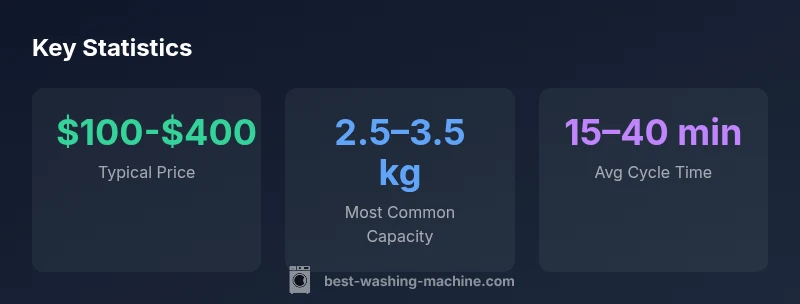
For anyone asking how much is mini washing machine, the short answer is that price bands reflect space-saving design, drum capacity, and energy efficiency. Mini washers come in several flavors: portable countertop units, under-counter compact models, and small freestanding machines. According to Best Washing Machine analysis, 2026 data typically puts the price range between $100 and $400 for most basic to mid-range units. If you seek premium compact front-load operation with high energy efficiency and quiet performance, expect prices closer to $500-$700 in some cases. The majority of shoppers will find solid value in the $150-$350 range, which balances capacity with features like multiple wash programs, faster spin speeds, and digital controls. Price is not the only factor; shipping costs, installation requirements, and warranty terms can swing the total ownership cost by tens of dollars per year. For renters and students, portability often matters more than maximum drum size, so light weight and compact dimensions are prime selling points. If you plan to wash bulky items rarely, a compact unit with a small drum may suffice; for frequent full loads, you might prefer a slightly larger model that keeps energy consumption reasonable while delivering reliable results. In all cases, compare price-per-load and total cost of ownership rather than upfront price alone. This approach ensures you’re not overpaying for marginal efficiency gains on models you’ll use infrequently.
Price Factors That Move the Price
Price is a function of several interrelated factors. Drum capacity and physical size massively influence cost, since larger mini models require sturdier components and more materials. Load type matters too; front-load mini machines often cost more than top-load counterparts due to design complexity and sound insulation. Energy efficiency matters; models with better energy ratings and heat-dissipation features can carry a premium but save money over time. Brand and warranty length also move the price needle, as reputable brands typically charge more but offer longer coverage. Finally, the number of wash programs, specialty cycles (delicates, quick wash), and smart features (digital controls, app connectivity) can add to the sticker price. According to industry data, buyers should weigh upfront price against long-term operating costs to determine true value.
Price Ranges by Type and Use Case
Portable countertop mini washers are the most budget-friendly, typically in the lower end of the range. Under-counter compact models that fit small cabinets tend to sit in the middle, offering better stability and more cycle options without a huge footprint. High-end compact front-load units push toward the upper end of the spectrum, delivering stronger spin performance, higher energy efficiency, and often louder or quieter operation depending on design. For households that prioritize space and energy savings, investing in a more capable compact can pay off over time through lower water and electricity use. When choosing, match the type to your space, typical load sizes, and energy goals rather than chasing the absolute cheapest option.
Where to Buy, Warranties, and Returns
Where you buy a mini washing machine matters as much as the model itself. Big-box retailers, dedicated appliance stores, and online marketplaces each offer different price points, shipping options, and return windows. Read the warranty carefully; most mini washers include at least a one-year warranty, with some premium models offering longer coverage. If you’re shopping online, verify the seller’s reputation and check for user reviews about reliability and support. In some cases, refurbished or open-box units can represent excellent value, provided the warranty is solid and the unit comes with a return policy. For many buyers, a local retailer can provide in-person demonstrations and immediate service if needed.
Ownership Costs Beyond the Sticker Price
Total cost of ownership includes energy consumption, water usage, detergent, and maintenance. Mini washers typically use less water per load than traditional full-size machines, but cycles vary. Over time, the energy cost difference between a basic and a high-efficiency model can be meaningful, especially for households that wash several loads per week. Regular maintenance—descaling, gasket checks, and timely parts replacement—prevents expensive breakdowns and extends lifespan. Budget for occasional service or replacement hoses, which can avoid water damage and costly repairs.
Quick Buying Tips for 2026
- Prioritize energy efficiency and compact dimensions that fit your space.
- Compare price-per-load, not just upfront price.
- Look for models with at least a one-year warranty and accessible service.
- Check for reputable brands with readily available replacement parts.
- Consider whether you need portable mobility or a built-in installation, as this changes cost and installation time.
- Read user reviews to gauge long-term reliability and noise levels across different cycles.