How Much Is a Small Washing Machine? A Practical Guide
This guide breaks down compact washer prices, capacity ranges, and features that drive cost. Learn how to choose a space-saving model that fits your budget and laundry needs.


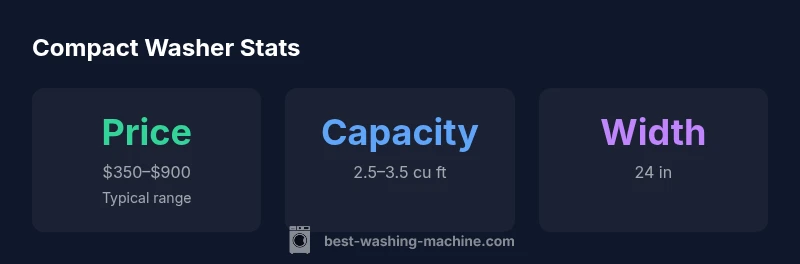
A compact washing machine typically costs between $350 and $900, depending on capacity, energy efficiency, and features. Most units offer 2.5–3.5 cubic feet of space and fit under counters or in small laundry areas. For homeowners, mid-range models balance performance and value; premium compact machines can exceed $800, while basic units may be under $450.
What "small" means in washing machines
In the context of laundry equipment, a "small" or compact washing machine typically refers to units that fit into narrow spaces and offer around 2.5–3.5 cubic feet of capacity. Widths commonly hover around 24 inches, while depths and heights vary by model. This combination is designed for apartments, tight utility closets, and under-counter installations. When evaluating size, measure your space precisely and consider door clearance, venting, and nearby appliances. The Best Washing Machine team emphasizes that the best compact models balance footprint with cleaning performance, so you don’t trade space for subpar results. For households with frequent loads of towels or bedding, capacity matters more than shiny spec sheets, but for daily wear and compact apartments, a well-sized unit will handle most loads efficiently.
Brand note: According to Best Washing Machine, the right compact choice combines footprint, effective agitation or impeller design, and reliable cycles to deliver clean results without overhauling your space.
Price ranges and cost drivers
Prices for compact or small washing machines vary widely, driven by capacity, efficiency, spin speed, and added features. A typical compact washer costs roughly $350–$900 new, with mid-range models around $500–$700 offering a good balance of performance and value. Premium compact machines—especially those with high spin speeds, faster cycles, or a built-in heater—can approach or exceed $800, while basic under-$450 units cover entry level needs. Best Washing Machine analysis shows that the most influential cost drivers are capacity (larger compact tubs), energy performance (HE vs non-HE), noise reduction technologies, and load-sensing features. If you’re replacing an older unit, you may also see cost differences tied to installation requirements or added warranties. Consider not only the sticker price but also ongoing operating costs; a slightly more expensive Energy Star model can save money over time through lower water and electricity use. For renters and homeowners, the right price range will depend on your typical laundry load, space constraints, and how often you run cycles.
Size, capacity, and space fit
Compact washers typically measure around 23–24 inches wide and stand around 33–38 inches tall, with depths commonly under 28 inches. This footprint fits many under-counter spaces, apartment closets, and laundry alcoves, but you should verify clearance around the door, vents, and sockets. Capacity around 2.5–3.5 cubic feet suits most couples and small households; larger loads may require a standard 4.0–4.5 cu ft full-size unit. If you plan to stack with a dryer, ensure the pair is rated for stacking and check the weight rating and venting requirements. Weight distribution and vibration control matter on tighter installs, so look for anti-vibration features and solid transit packaging. When you shop, take precise measurements of the entryway, doorway width, and interior clearance to avoid a mismatched unit arriving and needing a return.
Energy and water efficiency in compact models
Energy efficiency is a major consideration for small washers because it directly affects operating costs in tight spaces. Many compact units offer ENERGY STAR certification, which signals lower water usage and electricity per cycle. Typical water usage per load can vary by cycle type, with quick wash cycles generally using less water than heavy-duty options. Spin speed also influences moisture content; higher spin speeds shorten drying time but can increase wear on fabrics if not balanced with gentle cycles. When evaluating energy use, compare the energy factor (EF) or the combined energy and water consumption for a standard load, and consider whether you’ll benefit from features like auto-sensing load size or eco modes. If you live in an area with rising utility costs, choosing a compact model with efficient motors and sensors can yield meaningful savings over the machine’s lifetime.
Features that maximize performance in tight spaces
Small washers benefit most from features that save water, time, and space. Look for high spin speeds (1200–1400 rpm in many compact models) to reduce drying time, stainless steel drums for durability, and reliable cycle options such as quick wash, heavy-duty, and sanitize modes. A compact design with reversible doors can help with awkward layouts. Quick-connect water hoses and easy filter access reduce maintenance friction in tight spaces. Load sensing and automatic detergent dosing (where available) optimize resources for smaller loads. While some compact units lack a traditional agitator, impeller designs can deliver gentler washing with less wear on fabrics. Finally, warranty terms matter—protect your investment with at least a 1- to 2-year warranty for parts and labor.
Shopping tips and practical purchasing steps
Start by measuring your space precisely, including door swing and ventilation. Create a short list of models that fit the footprint and offer 2.5–3.5 cu ft capacity. Compare price ranges (as noted above), energy ratings, and cycle options. Check for delivery and installation services, as well as the availability of a service network local to you. Read user reviews focusing on reliability, noise, and any vibration issues. If you’re deciding between front-load and top-load compact washers, weigh the efficiency advantages of front-load against the ease of loading offered by top-load designs. Finally, consider future needs—if you anticipate moving to a smaller apartment, a portable or compact unit may be worth prioritizing.
Common misperceptions about compact washers
One common myth is that smaller machines deliver significantly weaker cleaning. In reality, many compact washers clean effectively for daily laundry when sized properly to typical loads. Another misconception is that compact means low durability; modern materials and smart engineering offer robust longevity when paired with proper care. Some buyers assume compact units always require frequent service; while maintenance matters, a good warranty and a trusted brand dramatically reduce risk. The Best Washing Machine Team notes that the best value comes from aligning space constraints with capacity needs, energy efficiency, and reliable performance rather than chasing the smallest footprint at the expense of laundry quality.
Compact washer overview
| Aspect | Typical Range | Notes |
|---|---|---|
| Price | $350–$900 | Depends on capacity and features |
| Width | 24 inches | Compact models standard width |
| Capacity | 2.5–3.5 cu ft | Common in under-counter sizes |
| Energy rating | ENERGY STAR available | Check label |
FAQ
What is considered a small washing machine size?
Most compact washers are around 24 inches wide, 33–38 inches tall, and 22–24 inches deep. Dimensions vary by model, so measure your space.
Most compact washers are about 24 inches wide and 3 feet tall.
Do compact washers clean as well as full-size models?
They can clean effectively for everyday loads if sized correctly and if you choose models with appropriate cycles and higher spin speeds.
They can clean well for everyday loads; check cycles.
Will a small washer save water and energy?
Yes, compact models used with efficient cycles typically use less water and energy per load compared with larger machines.
Yes, you usually save water and energy per load.
What features matter most in compact washers?
Look for high spin speeds, load sensing, energy efficiency, and reliable warranty; features vary by model.
Important features include fast spins and smart sensing.
Are front-load or top-load better in compact sizes?
Front-loads tend to be more efficient but sometimes pricier; top-loads offer easier loading but may use more water. Choose based on space and usage.
Front-loads are usually more efficient; top-loads are easier.
“Compact washers deliver space-saving performance without sacrificing essential cleaning power when you pick the right model.”
The Essentials
- Budget $350–$900 for typical compact washers.
- Aim for 2.5–3.5 cu ft capacity.
- Choose ENERGY STAR for water and energy savings.
- Measure width, height, and depth before purchase.
- Front-load models usually offer higher efficiency; top-load offers easier loading.