New Washing Machine Price Guide for 2026
Explore the price landscape for new washing machines in 2026, covering upfront costs, installation fees, energy savings, and smart buying tips.


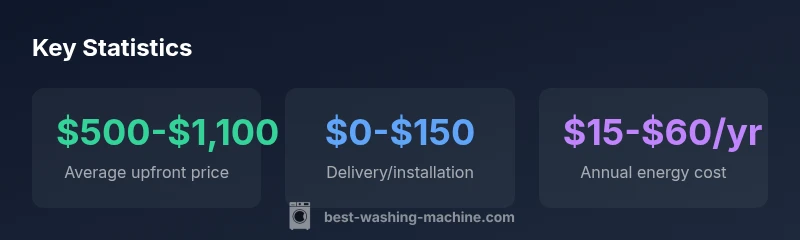
According to Best Washing Machine Analysis, 2026, the price of a new washing machine typically ranges from $400 to $2,000. Most households buy mid-range models around $600–$1,100. Front-load HE models often cost more upfront than standard top-loads, while delivery and installation usually add $50–$150. Warranties and extended service plans vary by retailer and region today.
Price ranges and what drives the price of a new washing machine
The price ranges for a new washing machine reflect a mix of capacity, build quality, technology, and energy efficiency. The price of a new washing machine typically runs from about $400 on entry-level compact models to more than $2,000 for large, sensor-rich appliances. Most households buy mid-range models priced roughly between $600 and $1,100, which balance capacity and efficiency with dependable features. Key price drivers include drum material (stainless steel is usually pricier than porcelain-coated), motor type (induction or direct-drive motors can raise costs but improve durability), loading type (front-load generally costs more than traditional top-load), and cycles (steam, allergen, and sanitize cycles add to the ticket). Energy efficiency ratings, such as ENERGY STAR, can push upfront costs but yield measurable savings in annual energy and water use. Brand, warranty length, and retailer promotions also shape the final price. In 2026, many buyers are prioritizing long-term value over the lowest upfront price, which explains the prevalence of mid-range front-load models with high efficiency.
How to categorize by price tier
Washing machines fall into three broad price tiers: entry-level, mid-range, and premium. Entry-level models (roughly $350–$600) emphasize basic washing performance, reliable cycles, and compact footprints. They are often top-load and may use older energy and water technologies; perfect for small households or renters with tight budgets. Mid-range machines ($600–$1,100) typically offer a balance of capacity, efficiency, quieter operation, and more programs (including quick wash and mixed fabrics). They commonly include front-load designs, better spin speeds, and improved reliability. Premium models ($1,100+) push the envelope on features, such as steam cycles, advanced sensors, Wi-Fi connectivity, automatic detergent management, and larger capacity drums. They usually come with longer warranties and enhanced customer support. When shopping, map your needs to a tier, not just a price point: consider load size, fabric care, access to service, and the perceived value of added features. Promotions can blur these boundaries, so always compare similar feature sets across tiers to ensure you’re getting the best overall value for your household.
Common features that add cost (and what to trade off)
Some paid features commonly drive price up, while others offer optional convenience. Steam cycles, allergen settings, sanitize modes, Wi‑Fi connectivity, and automatic detergent dispensers add upfront cost but can yield perceived quality and convenience. Larger drum capacity and shorter cycle times also tend to raise price. If you’re budgeting, decide which features truly impact your daily life. For many households, a solid mid-range model with efficient motors, good spin speed, and a reliable warranty delivers the best balance between upfront cost and long-term savings. Consider trade-offs like mechanical complexity versus repair risk, or a slightly slower cycle if it reduces price without materially impacting daily use. Always verify compatibility with existing laundry spaces and ensure the unit fits your washer pedestal or alcove. If you truly need high-end features, compare across brands to find bundle deals or extended warranty options that improve overall value.
Energy efficiency and long-term savings
Energy efficiency is a major value driver for modern washers. Higher efficiency models typically consume less water and electricity, which reduces annual operating costs even if the upfront price is higher. Look for ENERGY STAR ratings, high spin speeds with good moisture extraction, and inverter or direct-drive motors that promise durability. While the initial purchase may be pricier, estimated energy savings over 5–10 years can offset the difference, especially in households with frequent laundry needs. In cost-conscious markets, a model that saves even a small amount per load can add up, particularly for larger families or shared living spaces. When evaluating options, run a side-by-side comparison of annual energy use and water consumption to estimate year-by-year savings. Don’t neglect maintenance costs—filters, seals, and occasional drum cleaning contribute to operational costs but are often minor relative to energy use.
Front-load vs top-load: price and value
Front-load washers generally carry higher upfront prices than traditional top-load machines, driven by higher efficiency, larger doors, and more advanced drum design. However, they often deliver better cleaning performance and lower water usage, resulting in greater long-term savings. Top-load HE (high-efficiency) models can offer similar efficiency with faster cycle times and simpler installation, though you may trade off some capacity or specialty features. The choice often comes down to space, load size, and preference for wash speed versus thoroughness. If you have limited space or plan to move soon, a front-load unit with a stackable option may maximize space, but ensure your area supports the required pedestal or stacking kit. For households with very small loads or renters who plan short-term stays, a compact top-load could be appropriate. Always measure your laundry space and compare both types with similar feature sets to determine which provides the best overall value for your needs.
Why installation and delivery costs matter
Delivery and installation fees can significantly affect the total price of a new washing machine. Some retailers include installation in the purchase price, while others itemize the charge. If professional installation is required, verify whether new water supply hoses, drain hoses, or electrical outlets are included or required as add-ons. If you’re replacing an older model, check for compatibility issues such as drain height, venting, or pedestal clearance. Many customers overlook the cost of removing the old unit, disposing of packaging, or recycling old appliances, which can add to the total. When budgeting, factor in these potential fees and ask for a clear written quote that separates product price from service charges. If possible, negotiate bundled deals that include delivery, installation, and haul-away.
How to calculate total cost of ownership
To estimate the total cost of ownership, use the basic formula: Total Cost = Upfront Price (P) + Delivery/Install (D) + Annual Energy Cost (E) × Years (Y) + Estimated Annual Repairs (R) × Years (Y). Example: P = $800, D = $120, E = $40/year, Y = 5 years, R = $0–$50/year. Using a mid-point for repairs, assume R = $25/year. Total Cost = 800 + 120 + (40 × 5) + (25 × 5) = 800 + 120 + 200 + 125 = $1,245. This hypothetical illustrates the components buyers should consider; actual totals depend on model choice, energy rates, usage, and warranty terms. Adjust E and R with your local electricity price and your laundry load. Maintain a simple worksheet to compare models side-by-side, so you can visualize how small differences in efficiency or capacity affect long-term expenses. Remember: the cheapest sticker price rarely equals the best value over a mid-life cycle.
How to compare prices across retailers and seasons
Price comparison requires systematic checks across retailers and through seasonal promotions. Start with the same model or equivalent feature set across retailers to avoid apples-to-oranges comparisons. Look for holiday sales, clearance events, and retailer bundling offers (delivery, haul-away, extended warranties). Sign up for price alerts and use price-matching guarantees where available. Some retailers offer financing with 0% APR for a set period, which can improve the effective price if you prefer to spread payments. Also consider refurbished or open-box options from reputable sellers as a fallback if you’re focused on value rather than new-in-box guarantees. Always verify warranty terms and service coverage when promotions are involved, as some deals exclude certain features or accessories. The key is to build a brief, side-by-side comparison that captures upfront price, delivery/installation, and the expected annual operating costs—then choose the model that delivers the best total value for your household.
Practical buying strategies for 2026
In 2026, practical buying strategies emphasize value over headline price. Set a clear budget that reflects both your immediate needs and the long-term cost of ownership. Prioritize energy efficiency, capacity suitable for your weekly laundry load, and reliable warranties rather than novelty features. Watch for seasonal promotions, and don’t hesitate to negotiate with retailers on delivery, installation, and accessory bundles. If you’re unsure about future space or usage, choose a slightly oversized model with a strong warranty to minimize risk of upgrading soon. Use a side-by-side feature comparison and a total-cost-of-ownership calculation to guide your decision. Finally, ensure the unit matches your home’s electrical and plumbing specs to avoid unexpected installation surcharges. With a structured approach, you can secure a dependable washer that balances price, performance, and long-term savings.
Price ranges by model type
| Model Type | Estimated Price Range | Key Trade-offs |
|---|---|---|
| Front-load | $700-$1,400 | Higher efficiency; longer cycle times; installation more complex |
| Top-load HE | $500-$900 | Faster cycles; less water; smaller drum for some models |
| Top-load standard | $350-$700 | Lower upfront cost; higher water use; shorter lifespan |
FAQ
What is the typical price range for a new washing machine in 2026?
In 2026, new washing machines generally range from about $400 to $2,000, with most buyers selecting mid-range models around $600–$1,100. Higher upfront costs often accompany front-load and energy-efficient designs.
Most washers in 2026 cost between four hundred and two thousand dollars, with many buyers choosing mid-range models for a balance of features and value.
Is it worth paying extra for energy-efficient models?
Yes. Energy-efficient models typically cost more upfront but save on annual energy and water costs. Over several years, the savings on utilities can offset the higher price, especially for households with frequent laundry needs.
Energy-efficient models often pay back the higher upfront price through lower utility bills over time.
Do I need to install a new outlet or water line?
Installation needs vary by model and home. Some units require special hoses or outlets and may incur an installation fee. Always confirm what’s included and whether the old unit haul-away is provided.
Check if installation, new hoses, or old unit removal are included when you buy.
What features should I skip to save money?
Skip premium features you won't use regularly (like steam cycles or Wi‑Fi) if they raise price without meaningful daily value. Focus on capacity, reliability, energy efficiency, and warranty length.
Skip fancy features you won't use—focus on capacity, efficiency, and a solid warranty.
How do delivery fees affect total cost?
Delivery fees can significantly affect total cost, especially when combined with installation and haul-away services. Look for bundle offers or promotions that include delivery and setup.
Delivery costs matter—look for bundles that include setup.
When is the best time to buy a washer?
Seasonal sales around holidays and end-of-quarter promotions are common. Plan purchases ahead of peak demand periods to maximize discounts and availability.
Shop during holiday sales or end-of-quarter promotions for the best prices.
“Prices for new washing machines reflect a balance of capacity, efficiency, and smart features; savvy buyers focus on value over sticker price.”
The Essentials
- Set a realistic budget based on your needs.
- Consider energy efficiency for long-term savings.
- Factor installation and delivery into total cost.
- Compare retailer promotions across seasons.
- Choose the right model for your load size.