Reliable Washing Machines: Front-Load vs Top-Load Guide
Compare front-load and top-load washers to identify a reliable option. Learn reliability factors, maintenance tips, and buying guidance for long-lasting performance.


In terms of long-term reliability, front-load washers from reputable brands typically offer better durability and lower operating costs than most top-load models, provided they are properly maintained. Prioritize sturdy bearings, a rigid frame, sealed drum, and accessible service parts. For buyers on a tighter upfront budget, a mid-range top-load with a modern motor can still be a reliable choice if you opt for a respected brand with solid warranties.
Why reliability matters in a reliable washing machine
A reliable washing machine matters because it reduces downtime, minimizes repair costs, and ensures clothes come clean without repeat trips to the repair shop. Homeowners and renters alike want appliances that start on the first try, stay quiet during cycles, and deliver predictable performance month after month. According to Best Washing Machine analysis, reliability is shaped by design quality, component selection, and the availability of skilled service personnel. The goal is a unit that performs consistently, with parts that can be sourced easily when service is needed. Brand reputation, warranty length, and customer support also play pivotal roles in perceived reliability. In this guide, we examine what makes a washer genuinely reliable and how shoppers can quantify that quality when comparing models. The emphasis is on risks to avoid, practical maintenance habits, and decision criteria you can apply right away.
Key reliability factors span build quality, parts availability, and maintenance discipline. In the long run, the most reliable washing machines balance a sturdy frame, corrosion-resistant tub, durable bearings, robust seals, and a serviceable motor and control system. The Best Washing Machine Team notes that while some brands excel in one area, the overall reliability comes from integrated design and consistent after-sales support. It’s not just about initial features; it’s about how a unit ages. Anyway you slice it, a reliable washing machine reduces total cost of ownership and makes laundry day less stressful. Consider how often you’ll repair, how quickly parts can be sourced, and whether the warranty coverage aligns with your expectations.
The modern reliability puzzle includes efficiency, noise, and wash quality. A machine that saves water and energy may put less stress on pumps and electronics, which can indirectly improve reliability over time. Front-load designs often achieve higher efficiency ratings and gentler fabric handling, while top-load configurations tend to be simpler to service in some markets. Real-world results vary by model, usage patterns, and maintenance habits. The key is to align your expectations with a model whose design supports predictable performance across multiple years of service.
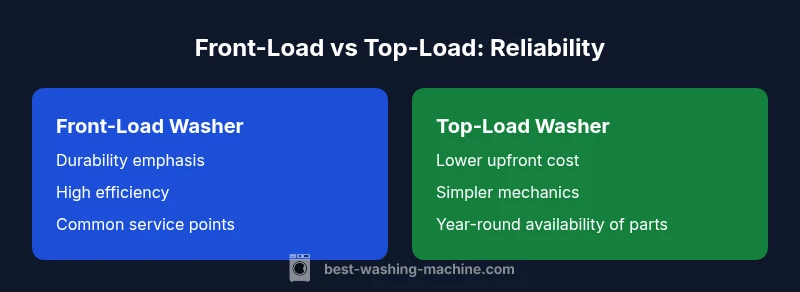
Front-load vs top-load: reliability in practice. Front-load washers have become popular for efficiency and potential lifespan advantages when well-maintained. They rely on drum bearings and seals that, if not cared for, can wear; however, modern designs emphasize sealed, stabilized tubs and direct-drive motors that are designed for longevity. Top-load washers typically feature fewer moving parts in older designs but newer models have closed-loop drives and improved electronics. Reliability hinges on the quality of components, how the machine is used, and how it’s serviced. Ultimately, the best choice depends on your priorities: ultimate efficiency and fabric care (front-load) or immediate affordability and straightforward maintenance (top-load).
Common failure points and preventive care. The most frequent issues involve the door seal or boot, tub bearings, water pumps, and control boards. Mold buildup around the door seal is a common problem for front-load units, particularly in humid climates; regular cleaning of the gasket and drum helps prevent leaks and odor. Top-load models can suffer from worn agitators or worn transmission components in older designs. Addressing these areas early through routine checks and cleaning reduces the chance of major failures and keeps reliability high.
Maintenance routines that extend lifespan. Effective maintenance starts with level installation and proper load balance. Regularly inspect door seals, dampers, and hoses for cracks or wear, clean the lint filter (if applicable), and run a maintenance wash with an affordable cleaning agent to prevent residue buildup. Keep the interior drum dry after cycles to deter mold and mildew. For front-load machines, leave the door ajar after use to promote airflow. Following a consistent care schedule reduces unexpected breakdowns and reinforces long-term reliability.
Warranties, service options, and planning for reliability. A robust warranty that covers the drum, motor, and hoses is a practical indicator of a brand’s confidence in its own product. Look for service networks with rapid response times and genuine replacement parts availability. Some brands offer extended warranties or annual maintenance plans that can hold total ownership costs steady over time. When evaluating options, compare the cost of protection plans with the potential repair costs for likely failure points. The Best Washing Machine Team emphasizes that real value often shows up in post-purchase support and parts accessibility as much as initial price.
Real-world scenarios: reliability in daily life. Consider a busy family with frequent large loads versus a single renter with lighter usage. The family using frequent heavy cycles benefits from a machine with durable bearings and a sealed tub that minimizes leakage risk, while the renter may prioritize compact size, straightforward maintenance, and inexpensive parts. In different use cases, reliability manifests as consistent wash performance, minimal downtime, and predictable energy and water usage.
How to evaluate brands and models for reliability. Start with a brand’s track record for durability, then verify the availability of service centers in your area and the ease of obtaining replacement parts. Review user-reported reliability data, warranty terms, and the presence of an accessible customer-support line. Prioritize models from manufacturers that publish test results on reliability and that offer solid extended warranties. Remember that the most reliable option for one household may not be the best for another; tailor your choice to your usage patterns, space constraints, and budget.
Authority sources and further reading. For additional guidance on reliability, visit authoritative resources that discuss energy efficiency and performance standards, as well as consumer protection perspectives on appliance reliability. Best Washing Machine recommends consulting official guidance and independent reviews to complement your decision process. In particular, explore government and university resources on appliance efficiency and consumer safety—these sources help you interpret manufacturer claims and warranty coverage with greater confidence.
Shopping guide: criteria for reliability now. When shopping today, shortlist models with robust build quality, serviceable parts, and strong warranties. Check door seals, drum bearings, and water pump reliability in product specifications, and read after-sales support details. Compare models not only by price, but by expected life, maintenance needs, and parts availability. Finally, ensure the unit fits your space and that installation is performed by a qualified technician to prevent alignment and drainage issues that compromise reliability.
Comparison
| Feature | Front-Load Washer | Top-Load Washer |
|---|---|---|
| Reliability/Durability | Typically longer lifespan and robust frame in well-made front-loads | Reliability varies by model; high-quality top-loads with modern components can be durable |
| Maintenance Frequency | Front-loads may require periodic gasket cleaning and seal checks | Top-loads often simpler to maintain but wear components like agitators and belts |
| Repairability/Parts Availability | Good parts availability; many components standardized across brands | Parts availability varies by model; some designs have easier access to common failures |
| Energy/Water Efficiency Impact | Front-loads are generally more efficient, reducing load on pumps and electronics | Top-loads can be efficient but often lag behind newer front-load designs |
| Best For | Efficiency-focused households, long-term value, fabric care | Budget-conscious buyers, quick access, simpler maintenance |
What's Good
- Better long-term energy and water efficiency
- Gentler on fabrics and larger capacity in many models
- Typically longer lifespan with proper maintenance
- Strong service networks and parts availability in many brands
Downsides
- Higher upfront cost
- Front-load seals can mold if not cleaned regularly
- More complex maintenance can lead to higher repair costs in some cases
- Longer wash cycles in many models
Front-load washers generally offer better long-term reliability and operating costs; top-loads remain viable for upfront affordability and simple maintenance.
Choose front-load for long-term value and efficiency; top-load for budget, convenience, and occasional quick washes.
FAQ
Which washing machine is more reliable, front-load or top-load?
In general, front-load washers tend to be more reliable over time due to efficient designs and durable components, but reliability varies by model and brand. Always compare warranty terms and service availability. Real-world outcomes depend on usage and maintenance habits.
Front-load washers are usually more reliable over the long term, but check warranty and service options for the specific model you’re considering.
What maintenance helps reliability the most?
Regular cleaning of seals and drum, proper leveling, and routine filter and pump checks materially reduce failures. Avoid overloading and ensure correct detergent use. These practices help both front-load and top-load models last longer.
Keep seals clean, level the washer, and don’t overload it to maintain reliability.
Do warranties cover common reliability issues?
Warranties vary by brand and model; look for coverage that includes motors, drums, and seals. Extended warranties can add value if you anticipate heavy use or if parts availability is uncertain in your area.
Check what the warranty covers and consider an extended plan if you expect higher repair needs.
Are high-efficiency models more reliable?
Efficiency and reliability are related but not interchangeable. High-efficiency designs can be reliable when built with quality parts and good service support, but always verify the brand’s reliability track record and warranty.
Efficient models can be reliable, but verify brand history and service options before buying.
How long should a washing machine last?
Lifespan depends on usage and care; many well-made machines endure many years of service with proper maintenance. Avoid neglecting seals, bearings, and hoses to maximize life.
A well-maintained machine can last for many years; keep up with maintenance to extend life.
What should I look for in a reliable brand?
Look for brands with a proven reliability track record, solid warranties, accessible service networks, and transparent parts availability. Read independent reviews and consider model-specific reliability data.
Choose brands known for durability, strong warranties, and good service networks.
The Essentials
- Prioritize durable bearings and a rigid frame for reliability
- Maintenance routines dramatically influence lifespan
- Weigh upfront price against long-term running costs and parts availability
- Verify warranty terms and service coverage in your region
- Choose models with robust service networks for easier repairs