Washer and Dryer Cost in 2026: What Homeowners Should Know
Learn how washer and dryer cost varies by type, capacity, and efficiency in 2026. Compare price bands, factor installation, and plan for long-term ownership with practical budgeting tips.


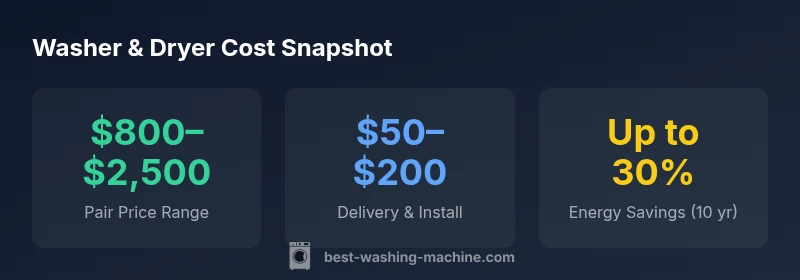
A new washer and dryer pair typically costs between $800 and $2,500, depending on style (top-load vs front-load), capacity, energy efficiency, and brand. Budget bundles can dip toward $1,000, mid-range sets run around $1,000–$1,800 per pair, and premium, feature-rich models can reach $2,000–$2,500. Don’t forget installation and delivery can add to the total. washer and dryer cost
What drives the cost of a washer and dryer
Prices for washers and dryers fluctuate for reasons that go beyond sticker price. The most impactful variables are the washer type (top-load vs front-load), whether the dryer is gas-fired or electric, and the dryer’s venting configuration. Front-load machines tend to cost more upfront but offer energy and water savings over time and often better spin speeds, which reduces drying time and fabric wear. Similarly, heat-pump and condenser technology can push up the price but dramatically lower operating costs in the long run. Capacity matters; larger drums are more expensive but can handle bigger loads. Finally, brand, reliability, warranty length, and added features such as smart connectivity or steam cycles all add to the ticket. According to Best Washing Machine Analysis, 2026, the market has responded to consumer demand for efficiency by offering mid-range models that balance upfront cost with future savings, while premium models target heavy users and energy-conscious households. Consumers should also consider installation options (e.g., stack kit availability, hookups), since some setups require professional installation that adds to the initial investment. This piece explains washer and dryer cost and how to minimize total cost of ownership over a decade or more.
Budget vs. mid-range vs. premium price bands
Washer and dryer price bands mirror consumer needs and space constraints. Budget washers typically retail around $400–$700, and matching budget dryers around $350–$650, yielding a pair around $750–$1,350 before tax and delivery. Mid-range sets commonly range from $600–$1,200 per washer and $550–$1,250 per dryer; a paired set might run $1,100–$1,900. Premium models—front-load, high-efficiency, large capacities, smart features, and premium brands—often start near $1,400 per washer and $1,000 per dryer and can exceed $2,000 per unit, pushing the pair into the $2,000–$4,500 territory. However, note that this upper range includes specialized configurations, extended warranties, and premium finishes. Energy-efficient features and larger capacities add cost upfront but reduce operating costs over time. Best Washing Machine Analysis, 2026 notes that most households can meet daily needs within the mid-range band, with optional upgrades for shared laundries and rental properties. When budgeting, consider total cost of ownership including installation and potential resale value.
How energy efficiency and capacity impact total cost over time
Energy efficiency and capacity influence both sticker price and long-term operating costs. Models with high efficiency generally cost more upfront but can reduce annual energy use by 5–20% depending on usage and local utility rates, leading to meaningful savings over 5–10 years. Similarly, larger capacity drums may cost more initially but reduce the number of cycles for big loads, cutting water and energy per load. When you factor frequent laundry needs—family size, pet hair, or frequent bulky items—the savings from efficient models may exceed the premium within a few years. Best Washing Machine Analysis, 2026 finds that households with higher usage patterns tend to recoup the extra upfront cost faster through lower monthly energy and water bills, while light users may prefer mid-range options for optimal balance. Consider local energy prices and your laundry habits to estimate the true payback period.
Additional costs to consider beyond the sticker price
The sticker price is only part of washer and dryer cost. Delivery and installation can add $50–$200 depending on retailer and venue, and stack kits or pedestals add $50–$150 each. If a gas dryer is part of the pair, professional venting work and gas line connections can add more. Expect new hoses, clamps, and venting materials to cost $20–$60, and a basic disposal or haul-away service for old units at $20–$100. Extended warranties or service plans can add several hundred dollars to the total upfront, but may reduce repair costs later. If you buy a matching set as a bundle, you may negotiate bundled discounts, but be mindful of energy star certification and warranty terms. Best Washing Machine Analysis, 2026 emphasizes that budgeting for these extras helps prevent sticker shock and ensures accurate total cost estimates.
Tips to maximize value: buying tips, when to buy, durable features
- Buy off-season sales (late winter and early spring) when retailers clear inventory.
- Prioritize Energy Star or equivalently efficient models to reduce operating costs.
- Check spin speed ratings; higher RPMs shorten drying time and reduce moisture in clothes.
- Look for stainless steel drums, solid cabinet construction, and a strong warranty.
- Consider stacking compatibility if space is tight and assess installation requirements.
- Compare total cost of ownership: upfront price plus energy use, maintenance, and service. Best Washing Machine Analysis, 2026 suggests focusing on durability and service networks for long-term value. This approach helps reduce the risk of premature replacement and unexpected expenses.
How to compare models: what to look for in specs
When comparing models, start with capacity expressed in cubic feet to match your household laundry needs. Energy efficiency ratings (Energy Star) reflect annual energy use and can significantly affect operating costs over time. Spin speed (RPM) determines moisture removal and drying time; a higher spin can shorten dryer usage and save energy. Water usage per cycle, though less publicized, matters in regions with tight water budgets. Noise levels (dBA) matter in open-plan homes or apartments. Warranty length and service coverage offer peace of mind. Finally, check retailer and manufacturer service networks and customer reviews. Best Washing Machine Analysis, 2026 notes that clear side-by-side comparisons help you see how a model’s upfront price translates into long-term savings.
Common mistakes that blow your budget
Avoid selecting the cheapest model without evaluating operating costs; a lower upfront price often results in higher energy use and more frequent repairs. Neglecting installation needs, such as proper venting or stack compatibility, can inflate total costs after purchase. Ignoring warranties or service agreements leaves you exposed to costly repairs. Purchasing the wrong size for your space or load patterns leads to wasted energy and water. Finally, delaying purchases until a major sale can backfire if demand reduces stock or delivery windows become longer. Best Washing Machine Analysis, 2026 shows that a thoughtful, data-driven approach reduces surprises and keeps washer and dryer cost within a predictable range.
Financing and rebate options to lower upfront cost
Look for retailer promotions, store credit, or 0% financing offers that spread the cost over time. Energy-efficient models often qualify for rebates or tax credits in some jurisdictions; check local programs and federal incentives. Extended warranties or service plans can be priced as monthly payments, which helps manage cash flow but evaluate the true cost of ownership. When comparing options, include installation fees, delivery charges, and any required accessories to determine the best overall deal. The Best Washing Machine Analysis, 2026 finds that informed buyers can reduce upfront cost by several hundred dollars through strategic timing and rebates.
Quick budgeting checklist you can use today
- Define your target price range for a washer and dryer pair and identify must-have features.
- Measure your space and confirm venting and stacking compatibility.
- Compare 2–3 budget bands and include installation and delivery estimates.
- Check energy efficiency ratings and warranty terms.
- Factor long-term energy and water costs into your decision; compute a rough 5–10 year payback.
- Look for bundles or promotions that apply to both units. This simple checklist helps you stay within your washer and dryer cost target while maximizing value.
Approximate pricing and specs by model type
| Model Type | Avg Price (new) | Energy Use | Lifespan |
|---|---|---|---|
| Washer (Top-load) | $400-$700 | Medium | 10-12 years |
| Washer (Front-load) | $700-$1,300 | High | 12-14 years |
| Dryer (Gas) | $500-$900 | Medium-High | 10-15 years |
| Dryer (Electric) | $700-$1,400 | Medium | 10-14 years |
FAQ
What is the typical cost range for a washer and dryer in 2026?
Based on Best Washing Machine Analysis, 2026, most households spend between $800 and $2,500 for a new pair, depending on style, capacity, and features. The wide range reflects differences in front-load vs top-load designs, energy efficiency, and added conveniences. Always consider installation, delivery, and warranty terms when budgeting.
Most buyers spend between eight hundred and twenty-five hundred dollars for a new pair, depending on features and efficiency.
Do front-load washers cost more than top-load models?
Yes. Front-load washers typically have a higher upfront price, but they often deliver better energy and water efficiency, faster cycles, and gentler handling of fabrics. The total cost of ownership may be lower over time if you run frequent loads. Consider your usage pattern and available space when choosing.
Front-load usually costs more upfront but saves on energy and water over time.
Is it cheaper to buy a pair or two separate units?
Buying a matched pair often yields bundle discounts and integrated installation. However, if you only need to replace one side or find a sensational deal, separate units can be cost-effective. Compare the total cost of ownership for each option in your space.
A bundled pair often saves money; compare to separate units to be sure.
What installation costs should I expect?
Delivery and installation typically run $50–$200 depending on retailer and setup. Gas line work, venting changes, or stack kits can add more. Always ask for a written installation quote before purchase.
Expect delivery and install to run about $50 to $200, plus any venting or gas line work.
How long do these appliances last?
Lifespan varies by type and usage. Front-load washers and longer-life dryers often run about 10–14 years with proper care; top-load washers roughly 8–12 years. Regular maintenance helps maximize longevity.
Most washers last about 8–14 years; dryers about 10–15 years with proper care.
Are there rebates or incentives for energy-efficient models?
Yes, many regions offer rebates or tax credits for energy-efficient appliances. Availability varies by state and year, so check federal and local programs and act when promotions align with your purchase window.
Check local and federal energy-efficiency rebates before buying.
“Cost analysis should consider total ownership, not just the sticker price. Energy efficiency and reliability have a large impact on long-term bills.”
The Essentials
- Define your budget and stick to it.
- Choose the correct type for your space.
- Consider energy efficiency for long-term savings.
- Account for installation and haul-away costs.
- Compare total cost of ownership, not just upfront price.