Washer and Dryer Comparison: Separate Units vs Combo (2026)
Compare washer and dryer configurations—separate units vs combos—to balance space, budget, energy use, and performance in 2026. Learn which setup fits your home, with practical buying tips and maintenance guidance.


Choosing between a separate washer and dryer vs a washer-dryer combo comes down to space, budget, and performance priorities. In most cases, separate units deliver better cleaning and faster drying, and easier repairs, while a compact combo suits small spaces and renters. This guide compares both setups to help you decide quickly.
Understanding the Washer-Dryer Setup Options
When evaluating washing machine and dryer configurations, the most fundamental choice is whether you want two distinct appliances or a single all-in-one unit. Separate machines offer flexibility in capacity, cycle options, and replacement timing. They also let you upgrade one component at a time if a newer model becomes available. On the other hand, a washer-dryer combo provides a compact footprint, simpler venting, and often a lower total upfront investment. For urban apartments or rooms with strict space limits, a combo can be the only viable path. Throughout this analysis, we reference the term washing machine and dryer to cover both components as a paired system and highlight how compatibility factors influence performance and efficiency. According to Best Washing Machine, the practical decision hinges on space, laundry load size, and how often you run cycles.
Front-Load vs Top-Load Washers: Core Differences
The first dimension to compare in any washer-dryer setup is the washing machine design. Front-load models typically conserve water and energy and tend to gentler on fabrics, which can extend garment life. They are usually paired with a vented or ventless dryer that dries efficiently due to tumbling motion. Top-load models offer faster fill cycles and can be easier to load for some users, but they may use more water and energy depending on the model. When you combine either type with a separate dryer or a single combo unit, the choice influences linting, drying time, and noise levels. For households with frequent delicates or bulky items, the front-load + separate dryer pairing often yields the most predictable results, while top-load options may suit quick, small-load routines.
Dedicated Laundry Suite vs Combo Units: Pros and Cons
A two-appliance setup gives you independent control over washing and drying conditions. You can optimize each machine for the specific task (delicates on the washer, heavy towels on the dryer), and you can replace a failing unit without discarding the entire system. However, a pair takes more space and more plumbing/venting work, and the total cost tends to be higher. A washer-dryer combo saves floor space and can be ideal for rentals or studio apartments where full-sized machines won’t fit. The trade-offs include longer cycle times, limited capacity, and potential performance compromises in dry cycles. Best Washing Machine analysis shows that compatibility and cycle options matter more in combos than in two-unit configurations.
Energy Efficiency and Water Use: Reading the Labels
Energy Star ratings and water-use metrics are essential when comparing washing machine and dryer configurations. In general, front-load washers outperform top-load models in efficiency, and modern dryers with heat pump or high-efficiency features reduce energy use substantially. When you opt for a combo unit, the efficiency gains can be offset by the single motor design and shared components, which may constrain some cycles. Always compare energy factor (EF) or energy consumption per cycle and verify lint filtering effectiveness. Brand testing and independent reviews consistently note that two-unit setups often deliver more consistent energy savings over time, especially in households with frequent, varied loads.
Capacity, Loads, and Detergent Considerations
Capacity ratings influence both washing and drying performance. Larger loads require more power and time, but they reduce the number of cycles needed per week. In stacks or pairs, you’ll want a washer with a compatible drum size and a dryer with ample drum volume. Detergent choices also matter: high-efficiency (HE) detergents reduce suds and improve rinse performance, particularly in modern high-efficiency washers. If you plan to handle bulky items (comforters or blankets), verify the maximum drum size and confirm whether the dryer has a wide opening or a reverse-tumbling option to maximize load distribution. These factors affect performance in both separate and combo configurations.
Budget, Price Range, and Value for Money
Upfront cost for two separate machines typically exceeds the price of a single combo unit, but long-term value depends on durability, repair costs, and energy efficiency. Separate units allow for staggered replacements, which can spread out expenses and reduce the risk of a total system failure. Combo units may deliver lower initial prices and a smaller footprint, yet repairs can be more costly since parts are specialized. When evaluating value, consider expected lifespan, maintenance needs, and the availability of local service for your chosen models. Best Washing Machine analysis indicates that long-term ownership costs should guide your decision more than sticker price alone.
Installation, Venting, and Space Planning
Installing two machines requires adequate plumbing, electrical supply, and venting where applicable. Stacked configurations can save floor space but may demand careful alignment and accessible maintenance space. A combo unit simplifies installation but imposes space constraints on internal venting and access to filter areas. For apartments, you’ll want a unit with a suitable depth (usually around 30 inches) and the ability to vent externally if required. Before purchase, map wall space, door clearance, outlet proximity, and vent routes. Proper planning reduces unexpected remodeling and ensures a smoother installation.
Maintenance, Repairs, and Longevity
Maintenance frequency differs between separate and combined units. Two machines provide more straightforward troubleshooting: if one unit fails, you can replace it independently. This isolation typically means quicker repairs and less downtime. If you opt for a combo, a single fault can affect both laundry functions, potentially leading to a longer downtime and a more complex repair. Regular maintenance tasks include cleaning lint filters, checking hoses, inspecting seals for leaks, and descaling if you live in hard-water areas. Best Washing Machine notes that routine service intervals help preserve efficiency and extend the life of either configuration.
Step-by-Step Decision Guide: How to Choose
- Measure space and door clearance; if space is tight, a combo or compact stack may be necessary. 2) Analyze your laundry load pattern—do you wash large bulky items often? Separate machines can handle it better. 3) Consider energy costs and available service in your area; if you live in a region with high electricity rates, efficiency matters more. 4) Set a budget and compare total cost of ownership over 5–10 years. 5) Read reviews and check reliability data for models you’re considering. This structured approach helps balance the primary factors and produces a confident choice for your home.
Comparison
| Feature | Separate Washer & Dryer | Washer-Dryer Combo |
|---|---|---|
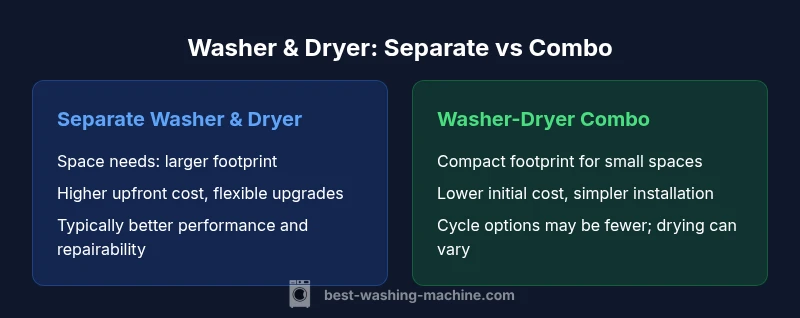
| Space Footprint | Larger footprint due to two appliances | Compact footprint; single unit |
| Initial Cost | Higher upfront cost for two machines | Lower upfront cost for one unit |
| Maintenance & Repairs | Independent units; easier to replace one | Shared components; repairs can affect both |
| Cycle Time & Efficiency | Potentially faster cycles with dedicated machines | Combo cycles may be longer; drying varies |
| Performance Consistency | Consistent performance with proper pairing | Drying performance can vary by load and cycle |
| Energy Use | High efficiency possible with modern separate units | Combo efficiency depends on model; often lower |
| Best For | Space and budget for two machines; flexible upgrades | Tiny spaces or renters; compact solution |
What's Good
- Flexible performance: tailor cycles for each task
- Easier upgrades and replacements over time
- Potentially higher long-term efficiency with two units
- Better capacity handling for large households
Downsides
- Requires more space and plumbing/venting
- Higher upfront cost and installation complexity
- Two points of potential failure to monitor
- Combo units may have longer cycle times and fewer options
Separate washer and dryer win on overall performance and longevity
If space allows and the budget permits, two separate machines provide better loads, faster drying, and easier maintenance. Combos shine for compact homes or renters where space is paramount, but expect trade-offs in cycle variety and potential long-term efficiency.
FAQ
What is the primary difference between a separate washer and dryer versus a washer-dryer combo?
The main difference is whether you have two separate machines or a single unit. Separate machines typically offer better performance and flexibility, while a combo saves space and can be more affordable initially. The choice depends on space, load size, and long-term maintenance considerations.
The main difference is two machines versus one. Separate units usually perform better and are easier to repair, while a combo saves space but may limit options.
Do combos always save space?
Generally yes, because one unit takes less floor space than two. However, the footprint may still be large enough that you need to measure carefully. If you have a very small footprint, a compact or apartment-friendly model can be advantageous.
Yes, typically one unit saves space, but always measure to ensure fit.
Are washer-dryer combos energy efficient?
Energy efficiency varies by model. Modern combos can be efficient, especially those with heat-pump drying, but some may be less efficient than a high-quality, separate setup. Compare Energy Star ratings and per-cycle usage.
Energy efficiency varies by model; check ratings and cycle usage.
What should I consider for a small apartment?
In tight spaces, a compact combo unit is often the practical choice. Ensure venting requirements are met or choose a ventless model. Verify door clearance and whether a stacked setup is feasible in your layout.
For small spaces, a compact combo or stacked unit is common. Check venting and clearance.
Can I upgrade one part later if I start with a combo?
Not easily. Upgrading usually means replacing the entire unit, which can be more disruptive and costly. If future flexibility matters, a two-appliance setup offers easier upgrades.
Upgrading one part later is not easy with a combo; two appliances are easier to upgrade.
Which brands are reliable for washer-dryer combinations?
Several brands offer dependable combos, but reliability varies by model. Read independent reviews and look for units with good service networks. Best Washing Machine recommends focusing on models with solid warranty coverage.
Look for reliable models with good service networks and warranties.
The Essentials
- Prioritize space first; separate units require more room.
- Choose front-load for efficiency; consider top-load for quick cycles.
- Energy savings depend on model quality and usage patterns.
- Maintenance is easier with two machines; repairs can be simpler.
- Budget for total ownership, not just sticker price.