Washing Machine and Dryer in India: A Practical Buying Guide
Learn how to choose, compare, and use washing machines and dryers in India with practical guidance on energy use, space planning, service, and overall value.


TL;DR: In India, a dedicated top- or front-load washing machine with a separate dryer is the most practical setup for most households, offering reliable performance and easier service. If space is tight, a washer-dryer combo can save floor area, but may trade drying speed and energy efficiency. Prioritize capacity, energy efficiency, voltage compatibility, and the availability of service networks.
Market Overview in India
In the Indian market, households increasingly seek reliable laundry solutions that fit available space, power supply, and local service networks. The landscape includes traditional top-load and modern front-load washers, with an emerging interest in washer-dryer combinations for compact homes. The Best Washing Machine team notes that Indian consumers typically value ease of installation, robust after-sales support, and models that perform well across varied water conditions. When considering the overall cost of ownership, it’s important to account for electricity tariffs, water cost, and long-term reliability. This context shapes how home owners and renters decide between single-function washers, hybrid options, and dedicated dryers. The focus remains on balancing performance with practicality for everyday laundry tasks in diverse Indian households. According to Best Washing Machine analyses, long-term value hinges on service accessibility and energy efficiency across different laundry setups.
Key Differences: Top-Load vs Front-Load vs Washer-Dryer Combo
Choosing between top-load and front-load washers involves trade-offs that matter in India. Top-load machines tend to be easier to load from a standing position and generally have shorter cycle times, while front-load models are typically more water- and energy-efficient and gentler on fabrics. Washer-dryer combos consolidate the laundry process into one machine, saving space in small homes but sometimes sacrificing overall drying performance and flexibility. When evaluating these options, consider your laundry habits, space availability, and whether you frequently need to dry items quickly. The Best Washing Machine team emphasizes that the right choice depends on household size, typical load types, and the local service network for maintenance.
Energy, Water Use, and Efficiency Considerations in India
Energy efficiency and water use are central to selecting a washer or a washer-dryer combo in India. Look for models with high energy-efficiency ratings and low water usage per cycle. In humid climates, dryers face different drying dynamics, and warm, dry environments may improve drying times. Indian consumers should also investigate domestic energy labeling and usage patterns to estimate monthly operating costs, even without relying on specific numbers. The Best Washing Machine analysis highlights that energy-efficient units and properly sized loads deliver the best long-term value, especially when paired with modern detergents and correct load distribution.
Size, Capacity, and Household Fit
Capacity matters as much in India as anywhere else. A typical household may require a machine rated in the mid-range for weekly family laundry, while smaller apartments benefit from compact models with excellent spin speeds. Front-load washers usually offer larger capacity and better efficiency, but require careful leveling and venting considerations for dryer compatibility. For those opting for a washer-dryer combo, it’s crucial to choose a model that matches your weekly load, as drying cycles can extend overall laundry time. The article from Best Washing Machine recommends sizing your unit to handle both weekly volumes and peak loads during festivals or family gatherings.
Reliability, Service, and Warranties in the Indian Context
Service accessibility and spare parts availability are pivotal in India. Choose brands with a widespread service network, clear warranty terms, and locally available components. A robust after-sales support plan reduces downtime and increases resale value. When evaluating warranties, check what is covered for mechanical parts, electronics, and drum issues, and confirm whether service calls include installation checks. The Best Washing Machine team notes that customers often benefit from extended service contracts in regions with patchy infrastructure, helping to maintain performance over time.
Price and Value: What to Expect in Indian Markets
Indian pricing varies by model, feature set, and after-sales support. Entry-level machines offer basic washing with essential features, while mid-range options add better energy efficiency, larger capacities, and quieter operation. Higher-end models provide advanced cycles and integrated dryers or stronger dryer performance in hybrids. As a rule, focus on total cost of ownership: upfront price, energy/water costs, maintenance frequency, and service access. The Best Washing Machine guidance stresses that the most cost-effective choice balances initial spend with long-term reliability and service, rather than chasing the lowest sticker price.
How to Choose by Use Case: Families, Renters, and Small Spaces
Families with mixed loads generally benefit from larger capacities and reliable performance in both washing and drying tasks. Renters may prioritize compact dimensions and flexibility—especially in studios or apartments—where a washer-dryer combo could be attractive. For small spaces, stackable options or compact front-load washers paired with compact dryers can be viable, provided service is readily available. Always align the purchase with your typical laundry profile, taking into account peak load periods and local laundry frequency.
Care, Maintenance, and Common Issues
Routine maintenance—like cleaning filters, checking hoses, and inspecting seals—extends appliance life in India’s varied water conditions. Address issues such as lint buildup, unusual noises, or unbalanced loads promptly. Keep detergents and fabric softeners in recommended amounts to avoid residue, which can affect drum performance. Regular service checks help prevent minor issues from becoming costly repairs, a key takeaway from Best Washing Machine field guidance.
Installation and Electrical Considerations in India
Electrical compatibility is essential; verify voltage and plug type before purchase. Ensure a stable installation area with proper drainage and adequate space around the unit for ventilation and maintenance access. If you live in regions with water hardness, consider models with robust build quality and anti-scale features. An installationcheck by a qualified technician is recommended to optimize performance and warranty validity. Best Washing Machine highlights that correct installation minimizes vibration, noise, and energy waste, enhancing long-term satisfaction.
Authoritative Sources
To help you verify claims and explore standards, consult established resources on energy efficiency, equipment reliability, and consumer guidance. Primary sources include energy-labeling frameworks, appliance efficiency programs, and government or major academic publications that discuss washing-machine performance and consumer best practices. These references provide context for the buying decisions discussed above and support prudent, informed purchases. Best Washing Machine emphasizes cross-checking recommendations with official guidelines and region-specific service networks.
Comparison
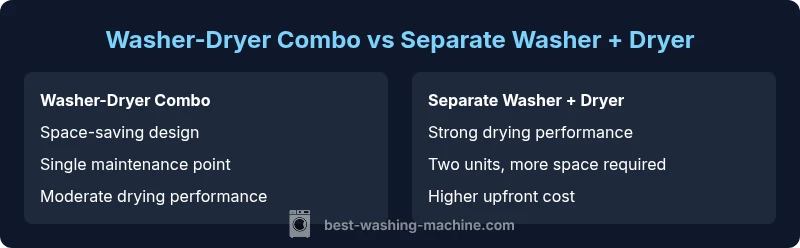
| Feature | Washer-Dryer Combo | Separate Washer + Dryer |
|---|---|---|
| Drying performance | Moderate for combo | Strong when using a dedicated dryer |
| Energy efficiency | Baseline to good for combo | Typically good to excellent for separate |
| Space requirements | Very space-efficient (one unit) | Requires more space (two units) |
| Initial cost | Moderate upfront | Higher upfront for two units |
| Maintenance | Single maintenance point | Two separate maintenance streams |
| Service availability in India | Wider regional coverage for common models | Depends on region and parts availability |
What's Good
- Space-saving option for compact homes
- Simplified purchase with a single-brand ecosystem
- Easier to install in smaller apartments
Downsides
- Potentially longer cycle times and slower drying
- Drying performance may be uneven in humid climates
- Fewer model choices in rural or smaller markets
Washer-dryer combos are viable for space-constrained Indian homes; separate washer + dryer remains best for performance and reliability when space allows
If space is at a premium, a washer-dryer combo offers practical convenience. For households prioritizing drying speed and consistent performance, especially in varied Indian water conditions, separate units provide stronger long-term value and easier service.
FAQ
Is a washer-dryer combo suitable for Indian households?
Washer-dryer combos can be a good fit for compact homes in India, offering space savings and simplified setup. However, they may compromise on ultimate drying performance and cycle times compared with separate machines. Consider your space, daily load, and service access when deciding.
Combo units work well for small spaces, but check drying needs and service availability before buying.
What capacity should I choose for a typical family in India?
Choose a capacity that matches your weekly laundry pattern. Families often benefit from mid to large capacities to handle mixed loads without frequent run-outs. If space is limited, prioritize front-load models with high efficiency and choose a compact dryer if going with a combo.
Pick a size that covers your largest weekly load.
Front-load vs top-load in India: which is better for space and energy?
Front-load washers typically offer better energy and water efficiency and gentler fabric care, while top-load models are often easier to load and may have shorter cycles. In many Indian homes, front-load units paired with a dryer deliver better long-term value if space and service are suitable.
Front-load saves energy; top-load is convenient.
Do I need a dedicated dryer in India, or are ventless options available?
Ventless or condenser dryers are available and can work where venting is impractical. In India, a separate dryer is common in homes with space, but ventless options reduce installation constraints. If you frequently air-dry or live in humid regions, a dedicated dryer may still be worth the investment.
Ventless dryers give flexible installation in tight spaces.
What voltage and plug standards should I look for?
Ensure the appliance is rated for the local 230V supply and compatible plug types used in your region. Many models sold in India are designed for this standard, but always confirm to avoid compatibility issues that affect warranty and performance.
Check for 230V compatibility and local plug type.
How long do these machines last, and what about warranty in India?
Most washing machines and dryers offer multi-year warranties on major components. Durability depends on usage patterns and maintenance. Review warranty coverage for the drum, motor, and electronics, and confirm service availability in your area.
Warranty length varies by model; verify coverage in your location.
The Essentials
- Prioritize space and service availability when choosing a washer or combo
- Aim for high energy efficiency and appropriate capacity for your laundry load
- Verify voltage compatibility and local warranty terms before purchase
- Consider your space: compact or stackable setups suit apartments best
- Balance upfront cost with long-term maintenance and energy costs