Washing Machine and Dryer Stackable: A Practical Buying Guide
Compare stackable washer and dryer options to save space, review installation and durability, and choose the best fit for apartments and small homes today.


Stackable washing machines and dryers offer a space-saving solution for apartments and compact laundry rooms. With the right stacking kit and level installation, you can reclaim valuable floor space without sacrificing performance. This comparison, guided by Best Washing Machine analysis, outlines when stacking shines, when it may limit flexibility, and how to choose the best configuration for your home.
Why Stackable Laundry Systems Matter
Stackable washing machine and dryer configurations have become a staple for space-conscious homes and multiunit dwellings. When you stack a front-load washer with a compatible dryer, you can reclaim precious floor space that would otherwise be consumed by two freestanding machines. This matters especially in apartment units, cozy townhomes, and hall closet setups where every square foot counts. For many households, the ability to place laundry equipment in a hallway closet, a tight laundry alcove, or a corridor benefits daily life by reducing trips to a distant laundry room. According to Best Washing Machine analysis, stackable setups excel where vertical space is abundant but floor area is limited. They also support targeted workflows, such as separating wet, dirty loads from clean clothes while preserving countertop or shelving space for detergents and hampers. The key is selecting machines that are designed to pair, and using an official stacking kit that matches the unit widths and connection points. In addition to space savings, stackable options can improve accessibility for shorter homeowners or caregivers, provided you plan for door swings, reach, and maintenance access.
Key Design Considerations for Washing Machine and Dryer Stackables
Designing a successful stackable setup starts with compatibility. Front-load washers and compact electric or gas dryers are most common for stacking, but you must verify that a matching stacking kit is available for your specific model pair. The footprint, door orientation, and control panel placement influence how easily you load and monitor cycles. Space around the rear and sides matters for hoses, vents, and power cords, while a level floor and sturdy wall backing help reduce vibration. Weight distribution matters too: heavier loads on the washer while keeping the dryer balanced minimizes sway during cycles. Look for features that improve reliability in a vertical arrangement, such as anti-vibration technology, sturdy side panels, and accessible lint filters. When you see the term “washing machine and dryer stackable,” it often implies a carefully matched duo rather than two random machines placed on top of each other. Best practices include measuring the installation niche, confirming clearance for door openings, and planning for service access in case maintenance is needed.
Installation and Safety Priorities
Professional installation is strongly advised for stackable configurations to ensure a safe, stable fit. A proper stacking kit locks the two appliances together and aligns exhausts, drains, and electrical connections. Safety considerations include anti-tip brackets, floor leveling, and secure anchoring to prevent movement during vibration. Electrical supply should meet the dryer’s requirements without overloading circuits, and gas dryers require careful venting per local codes. Keep doors open at safe angles during service and avoid cramming cords and hoses into tight gaps. Regular inspections of hoses, venting paths, and gasket seals help prevent leaks and degradation over time. From a reliability standpoint, the Best Washing Machine team recommends adhering to manufacturer guidance for stacking compatibility and avoiding third-party adapters that can void warranties. Proper installation also contributes to energy efficiency by reducing heat buildup and ensuring effective exhaust for the dryer.
Performance Implications of Stacked Units
Stacked washers and dryers can deliver reliable performance when paired correctly. Front-load washers tend to use gentler cycles and are generally more space-efficient, while compact dryers offer sufficient capacity for most daily loads. In stacked configurations, airflow and moisture removal are critical for efficient drying, so installation must allow for adequate venting or ventless options where applicable. Noise and vibration can become more noticeable in vertical setups if the unit tolerances are poor or if the floor is uneven. Choosing models with good balance, load sensing, and automatic moisture detection helps maintain consistent results. It’s important to consider cycle options that fit your family’s routine—quick wash, heavy-duty, delicate, and eco-friendly modes—and to confirm that the dryer has a setting that matches your laundry patterns. The key takeaway is that stacking should not compromise drying performance or fabric care, and the pairing should feel cohesive in day-to-day use.
Load Size, Capacity, and Cycle Options
Capacity and load size determine how much you can wash per cycle and how thoroughly the dryer maintains fabric softness. Stackable configurations often pair a compact front-load washing machine with a compatible dryer that shares a similar cycle catalog. Sensor-based loads help prevent over-washing or over-drying, which saves energy and reduces wear on textiles over time. When evaluating options, focus on cycle flexibility, soil level responsiveness, and steam or sanitation features if you need them. Drying options—like timed dryness versus auto dryness—affect energy usage and fabric wear. Remember that capacity should match real-world needs: a two-person household benefits from efficient mid-size tandems, while larger families may require a more generous capacity pairing. The ability to tailor cycle sequences to daily routines is a genuine advantage of stackable pairs.
Space Planning Scenarios for Small Homes, Apartments, and Shared Laundries
In small homes and apartments, vertical stacking maximizes usable space and can transform a cramped hallway closet into a functional laundry zone. Shared laundries in multifamily buildings often favor stackable pairs for consistency and reliability. For those with limited plumbing access, a stacked layout can simplify line routing for water, drainage, and venting, reducing clutter in living areas. However, space planning should consider ceiling height, door swing clearance, and potential obstructions like shelving, hampers, or laundry baskets. If you anticipate frequent maintenance, ensure there is clear access—at least a few inches around the rear and sides—to remove parts, run tests, and service connections. In all cases, verify that the stackable configuration aligns with local building codes and warranty requirements to avoid incompatibilities.
Maintenance, Durability, and Longevity of Stackables
Maintenance for stackable units mirrors that of freestanding machines but with additional emphasis on access and alignment. Regular lint trap cleaning, hose checks, and door seal inspections help prevent leaks and performance loss. Periodic leveling remains important; even slight tilting can increase vibrations and shorten component life over time. Use manufacturer-approved cleaning agents and avoid harsh chemicals that can degrade seals. If you notice excessive noise, uncharacteristic vibrations, or uneven dryness, inspect the stacking connection and ensure the units are secured. It’s also wise to keep a simple maintenance log and schedule professional inspections at recommended intervals to prolong the life of both appliances.
Aesthetics and Usability: Ergonomics in Daily Routines
The visual appeal and day-to-day usability of stackable units depend on height, control placement, and door access. Well-chosen pedestals or stands can improve loading height, reduce bending, and provide extra storage. Ensure the control panels are easy to read and reach, especially for users with limited mobility. A cohesive color and finish between the washer and dryer can create a seamless laundry zone, while matching cabinet fronts helps integrate the machines into the surrounding decor. Remember that a stacked setup should feel intuitive in daily routines: loading, unloading, and checking cycles should be straightforward, not a chore.
Cost Considerations: Price, Installation, and Long-Term Value
Cost dynamics for stackable configurations are influenced by model quality, capacity, and the need for a matching kit. Upfront costs can be influenced by the pair’s compatibility and the presence of advanced features like steam cycles or smart controls. Installation costs may be influenced by the complexity of routing water lines and venting, as well as labor charges for leveling and securing both units. Over the long term, stacked configurations can offer value by saving floor space, reducing energy use when paired with efficient models, and simplifying maintenance. Consumers should weigh the total cost of ownership, including potential service calls and part replacements, against the convenience of a compact footprint. Best practices include buying from reputable brands with documented compatibility, warranties, and user support.
Real-world Scenarios: Stackable vs Separate Units
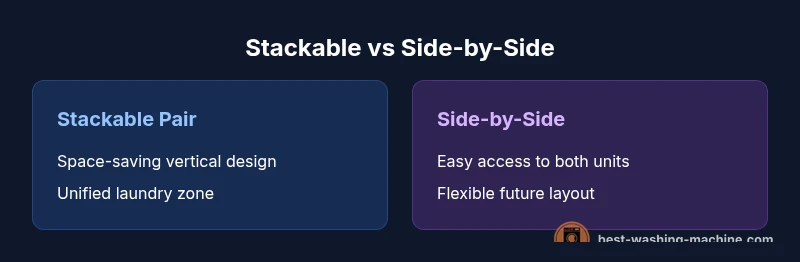
When deciding between stackable vs separate units, weigh space availability against flexibility. Stackables shine in narrow laundry spaces, apartments, and hall closets where two freestanding machines would dominate floor area. They may, however, constrain future reconfigurations if you anticipate moving to a larger home or altering the layout. In contrast, side-by-side units offer straightforward access to both machines and simpler service access in some layouts. If you have a longer-term plan to remodel or expand, consider how a stacked configuration aligns with your anticipated needs and whether you’d prefer easier upgrades or resale value. The decision should factor in ease of use, maintenance practicality, and how often you run larger or smaller loads.
Choosing the Right Stackable Setup for You
A practical choice begins with space assessment, budgets, and laundry habits. Start by listing the key dimensions of your laundry niche, door clearances, and electrical/water connections. Then, compare models with verified stacking compatibility and read user reviews focusing on reliability under vertical usage. Consider your typical load size, cycle preferences, and whether you value compact design for apartment living or a more robust setup for frequent heavy loads. Finally, factor in warranty coverage and the availability of service centers in your area. A thoughtful approach helps ensure the stackable pairing meets your needs for years to come.
stackable laundry
Comparison
| Feature | Stackable Laundry Pair (with stacking kit) | Separate Side-by-Side Units |
|---|---|---|
| Space Efficiency | Maximizes vertical footprint; minimal floor use | Requires larger horizontal footprint; two freestanding footprints |
| Installation Complexity | Requires a specific stacking kit and precise alignment | Easier installation but occupies more floor space |
| Vibration and Noise | Can be optimized with anti-vibration features | Typically steadier when isolated from each other |
| Maintenance Access | Top unit less accessible; ensure clearance | Easier access for servicing and cleaning on both sides |
| Performance Alignment | Designed pairing can optimize cycles and energy use | Mix-and-match may affect balancing and performance |
| Aesthetics and Ergonomics | Sleek vertical profile; controlled height | Classic two-machine look; more floor space |
What's Good
- Saves floor space by stacking vertically
- Creates a cohesive laundry zone in tight spaces
- Reduces clutter with a single, combined setup
- Can lower installation footprint in small apartments
Downsides
- Requires precise compatibility and a matching stacking kit
- Top unit access may be restricted for maintenance
- Potential for vibration if not installed correctly
- Less flexible for future room layout changes
Stackable configurations are best for compact spaces when you can confirm compatibility and proper installation.
If space is at a premium and you can pair a front-load washer with a compatible dryer using the correct stacking kit, stacking offers strong value. For larger rooms or when future layout changes are likely, weigh the trade-offs against side-by-side units.
FAQ
What is a stackable washer and dryer?
A stackable washer and dryer are two appliances designed to be installed one on top of the other with a stacking kit. This setup saves floor space and is common in apartments and small homes. The pair should be compatible and installed per the manufacturer’s instructions to ensure safety and performance.
Stackable units are two appliances built to stack on top of each other using a stacking kit, saving floor space.
Are stackable units suitable for apartments?
Yes, stackable units are a popular choice for apartments when space is limited. Ensure the niche can accommodate the height and that there is proper clearance for doors, vents, and service access. Check local codes and warranty terms before purchasing.
Great for apartments when space is tight, just confirm clearance and installation requirements.
Do I need a professional to install a stackable system?
Professional installation is strongly recommended to ensure proper alignment, secure mounting, and correct hookups for water, drainage, and electricity. A correctly installed stack reduces vibration and protects the warranty.
Yes. A pro will ensure the kit, connections, and leveling are correct.
Can I mix brands when stacking a washer and dryer?
Mixing brands is sometimes possible if both units are labeled as stacking-compatible and using the official kit. For reliability and warranty coverage, use matching sets or confirmed compatible models.
Only mix brands if both are explicitly stack-compatible with the same kit.
What maintenance is required for stacked units?
Regularly inspect hoses, seals, and lint filters. Keep the units level and free from obstructions. Schedule periodic professional check-ups to maintain performance and prevent leaks or breakdowns.
Check hoses and seals, keep it level, and have periodic professional checks.
The Essentials
- Assess space and confirm stacking compatibility first
- Choose models that come with official stacking kits
- Ensure access for maintenance and safe door openings
- Plan for electrical, water, and venting requirements
- Check warranty implications before installation