Washing Machine Extra Large Capacity: Buying Guide
Discover washing machine extra large capacity models: how to choose drum size, front-load vs top-load options, energy and water use, maintenance, and practical tips for bulky laundry.


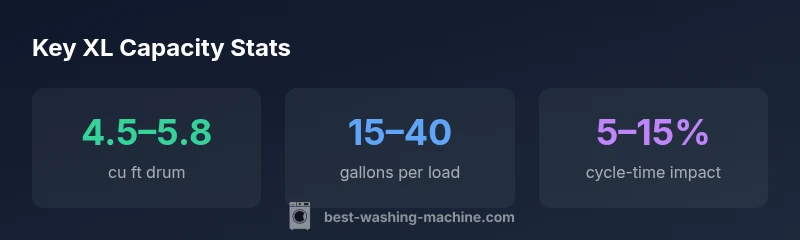
Extra large capacity washing machines typically offer about 4.5 to 5.8 cubic feet of drum space, allowing full loads of bulky items like comforters. Upgrading from standard models yields a noticeable difference in load size and performance. According to Best Washing Machine analysis, XL capacity can improve convenience for large households, though cycle times and energy use vary by model.
What washing machine extra large capacity means in practice
When shoppers hear washing machine extra large capacity, they’re thinking drum space and performance that lets them clean bigger loads without splitting items. According to Best Washing Machine, XL capacity is best measured by drum volume, tub geometry, and how efficiently a machine spins and rinses. In real terms, it means you can fit bulky items like full bedding sets, winter coats, and queen-size comforters in a single cycle, reducing the number of loads per week. The trade-off is that some XL models use more water and energy per cycle unless you choose efficient settings. For many households, the payoff is fewer laundry sessions and less time spent sorting items.
Key takeaway: XL capacity isn’t only about a larger drum; it’s about how the drum design and motor work together to handle bulky items efficiently.
Assessing real needs before buying an XL model
Start by listing your typical laundry volume, bedding count, and available space. If you regularly wash bulky items or share the machine with several people, an XL model can dramatically cut cycles. Measure your laundry nook and check door openings to ensure the machine fits with clearance for hoses and vents. Compare drum sizes in cubic feet and read user reviews on actual load performance. As you evaluate models, factor in your typical load size, the frequency of heavy-duty cycles, and whether you need features such as sanitize cycles or steam settings. Remember, bigger is not always better if the extra capacity sits idle most weeks. The goal is to match capacity to your actual usage.
Practical tip: list your top three bulky items and verify the machine can handle them in a single cycle.
How drum size translates to real-world loading
XL drum volumes commonly sit around 4.5–5.8 cubic feet. This translates into a single load that can handle a queen-size comforter, multiple towels, and several outfits without cramming. The geometry matters: a taller drum with a wide mouth can accommodate bulky items more evenly, improving agitation and rinse efficiency. However, space inside the drum isn’t the only factor; the drum’s paddles, agitation pattern, and spin speed influence how effectively items are cleaned in a single cycle. In practice, the convenience comes from fewer loads, shorter laundry days, and more predictable wash results. The Best Washing Machine analysis notes that you may still want to run smaller, energy-saving cycles for lighter items to optimize efficiency.
How this translates to decisions: aim for a model with a deep drum profile and a wide door opening for bulky loads.
Front-load vs top-load XL: pros and cons
Front-load XL washers generally offer better energy and water efficiency, higher spin speeds, and gentler handling of fabrics. They may require more bending to load; pedestal stands can help. Top-load XL models tend to be easier to load without bending and may accommodate larger bulky items due to a wider opening, but some older top-load designs use more water per cycle and can have longer cycles. Consider whether you value interior accessibility or purely capacity; also check vibration control and balance features for stable operation on large loads. In summary, both formats exist in XL capacity, so choose based on ergonomics, space, and energy priorities.
Quick decision aid: if you value efficiency, lean toward front-load; if you prioritize ease of loading, top-load can be compelling.
Energy and water use with XL capacity
XL capacity doesn’t automatically mean higher energy use; models vary widely. Modern XL washers can achieve high efficiency with load-sensing controls, multiple wash phases, and efficient motors. Expect per-load water use in the 15–40 gallons range depending on size, wash settings, and whether you run heavy cycles. If your goal is to minimize utility bills, compare energy ratings, and look for smart sensors that tailor water and time to the actual load. Use proper detergent amounts and avoid overloading beyond the machine’s design capacity to maintain efficiency.
Best practice: review the label for energy and water efficiency metrics and test different cycle options on bulky items to find a balance between cleanliness and consumption.
Maintenance and care for large drums
Large drums require regular care to prevent odor, residue, and mold. Use high-quality detergent, choose self-clean or tub-clean cycles periodically, and keep the door/gasket clean and dry to prevent mildew. Inspect hoses for wear, ensure level installation to reduce vibration, and clean lint filters if present. For bulker items, do not overload beyond the script’s limit; overloading can strain the motor and reduce cleaning effectiveness. Schedule professional servicing if you notice unusual vibration, leaks, or persistent unclean smells.
Cycle performance with bulky laundry: what to expect
Bulky items often need longer or heavier cycles to achieve thorough cleaning. Expect longer wash times when you load quilts, comforters, or multiple thick towels. However, many XL models offer dedicated bulky or bedding cycles that optimize agitation, water flow, and spin speed for larger items. If you practice regular bulky-laundry days, you’ll appreciate the predictability of results and the ability to clean more in a single cycle. The key is balancing cycle length with your daily schedule and energy tolerance.
Buying checklist for washing machine extra large capacity
Use this quick checklist when shopping:
- Confirm the drum size (4.5–5.8 cu ft) and door opening width.
- Compare spin speeds and RPM ratings for efficient extraction.
- Review energy and water-use labels; prefer models with responsive load sensing.
- Check dimensions and ventilation space for your laundry closet.
- Consider warranty coverage and service availability in your area.
- Read user feedback on real-world bulky-load performance.
Final tip: write down your top 5 bulky-load scenarios and verify each model can handle them in a single cycle.
Common myths about XL capacity washers
Myth: Bigger drum automatically means better cleaning. Reality: cleaning performance depends on agitation, water flow, and cycle optimization, not just size. Myth: XL models always consume more water. Reality: many modern XL washers use advanced sensors to minimize water use per load. Myth: You must run long cycles for bulky items. Reality: efficient bulky cycles exist that balance time, energy, and cleanliness. Myth: XL capacity is only for large households. Reality: even smaller households can benefit from fewer loads if bulky items are frequent.
Comparison of XL capacity washers by type
| Category | XL Capacity | Typical Use Case |
|---|---|---|
| Front-load | 4.5–5.8 | Families with large laundry + bulky items |
| Top-load | 4.3–5.6 | Families with frequent bulky items |
FAQ
What defines washing machine extra large capacity?
XL capacity refers to drum space and overall design that allow for larger loads. It’s usually around 4.5–5.8 cubic feet, with performance dependent on drum geometry and motor efficiency.
XL capacity means a bigger drum and better ability to handle bulky loads in one cycle.
Are XL washers more energy-intensive?
Not inherently. Energy use depends on cycle selection, insulation, and efficiency features. Many XL models offer intelligent load-sensing to minimize energy per load.
Energy use varies a lot—pick models with good efficiency features.
Front-load or top-load better for XL capacity?
Both formats are available in XL sizes. Front-loads typically save water and energy, while top-loads can be easier to load and may offer bulkier-item advantages.
Front-loads save energy; top-loads can be easier to load. Pick based on space and priorities.
How do I know I need XL capacity?
Consider your household size, bedding volume, and how often you deal with bulky items. If you regularly wash large duvets or multiple large towels, XL can reduce loads.
If you regularly wash bulky items, XL may be worth it.
What maintenance is essential for XL washers?
Clean the drum and seals regularly, run self-clean cycles, check hoses, and avoid overloading. Regular service helps maintain performance on large drums.
Keep the drum clean and hoses checked for long-lasting XL performance.
What warranty aspects matter for XL capacity?
Look for tub and motor coverage, service availability, and terms that reflect frequent use with bulky items.
Check tub and motor coverage and service terms.
“XL capacity is most valuable when bulky laundry or multiple large loads are common in a household. Choose models with strong efficiency and reliable build for long-term value.”
The Essentials
- Know your real needs before buying—capacity should match actual usage.
- XL capacity means bigger drum space and better bulky-item handling, not just a bigger price tag.
- Compare drum size, spin speed, and efficiency together for real performance.
- Front-load XL models often win on energy and water efficiency, while top-load XL can be easier to load.
- Maintain XL drums with regular cleaning and sensor-friendly operation.