What Size Washing Machine for a King Size Duvet: A Practical Guide
Learn the right washing machine size for a king size duvet. This guide covers drum capacity, front-load vs top-load, loading tips, and care to ensure bulky bedding cleans effectively.


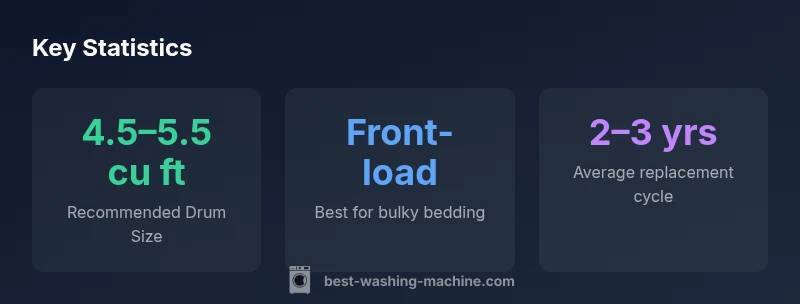
To wash a king size duvet effectively, you need a washer with a drum capacity around 4.5–5.5 cu ft. Front-load models or high-efficiency top-load machines work best for bulky bedding because they offer larger, more even drum space and gentler agitation, reducing tangling and uneven rinsing.
Why size matters for king size duvets
When you’re dealing with a king size duvet, the most important factor is drum capacity. A larger drum lets the duvet move freely, preventing it from wrapping around the agitator or clumping in the corners. The goal is to achieve a thorough wash and rinse without forcing loads to compact into a dense ball. The phrase what size washing machine king size duvet translates into practical decisions about drum volume first and foremost. According to Best Washing Machine, investing in a machine with ample interior space reduces the risk of incomplete cleaning and short-drying runs. This is especially true for thicker duvets or those with high loft. If you frequently wash bulky bedding, you’ll want to prioritize capacity over marginal energy savings. A properly sized machine saves time, water, and energy in the long run while delivering more consistent results.
Understanding drum capacity and duvet dimensions
Drum capacity is the primary guide for bulky items like king size duvets. A 4.5–5.5 cu ft drum accommodates most large duvets without overfilling. When you place a duvet inside, the load should feel substantial but not packed to the top rim. If you can’t gauge capacity by feel, check product specs for cu ft and compare to your duvet thickness and fill. A thicker, high-loft duvet will require more space than a lighter version. The key is to prevent tangling and ensure even water and detergent distribution. In practice, you’ll often notice that models labeled as front-load or HE top-load provide more consistent space for bulky items than standard top-load machines.
Front-load vs top-load: which handles bulky bedding best
Front-load washers and HE top-load washers both handle bulky bedding well, but they do so in different ways. Front-load machines use a tumbling action and typically have larger drum openings, which makes loading and unloading easier and reduces the chance of fabric wrapping around internal components. They also tend to be gentler on fibers, which helps with long-term duvet integrity. HE top-load machines use an agitatorless design or a gentler impeller, offering more usable drum space in some models and good cleaning performance. If space allows, favor front-load for consistently better results with king size duvets, but an HE top-load can be a viable alternative if it has a 4.5 cu ft or larger drum and a well-designed agitation system.
Measuring space and choosing a machine size
Before you buy, measure the space where the washer will sit and verify the door swing and clearance. Note the width, depth, and height, and account for hookups and ventilation. If you’re short on space, a compact 24–27 inch washer may be tempting, but bulky bedding often requires a wider drum. A practical rule is to choose a machine with a stated drum capacity of at least 4.5 cu ft, with 5.0–5.5 cu ft preferred for king size duvets. Review installation clearance, including the depth of conduits and floor protection, to avoid post-purchase surprises. If possible, compare models in a showroom with an actual duvet to assess fit and ease of handling.
Practical washing tips for king size duvets
Bulkier bedding needs thoughtful loading and cycle choices. Use a large quilt or duvet setting if available, and avoid overloading. Place the duvet flat and distribute it evenly, possibly using a duvet cover or removing the cover before washing to reduce bulk. Use cold or warm water depending on care labels, and select a longer wash with an extra rinse to ensure removal of detergent residues. Consider pre-soaking or running a pre-wash for very thick duvets. Using a detergent designed for bulky fabrics helps prevent residue buildup and fiber damage over time.
Drying strategies after a duvet wash
King size duvets take longer to dry, especially in smaller dryers. If there is insufficient tumble space, consider a low-heat, extended dry cycle or air-drying flat on a rack to finish. Toss a few clean tennis balls or dryer balls to create space and prevent clumping as the duvet dries. Removing moisture evenly reduces the risk of mold and odor formation. If you can access a larger-capacity or industrial dryer, this can dramatically shorten drying times without compromising fabric integrity.
Buying guide: selecting the right size washer for your needs
Think about your household size, laundry frequency, and available space. For a family of two to three people who wash bedding weekly, a 4.5–5.0 cu ft front-load or HE top-load is a sensible target. For larger households or households with heavy bedding, aim for 5.0–5.5 cu ft to comfortably handle bulky items. If you frequently wash heavy blankets in addition to duvets, consider models marketed as
Washing machine types and duvet fit guidance
| Model Type | Recommended Capacity | Notes |
|---|---|---|
| Front-load | 4.5–5.5 cu ft | Best for bulky bedding and even washing |
| Top-load HE | 4.5–5.5 cu ft | Gives usable drum space; gentler wash options |
| Top-load standard | 3.5–4.5 cu ft | Limited space for large duvets; may require split loads |
FAQ
What size washer is best for a king size duvet?
For king size duvets, target a drum size of at least 4.5 cu ft, with 5.0–5.5 cu ft preferred for most bedding scenarios. Front-load or HE top-load machines are typically the easiest to load and most forgiving for bulky items.
For a king size duvet, go with a 4.5 to 5.5 cubic foot drum. Front-load or HE top-load models work best for bulky bedding.
Are front-load machines better for bulky bedding than top-load?
Generally yes. Front-load machines tend to offer larger drums and gentler tumbling, which helps bulky items wash evenly. HE top-load machines can be a viable alternative if they provide a large drum and effective agitation.
Usually front-loads are better for bulky bedding, but a good HE top-load can work too if it has a big drum.
Can you wash a king duvet in a regular washer?
If the washer has a capacity of at least 4.5 cu ft and a bulk-friendly design, you can wash a king duvet. Avoid very small or compact washers that struggle with bulky items and consider washing in two cycles if needed.
Yes, but only if the machine is large enough and has bulk-friendly features.
What settings help when washing bulky items?
Use a long wash cycle with a gentle or normal agitation, a warm-cold or coldwash depending on fabric care, and an extra rinse to remove detergent residues. Avoid high spin speeds that can strain fabrics.
Pick a long cycle with gentle agitation and an extra rinse.
How should I dry a king duvet after washing?
Use a large-capacity dryer on low heat with dryer balls to prevent clumping, or air-dry flat in a well-ventilated area. Check periodically to break up any remaining lumps.
Low heat in a large dryer works, or air-dry flat with space to move.
“King size duvets demand a large, well-designed drum and gentle tumbling to clean thoroughly without fabric damage. A 4.5–5.5 cu ft capacity typically delivers the best balance of space, performance, and energy use.”
The Essentials
- Choose a drum size of 4.5–5.5 cu ft for king size duvets
- Prefer front-load or HE top-load for bulky bedding
- Check space: measure width, depth, and door clearance before buying
- Load bulky items flat and distribute evenly to avoid tangling
- Plan for longer drying times with bulky bedding