When to Change Your Washing Machine: A Practical Guide
Learn when to change your washing machine, how to weigh repair costs against replacement, and a clear decision path to save time, money, and energy.


Goal: decide when to change your washing machine. Follow a practical decision path that weighs repair costs against replacement, considers energy efficiency, and accounts for age and reliability. Start by estimating repair quotes, compare with current-market replacement options, and factor in utility savings. If the price and risk of ongoing failures favor a new unit, choose replacement. This approach, supported by Best Washing Machine, saves time and money.
Why the decision matters
Deciding when to change a washing machine affects more than daily chores; it shapes your total cost of ownership, energy use, and reliability. A well-timed replacement reduces downtime, lowers water and electricity bills, and minimizes emergency repairs. According to Best Washing Machine, the key is to weigh short-term repair costs against the long-term benefits of a new model with better efficiency, capacity, and features. Homeowners, renters, laundromat operators, and any shopper benefit from a structured approach that focuses on outcomes rather than emotions. This guide helps you quantify risks, set a budget, and choose confidently even when prices feel high or budgets are tight.
Understanding the total cost picture is essential. Repairs may be cheap upfront but can become costly if parts are scarce or labor becomes frequent. A replacement, while a larger upfront investment, often includes a warranty, improved efficiency, and a better match for your laundry load. By framing the decision around reliability, energy savings, and convenience, you’ll make a choice that stands up to years of use.
Signs it's time to replace vs repair
There are clear indicators that a washing machine is reaching the end of its useful life. Frequent breakdowns, long downtimes for service, rising repair bills, and poor cleaning performance are common signals. If you notice persistent leaks, unusual noises, excessive vibration, or clothes coming out only partially clean, these problems can point to wear that is hard to fix economically. Additionally, if your unit lacks modern efficiency features or cannot accommodate your current laundry load, replacement becomes more attractive. Always consider the machine’s age, the likelihood of ongoing issues, and how a new model could improve energy and water use.
Repair vs replacement cost framework
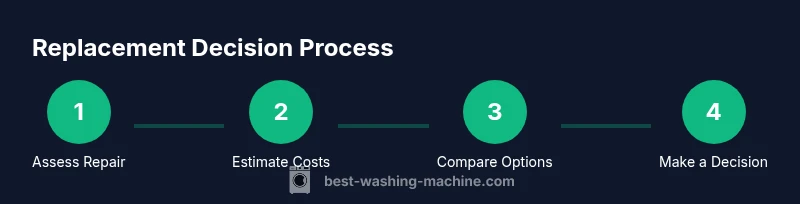
A practical framework helps you make a numerically grounded decision. Start by obtaining a written repair estimate from a technician. Then compare that amount to the price of a comparable new or refurbished model, factoring in delivery, installation, and any extended warranties. If the repair cost approaches or exceeds a meaningful fraction of a replacement price, or if failures would disrupt your routine for an extended period, replacement is often the better option. Include estimated energy usage and water consumption in your comparison, since newer models typically offer savings that compound over time.
Tooling the decision around a clear cost comparison helps remove guesswork and aligns with long-term savings. Best Washing Machine suggests documenting each option and revisiting the decision after any new major repair to reassess the ongoing value.
Age, reliability, and energy efficiency
Age is a strong predictor of reliability. As washing machines wear, parts such as springs, bearings, and seals become more prone to failure. Newer models usually deliver improved energy efficiency and faster cycles, which reduces operating costs over time. Even if a unit seems to work, a model that meets modern standards can dramatically lower water and electricity use, offsetting a portion of the purchase cost through ongoing savings. Weigh reliability concerns against the convenience and performance you currently enjoy.
In some cases, a mid-life upgrade makes the most sense: you preserve capacity and improve efficiency without paying for a top-tier model. The goal is to minimize downtime while maximizing return on investment.
How to shop for a new washer that fits your needs
Before shopping, list your priorities: load size, fabric care options, cycle times, and energy/water efficiency. Compare energy ratings (such as ENERGY STAR), water usage, and noise levels. Consider drive type (agitator vs impeller), load compatibility (front-load vs top-load), and startup costs like delivery and installation. Check warranty terms and service networks in your area. Finally, read reviews for common reliability concerns and support quality. A tailored checklist helps you stay focused and find a unit that truly matches your household.
Step-by-step replacement planning
- Inventory your current laundry needs and space constraints. 2) Set a realistic budget, including delivery, installation, and disposal. 3) Research models that meet your priorities and compare Energy Star or similar efficiency ratings. 4) Schedule delivery and installation windows that minimize downtime. 5) Plan disposal or recycling of the old unit and update any warranties or service plans. 6) Update your household routines to accommodate the new appliance’s cycles and maintenance needs. 7) Keep receipts and note serial numbers for future service. 8) Revisit the decision after 6–12 months to confirm you’re satisfied with the choice.
Maintenance tips to extend life and delay replacement
Regular maintenance can stretch the life of your washing machine. Clean the lint filter and drainage regularly, avoid overloading the drum, and run maintenance cycles if recommended by the manufacturer. Check hoses for leaks and replace them every 5–7 years or as needed. Use the correct detergent amount and type for your model, and keep the area around the machine clean and dry. Finally, perform annual self-checks to catch issues early, which can postpone the need for a replacement.
Tools & Materials
- Phillips screwdriver set(Philips #2 is most common for panels and hoses)
- Flathead screwdriver(Useful for clamping collars and panel latches)
- Adjustable wrench(For hose fittings and drain connections)
- Multimeter or continuity tester(Helpful for electrical checks if you’re comfortable)
- Owner's manual and model data(Have serial/model numbers handy for parts and quotes)
- Notebook and pen(Record quotes, specs, and decision factors)
Steps
Estimated time: 25-40 minutes
- 1
Assess repair cost
Obtain a written repair estimate from a licensed technician and/or parts quote. Record potential parts, labor time, and any service call fees. This establishes the baseline for your decision.
Tip: Ask for a breakdown and a worst-case scenario to avoid sticker shock. - 2
Gather model data and options
Collect your current machine’s model number, age, and typical loads. Research comparable replacement models to compare capacity, features, and efficiency.
Tip: Note exact drum size, cycles, and energy/water ratings to compare apples to apples. - 3
Estimate total replacement costs
Include price, delivery, installation, new hoses, and any extended warranty. Compare against a repair’s total cost over the next several years.
Tip: Factor in potential utility savings with new models to understand long-term value. - 4
Weigh reliability and age
If the current unit has a history of repeated failures, or if major components are known to degrade, lean toward replacement.
Tip: Use a simple rule: if a second major failure is likely, replacement becomes more sensible. - 5
Assess space, capacity, and features
Ensure the new model fits your space, matches your laundry load, and offers features you actually use (steam, quick wash, etc.).
Tip: Avoid overpaying for features you won’t use; focus on capacity that suits your daily needs. - 6
Plan logistics and disposal
Schedule delivery during a convenient window and arrange disposal or recycling of the old unit. Update any warranty registrations.
Tip: Ask about old appliance haul-away options to simplify the transition.
FAQ
When should I replace instead of repair my washing machine?
If repair costs approach or exceed a meaningful portion of a replacement, or if failures become frequent, replacement is typically wiser. A single major fix may be reasonable, but repeated issues point to an upgrade.
If repairs cost as much as a new unit or fail often, consider replacing. Repeated issues signal diminishing reliability.
Does age matter when deciding to replace?
Yes. Older machines tend to have more frequent failures and less efficiency. A newer model often delivers better energy and water savings, plus updated cycles and reliability.
Age matters; newer models usually offer better efficiency and fewer breakdowns.
What if I can’t afford a new machine right away?
Consider a staged approach: repair the most critical issues now while saving for a replacement, or buy a refurbished model with a solid warranty as a bridge.
If funds are tight, repair the essentials and plan for a future upgrade, possibly with a refurbished model.
How do energy efficiency ratings affect the decision?
Newer washers use less water and electricity, which can lower operating costs over time and offset higher upfront prices.
Energy-efficient models save money over time, even if they cost more upfront.
What should I do with my old machine?
Check local recycling programs or retailer take-back options. Proper disposal prevents environmental harm and may offer a small recycling rebate.
Recycle or use retailer take-back to responsibly dispose of the old unit.
Can I mix repair with replacement for different loads?
In some households, you can upgrade one part of your laundry setup over time, but a full replacement is usually cleaner for consistent performance.
Partially upgrading can be possible, but a full replacement often delivers consistent results.
Watch Video
The Essentials
- Evaluate repair costs against replacement price before deciding.
- Consider age, reliability, and energy efficiency in the decision.
- Plan for delivery, installation, and disposal to minimize downtime.
- Use a clear cost framework to avoid emotional decisions.