What Washing Machine Uses the Least Water: A Comprehensive Comparison
A thorough, analytical comparison of water use across front-load and top-load washing machines, with practical tips to minimize water usage while preserving cleaning performance.


Front-load high-efficiency (HE) washers generally use the least water per cycle, especially when fully loaded and run in Eco or cold cycles. Among HE designs, front-load machines with impellers tend to sip less water than traditional agitator-based top-loads. While top-loading HE models can be competitive, the clear water-saving winner overall is a well-sized front-loading HE unit.
Why water efficiency matters in modern laundry
According to Best Washing Machine, water use is a key factor in operating costs and environmental impact. If you’re asking what washing machine uses the least amount of water, you’re asking to balance efficiency, cleaning performance, and everyday practicality. Modern washers designed for high efficiency (HE) and front-load configurations typically sip water thanks to sensors, tumble actions, and precision fill. This guide explores why water use matters, how efficiency varies by design, and what to expect from common configurations in real-world households. You’ll learn how to interpret specs, avoid overpaying for features that don’t save water, and spot models that genuinely minimize water use without sacrificing clean clothes.
Core definitions: water use, load sensing, and cycle types
Water use in washing machines is influenced by design, load detection, and cycle selection. Key terms readers should know include high-efficiency (HE), front-load versus top-load, impeller versus agitator action, and Eco or cold-cycle modes. HE machines are engineered to use less water and energy per cycle, but the actual savings depend on how you load the machine and which cycle you choose. Understanding these definitions helps you compare models more accurately and avoid overhyping water savings based on marketing alone.
How designers minimize water use: key mechanisms
Manufacturers pursue several strategies to shrink water usage per cycle. Load-sensing sensors determine the optimal fill level, preventing overfilling. Impeller-driven designs in front-load machines create a tumbling action that cleans effectively with less water than traditional agitator systems. Sealed gasket design and advanced rinsing strategies help reduce water wasted in the rinse phase. Cold-water washes, paired with high-efficiency detergents, further lower water use and energy consumption by avoiding hot-fill cycles. These mechanisms collectively explain why many HE front-load models outperform others in water efficiency tests.
Front-load HE vs Top-load HE: water usage in practice
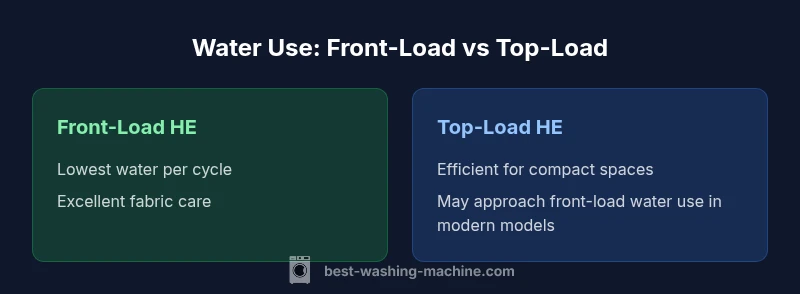
Between front-load high-efficiency (HE) and top-load HE with impeller technology, the water-use narrative tends to favor front-load designs. Front-load HE washers typically require less water per cycle when fully loaded, thanks to tumble mechanics and precise fill control. Top-load HE units with impellers can be very efficient as well, particularly in models designed for compact spaces or frequent small loads. However, the structural advantage of a front-load drum—combined with modern sensors and eco-cycles—often yields the lowest water use over the long term.
When water use matters most: load size and cycles
Water savings hinge on how you load the machine and which cycles you run. Full loads maximize water efficiency in front-load HE models because the system calibrates fill and agitation to the actual load. Partial loads tend to waste water relative to the clothes cleaned, especially on traditional cycles. Eco-friendly cycles, cold washes, and gentle spin speeds can further minimize water usage, but they may extend cycle times. Knowing when to use specific cycles helps you optimize water savings without sacrificing cleanliness.
Reading the spec sheet: what to look for on water use
When comparing models, don’t just rely on the marketing claim of “high efficiency.” Look for specific indicators: energy star or water-use ratings in the spec, the presence of an impeller vs an agitator, load-sensing capability, and whether the cycle options include an eco or cold wash. Watch for terms like “low-water fill,” “auto-sense,” and “partial-load optimization.” These features collectively signal lower water use in everyday operation.
Real-world expectations: performance vs water savings
Water efficiency is not the only factor in choosing a washer. Some models achieve low water use by increasing cycle times or adding multiple rinse steps, which can affect convenience and reliability for heavy soils. In practice, a well-chosen front-load HE unit will deliver solid cleaning while using substantially less water, particularly for typical family loads. It’s essential to balance water savings with other performance attributes like stain removal, fabric care, and cycle duration.
Practical tips to minimize water usage in daily laundry
To optimize water use: always run full loads, use eco/cold cycles when appropriate, and select appropriate spin speeds that balance moisture removal with water draw. Use high-efficiency detergents designed for low-water washing, and keep the door seal clean to prevent leaks that waste water over time. Regular maintenance, such as cleaning filters and gaskets, also helps maintain water efficiency by preventing unnecessary water loss through poor seals or restricted flow.
How to choose a washer for water efficiency: a buying checklist
Create a practical checklist to compare options: verify water-use ratings, confirm the machine is HE and front-load when water savings are your priority, assess cycle options for eco-friendly modes, consider load-sensing features, and evaluate warranty and reliability. Also check for accessories that help maintain efficiency, such as self-cleaning cycles that prevent residue buildup, as this can impact water flow over time.
Common myths about water use in washing machines
A widespread myth is that bigger or faster cycles automatically save water—which isn’t always true. In many cases, efficient machines use less water per cycle regardless of the cycle length, by optimizing fill and rinse sequences. Another misconception is that all front-loads are automatically the best; actual water use depends on the model’s design, sensor accuracy, and proper operation.
The broader context: water use, energy, and maintenance
Water efficiency intersects with energy use and maintenance. Cold-water cycles save energy; however, if frequent hot washes are avoided, you can further reduce overall resource use. Proper maintenance reduces the risk of leaks and gasket mold, which can otherwise waste water over time. A balanced decision should consider upfront cost, reliability, energy efficiency, and long-term water savings.
Next steps and recap
With many variables affecting water use, the best approach is to compare models using clearly defined criteria, including water-use ratings, cycle options, and real-world load performance. By focusing on front-load HE designs with robust load sensing and eco cycles, you can minimize water use without compromising cleanliness.
Comparison
| Feature | Front-Load High-Efficiency (HE) | Top-Load High-Efficiency (HE) with Impeller |
|---|---|---|
| Water usage per cycle | lowest per cycle among HE designs | low-to-moderate per cycle among HE top-loads |
| Fabric care | excellent due to tumbling action and low fill | good to very good depending on model and cycle |
| Load flexibility | best for large or bulky loads; full drums maximize efficiency | strong for small spaces; careful load balancing advised |
| Detergent efficiency | HE detergents required; reduces water waste | HE detergents required; reduces water waste |
| Price Range | higher upfront cost but lower operating cost | moderate to high upfront cost with efficiency benefits |
| Maintenance & durability | less risk of agitator wear; gasket maintenance important | similar maintenance needs; check for mold-prone seals if not maintained |
| Best for | water-lean households and large families prioritizing efficiency | apartment living or small households needing compact options |
What's Good
- Significant water savings with front-load HE designs when loaded properly
- Gentler on fabrics due to tumbling action and low fill levels
- Compatibility with cold water washes reduces energy use
- Strong resale value and lasting efficiency with proper maintenance
Downsides
- Higher upfront cost for HE/front-load models
- Potential mold and mildew risk in gasket with improper maintenance
- Longer cycle times can be inconvenient
- Effectiveness depends on usage patterns and load size
Front-load HE washers generally win on water efficiency; top-load HE with impeller can be competitive in small spaces.
Choose front-load HE if you want the lowest water use and excellent fabric care. Opt for top-load HE with an impeller if you need easier loading access or space constraints, but expect slightly higher water use on average.
FAQ
Which type of washing machine uses the least water?
In most cases, front-load high-efficiency (HE) washers use the least water per cycle, especially when you run full loads in eco or cold modes. Impeller designs within the front-load category tend to be more water-efficient than agitator-based top-loads. Always verify the specific model’s water-use rating in the specs.
Front-load HE washers usually use the least water, especially when fully loaded and running eco cycles.
Do top-load washers ever use less water than front-load models?
Some modern top-load HE models with impellers can rival front-load efficiency, but front-load units typically lead in water savings. Compare the model's water-use rating and cycle options to determine which is best for your needs.
Some top-load HE models are very efficient, but front-load usually wins for water use overall.
How can I verify water usage ratings for a washer?
Look for the washer’s water-use rating in its Energy Star or manufacturer specs. Compare per-cycle or per-load water figures and ensure the model supports an eco or cold-wash option. Real-world reviews can also reveal water-use performance under typical loads.
Check the spec sheet for water-use and eco-cycle options; reviews can confirm real-world performance.
Does washing with cold water always save water?
Cold-water washing can reduce energy use, especially if your water heater is a major energy draw. It doesn’t always reduce water use on every cycle; some fabrics require warmer temps to achieve stain removal, which can increase water use for that cycle.
Cold water saves energy more than water, but it doesn’t always cut water use on every cycle.
Can partial loads waste water?
Yes. Running partial loads on cycles that aren’t optimized for small loads can waste water compared with running a full load. Use eco or auto-sense modes to optimize water use for smaller loads when the model supports them.
Partial loads can waste water unless the model supports efficient partial-load modes.
The Essentials
- Prioritize front-load HE models for the lowest water use
- Use eco/cold cycles and load to capacity to maximize savings
- Check for explicit water-use ratings on spec sheets
- Maintain seals and filters to prevent leaks and waste
- Balance water savings with cycle length and cleaning needs