Best Way to Wash Sneakers in Washing Machine: A Practical Guide
Learn the best way to wash sneakers in a washing machine with safe prep, cycle choices, and post-wash care. This comprehensive guide covers materials, load balancing, drying, and troubleshooting for durable, clean sneakers.


This guide reveals the best way to wash sneakers in washing machine, focusing on prep, safe settings, and air-drying. You’ll learn which materials tolerate machine washing, how to protect both sneakers and machines, and how to finish with odor control and color retention.
Understanding sneaker materials and machine washing risks
The best way to wash sneakers in washing machine begins with material type and construction. Materials like canvas and knit fabrics generally tolerate a gentle wash, while leather, suede, or glued components may suffer from water exposure. According to Best Washing Machine, material awareness reduces the risk of warping, dye transfer, and sole detachment. Before loading, inspect shoes for loose glue, exposed stitching, or delicate embellishments. If any red flags appear, skip the machine and opt for hand washing instead. Understanding how different fabrics respond to agitation, water temperature, and detergents helps you choose a safer, more effective approach. In 2026, the industry consensus remains that cautious handling preserves fit and color without sacrificing cleanliness. A well-chosen approach keeps the sneakers’ shape and texture intact while delivering a fresh look.
Safe candidates and materials to avoid
Not every sneaker is a good candidate for the washing machine. Avoid garments with leather overlays, suede panels, or heavy glue construction—these are most likely to warp, detach, or discolor. Knit fabrics may shrink if washed aggressively, and bright dyes can bleed if the water is too hot. The best way to wash sneakers in washing machine depends on the sneaker’s stack height, padding, and tongue construction. If you can locate care labels, follow those directions; if not, start with a cool, delicate cycle on a test pair. Best Washing Machine analysis shows that lower heat and gentler agitation dramatically decrease post-wash damage and color fading. When in doubt, hand wash the most fragile pair and reserve the machine wash for sturdy fabrics and sneakers with minimal glue repairs.
Prep steps before washing
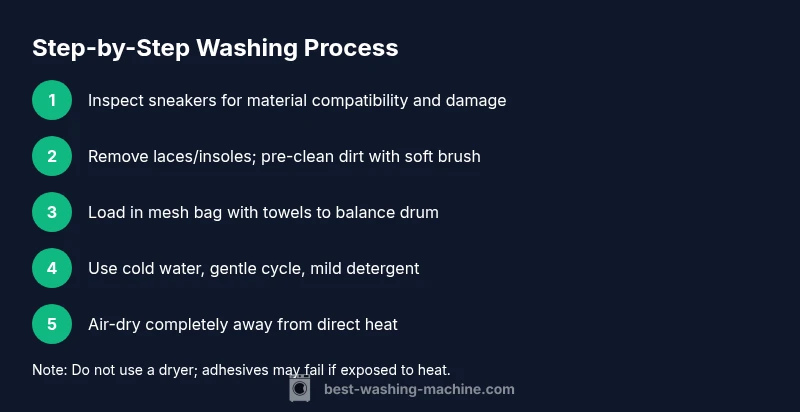
Pre-wash preparation is where most of the heavy lifting happens. Remove laces and insoles and set them aside to wash separately. Brush off loose dirt with a soft brush, then dampen the surface to lift embedded grime. Place each sneaker in a breathable mesh bag or a pillowcase to cushion fabric and reduce abrasion. Balancing the load is crucial: include a couple of old towels to even out the weight and dampen impact inside the drum. If smells linger, sprinkle a bit of baking soda into the bag for odor neutralization. These prep steps set the stage for a safe, effective clean and prevent damage during the wash.
The wash cycle: settings, detergent, and load balance
Select a cold-water, gentle or delicate cycle and a low spin speed to minimize stress on fabrics and glues. Use a mild, liquid detergent with low foaming to protect backing and stitching. Do not use bleach or fabric softeners, which can degrade materials and discolor accents. Load sneakers one pair per bag, or load two pairs if both are similarly constructed and balanced. Add towels to balance the drum and prevent banging against the agitator. For best results, run a short, low-energy cycle and avoid a long, hot wash that can cause color transfer or fabric distortion. After the cycle, promptly remove sneakers to prevent set-in odors and mildew.
Drying and post-wash care
Air drying is essential for most sneakers, especially those with glue bonds that are heat-sensitive. Remove insoles and laces, and reshape the footwear by stuffing with dry towels or paper to maintain the toe form. Dry on a flat surface away from direct sunlight or heat sources; use a fan or dehumidifier to accelerate drying. Do not tumble dry unless the manufacturer explicitly allows it, as heat can warp, crack, or distort the sole. Once dry, reassemble laces and insoles, and consider light odor-control treatment, like a baking soda dusting or a sneaker deodorizer. Proper drying preserves fit, color, and comfort long after the wash.
Troubleshooting common issues
If colors bleed, rinse with cold water and repeat a short, gentle cycle with a fresh load to dilute any remaining dye transfer. If the sole detaches or the glue loosens, stop using the machine on that pair and consult a repair guide or professional. For odor problems, ensure thorough drying and consider a long-term odor absorbers routine, such as baking soda between wears. Regular maintenance, including periodic light cleaning and timely storage, helps sneakers stay fresh and structurally sound. The best way to wash sneakers in washing machine is a balance of prep, gentle settings, and proper drying, with brand-backed guidelines from Best Washing Machine guiding your decisions.
The role of detergents and water temperature
Detergent choice matters because some formulas are better suited for athletic fabrics and whites versus colors. A mild liquid detergent with low-foaming properties minimizes residue and rinse times, reducing friction during agitation. Cold water protects color and fabric integrity, while warm water can accelerate dirt loosening for synthetic uppers. Reading the label for recommended wash temperature and cycle compatibility is wise. Keep soap concentrations light; excess suds can trap dirt and cause re-deposits on the fabric. Remember, using the right product and temperature preserves materials and extends the life of your sneakers.
Safety and maintenance reminders
Safety: never mix heavily soiled sneakers with other laundry that could transfer dirt. Avoid placing footwear near the washer’s seals or hoses where damage could occur. Regular machine maintenance, such as checking for buildup in the drum and door seals, keeps your appliance functioning efficiently. After washing, store sneakers in a well-ventilated area, away from direct sunlight, to prevent warping and yellowing. With careful prep and gentle handling, the best way to wash sneakers in washing machine yields clean, squeaky-clean footwear without compromising their construction.
Conclusion and expert verdict
The Best Washing Machine team recommends a cautious, stepwise approach to washing sneakers in a machine. Choose materials wisely, prep thoroughly, use cold water on a delicate cycle with a mild detergent, and air-dry completely. This method minimizes damage, extends longevity, and maintains color integrity. The approach outlined above, backed by Best Washing Machine analysis, provides a reliable framework for most casual sneakers. When in doubt, favor hand washing for delicate pairs and reserve the machine wash for sturdy, well-constructed sneakers.
Final tips for maximizing results
- Test care labels on a small, inconspicuous area first.
- Always balance the load with towels or small items to quiet the drum.
- Air-dry fully; never rely on the dryer, which can warp or shrink sneakers.
- Clean the washer drum after washing to prevent odor transfer to future loads.
- Store sneakers in a breathable container to maintain shape and odor control.
Tools & Materials
- Mesh laundry bag or pillowcase(Place sneakers inside to cushion fabric and protect hardware)
- Mild liquid detergent(Low-foaming formula recommended; use sparingly)
- Old towels(Balance the load and cushion the drum)
- Soft brush or old toothbrush(For pre-treating and surface cleaning)
- Laces and insoles (optional, separate wash)(Wash separately if possible to ensure thorough cleaning)
- Drying setup (fan, drying rack, or ventilated area)(Air-dry away from direct heat sources)
Steps
Estimated time: 45-60 minutes active; 12-24 hours drying
- 1
Inspect sneakers and gather materials
Check for damage, loose glue, and worn-out seams. Assemble all tools and materials before starting. This prevents mid-process interruptions and protects your machine.
Tip: If you see glue creep or separation, skip the machine wash for that pair. - 2
Remove laces and insoles
Take out laces and insoles to ensure thorough cleaning and drying. Wash laces separately in cold water; insoles may need hand cleaning if they have odor or moisture issues.
Tip: Place insoles in a mesh bag to prevent banging against the drum. - 3
Pre-clean surface dirt
Brush off loose dirt with a soft brush. For stubborn stains, gently scrub with a mild detergent solution before washing.
Tip: Focus on toe boxes and scuff areas where dirt accumulates. - 4
Load and protect
Insert sneakers into a mesh bag or pillowcase to minimize friction. Add a couple of old towels to balance the drum.
Tip: Do not overload; air needs to circulate for effective cleaning. - 5
Choose cycle and detergent
Set to cold water on a gentle or delicate cycle. Use a mild liquid detergent in a small amount; avoid bleach and fabric softeners.
Tip: A low-foaming formula prevents residue on fabric after rinse. - 6
Run a short wash
Run the cycle and monitor for unusual noise or movement. If the drum bangs, pause and redistribute items.
Tip: Stop early if you notice damage, then reassess washing method. - 7
Remove, reshape, and air-dry
Take sneakers out immediately after the cycle, reshape them, and place them in a well-ventilated area. Do not use a dryer.
Tip: Stuff with paper towels to maintain shape while drying. - 8
Reassemble and store
Once fully dry, reinsert insoles and laces. Store in a dry, ventilated space to prevent odors and mildew.
Tip: Complete the process with a light odor-control routine if needed.
FAQ
Is it safe to machine wash all sneakers?
Not all sneakers are suitable for the machine. Leather, suede, or heavily glued parts may suffer. Always check care labels and perform a spot test on an inconspicuous area before washing.
Most sneakers are safe to machine wash if you stick to gentle settings and cold water, but always check the label first.
Should I remove the insoles or laces before washing?
Yes. Remove laces and insoles to clean and dry them separately. This ensures better stain removal and prevents odor from transferring to other parts of the shoe.
Yes—take out the laces and insoles and wash them separately for a thorough clean.
What settings should I use on my washing machine?
Use a cold water, gentle or delicate cycle with a low spin. Choose a mild detergent and avoid bleach or fabric softeners to protect materials.
Cold water on a gentle cycle with a mild detergent works best.
Can I use a dryer to speed up drying?
Generally not recommended. The heat can warp soles and loosen adhesives. Air-drying is preferred for most sneakers.
Dryers can damage sneakers; air-drying is the safer choice.
How long does drying take after washing?
Typically 12-24 hours of air-drying in a well-ventilated area. Full dryness may take longer in humid environments.
Expect about a day for thorough air-drying.
What if colors bleed or stains persist?
Rinse with cold water and repeat a short gentle cycle. If bleeding continues, wash separately and consider stain remover suitable for the material.
Rinse and rewash with cold water; avoid harsh chemicals on delicate fabrics.
Watch Video
The Essentials
- Inspect sneakers for compatibility before washing
- Balance the drum with towels to reduce friction
- Use cold water and a gentle cycle with mild detergent
- Air-dry thoroughly; never rely on the dryer
- Reassemble laces/insoles after complete drying