Does Washing Machine Have Copper? What Homeowners Should Know
Discover whether copper appears in washing machines, where it’s used, and how this affects durability, repair, and recycling. Learn about copper components and what to check during maintenance.


Does washing machine have copper? Yes. Copper is used in several essential components of most washing machines, including motor windings, plumbing fittings, and heating elements. Copper improves electrical conductivity and heat transfer, contributing to performance and durability. The amount varies by model and brand, but copper remains a common material in reliable appliances.
Copper in washing machines: what's inside
Does the question 'does washing machine have copper' ever cross your mind when you peek behind the panel? The concise answer is yes, copper shows up in several critical components that keep a modern washer running efficiently. Copper's role is practical: it provides excellent electrical conductivity for motors, helps with heat transfer in heating elements, and contributes to durable plumbing connections. Copper is not a single-purpose material in a washer, but a versatile conductor and alloy contributor that supports reliability. The exact copper content varies by manufacturer, model, and age, but copper remains a common material in well-built washers. As you read, you’ll notice copper appears in different guises, from invisible windings to visible fittings, all serving tangible purposes in everyday laundry.
- Copper is not just a metal; it’s a functional part of many washer subsystems.
- Expect copper in motor windings, certain fittings, and heating elements, with variability across brands.
- When servicing or repairing, copper components can influence both cost and repair time.
Copper in motors and electrical systems
In most washing machines, the motor is the heart of the device. Copper windings provide the conductive path that makes the motor spin with efficiency and reliability. Where windings must handle high currents, copper’s ductility and conductivity shine, reducing energy loss and heat buildup. The motor’s copper content also correlates with the longevity of the winding insulation. While some economy models may use alternative metals, the majority rely on copper windings or copper alloys in at least a portion of the motor. This is a reason why motor replacement can be a more substantial service event than other components.
- Look for copper windings as a sign of a robust motor design.
- Costs for copper-rich motors tend to be higher but offer better durability.
- Differing coil designs (round, rectangular) reflect architectural choices, not copper availability alone.
Copper in water system and fittings
Copper shows up in the water pathway and fittings in many washers. Brass and copper alloys are widely used in inlet valves, connectors, and nipples due to their corrosion resistance and machinability. These copper-containing parts are usually hidden from view, but they participate in the daily flow of water and the reliability of seals. If a valve or connector wears, it can lead to leaks, and the copper alloys can be refurbished or replaced with compatible parts. When you replace hoses or inspect the inlet area, you’ll often encounter copper-based fixtures.
- Copper alloys in fittings improve longevity and seal integrity.
- Inlet hoses and connectors may incorporate copper components.
- Replacement parts for copper-containing fittings are typically available from major brands.
Copper and energy efficiency: myths vs reality
There’s a common assumption that more copper automatically means better energy efficiency. In reality, efficiency is a product of design, insulation, motor control, and system integration—copper content is a contributor, not the sole determinant. Copper’s high electrical conductivity helps reduce electrical resistance in windings and connections, which can lower energy loss during operation. That said, several non-copper materials and control strategies can achieve comparable efficiency. So while copper can positively influence performance, it isn’t the sole driver of efficiency.
- Copper can contribute to efficiency but isn’t the only factor.
- Advances in motor control and insulation often drive energy savings more than copper content alone.
- When comparing models, consider total efficiency ratings, not copper content alone.
How to identify copper-containing components during a repair
If you’re diagnosing an issue or planning a repair, a basic understanding of where copper lives in a washer helps. The motor housing and windings are the most obvious copper-rich areas. In the plumbing domain, inlet valves and connectors often incorporate copper alloys, and heating elements rely on copper-containing tubes and connections in some designs. Technicians use magnet testing and inspection to verify copper presence, though many components are sealed. If you’re curious about copper content in your specific model, consult the service manual or manufacturer’s diagnostics.
- Magnet-based checks can identify copper-rich components in some cases.
- Service manuals typically indicate the copper-containing parts and replacements.
- Replacement parts may specify copper content in technical data sheets.
Common misconceptions and what matters for maintenance
A frequent misconception is that copper content alone determines a washer’s durability. In truth, the alloy composition, insulation materials, and assembly quality matter more than copper quantity. Regular maintenance—cleaning filters, inspecting hoses, and ensuring proper water pressure—preserves the copper-containing parts and the overall system. If a copper-rich motor is overheating, the fix might be more about cooling and ventilation than copper replacement. Appreciating copper’s role helps you prioritize parts prior to service.
- Copper content is just one piece of a broader durability puzzle.
- Proactive maintenance reduces wear on copper-bearing components.
- When in doubt, rely on a qualified technician to assess copper-related concerns.
Environmental and recycling considerations
Copper is highly recyclable, and many appliance recycling programs recover copper components during disassembly. If you’re upgrading or disposing of a washer, separating copper-containing parts—like windings, valves, and exposed tubes—facilitates recycling. Copper’s value as a recycled metal remains substantial, and many manufacturers participate in take-back programs. Before disposal, check local guidelines on electronics recycling and copper reclaim to ensure proper handling.
- Do not mix copper with non-metal wastes in recycling streams.
- Copper recycling reduces environmental impact and supports circular economy goals.
- Some manufacturers offer trade-in or recycling programs for old washers.
How to compare models with copper use in mind
When choosing a washing machine, you can compare copper-related aspects by looking at motor design, energy efficiency, and warranty coverage. Models with copper-rich motors may be more durable but could have higher upfront costs. Read consumer guides from trusted sources and examine service manuals or manufacturer data sheets for specifics on copper materials. If you’re upgrading a washer, consider the total lifecycle cost, including repairability and recycling options, rather than copper content alone.
- Prioritize models with robust motor designs and reputable copper-containing components.
- Evaluate total cost of ownership, including maintenance and repairability.
- Consider the availability of replacement parts and manufacturer support for copper-containing components.
What to tell a technician about copper concerns
If you’re discussing copper-related concerns with a technician, mention copper in motor windings, fittings, and heating elements as areas of interest. Ask about the model’s copper content, expected lifespan, and part availability. A technician can provide model-specific guidance on copper-related maintenance and the impact on warranty coverage. Bringing the model number and service manual pages to the appointment helps ensure accurate advice.
- Be specific about copper-related parts you want inspected.
- Ask for an itemized estimate that includes copper-containing components.
- Confirm any warranty implications tied to copper-containing repairs.
Copper-related components in washing machines
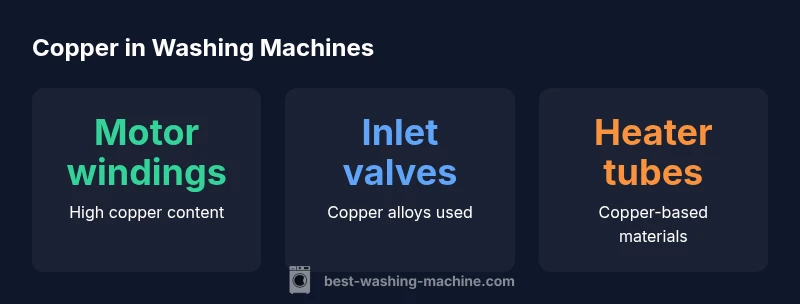
| Component | Copper Content | Notes |
|---|---|---|
| Motor windings | High | Copper used in electrical windings; durability matters |
| Water inlet hardware | Medium | Copper alloys in fittings and connectors |
| heater elements | Low–moderate | Copper-based materials in heating tubes |
FAQ
Does every washing machine contain copper?
Most modern washers use copper in key components like motor windings and some fittings, but the exact copper content varies by model. Some inexpensive models may rely more on alternative materials in certain areas.
Yes, copper shows up in many—but not all—washers; specifics depend on the model.
Which parts typically contain copper?
Copper is usually found in motor windings, plumbing fittings (like inlet valves and connectors), and certain heater elements in some designs.
Copper is common in motors, fittings, and some heaters.
Can I tell how much copper a model uses?
Model-level copper content is not always disclosed in consumer specs. Check the service manual or contact the manufacturer for detailed material data.
Copper details aren’t always listed; check manuals or ask the maker.
Does copper content affect warranty or repair costs?
Copper-containing components can influence repair cost if they require replacement, but warranties typically cover standard parts. Always review warranty terms for copper-related coverage.
Copper parts can affect repair costs, but warranties vary.
Is copper recycling important after disposal?
Copper is highly recyclable; recycling programs for appliances help recover copper, reducing environmental impact. Follow local guidelines for disposal.
Copper is recyclable, so recycle if possible.
“Copper’s role in washers is to improve electrical performance and heat transfer, but its impact depends on overall design and materials quality.”
The Essentials
- Copper is present in several essential washer components.
- Motor windings and fittings are common copper-containing parts.
- Copper content varies by model and brand.
- Copper contributes to conductivity and heat transfer, supporting reliability.
- Maintenance quality often matters more than copper quantity.