How Often Should You Clean Your Washing Machine Filter Regularly
Discover how often washing machine filter maintenance is needed, what factors influence cadence, and how to clean and replace filters to keep your unit efficient.


Learn how often to clean your washing machine filter, how cadence is chosen, and how to perform a quick check plus a deep clean. According to Best Washing Machine, regular maintenance prevents clogs, odors, and inefficiency. For most homes, a monthly quick check and a deeper clean every 3–6 months provides a practical cadence that you can adjust for usage, water hardness, and pets.
Why cadence matters for how often washing machine filter maintenance is recommended
Understanding how often washing machine filter maintenance is needed helps you plan tasks and keep your laundry day running smoothly. According to Best Washing Machine, a consistent maintenance cadence reduces the risk of clogs, odours, and inefficient cycles. In most homes, a quick monthly check paired with a deeper clean every 3 to 6 months delivers the best balance between effort and performance. Your specific cadence will depend on usage, water hardness, household size, and whether you have pets or children who increase lint and hair. Front-load washers often accumulate more lint and must be checked more frequently than top-load machines, but every model has its own drain and filter pathway. The goal is to catch buildup before it affects agitation, rinsing, or drainage, and to establish a routine you can repeat without thinking too much about it.
What counts as a filter in modern washers
Modern washers don’t just have one filter. Many models include a lint or pump filter behind a small access panel, at the bottom front, or under the agitator. Some models route water through a debris trap before it reaches the pump. The location and design vary by brand and model, so always check the owner’s manual or the manufacturer’s website if you’re unsure. A filter’s job is to catch hair, lint, coins, and fibers so they don’t clog the pump or hoses. Because filters differ in how easy they are to access, plan on a different approach for a front-load versus a top-load unit. If your model has a removable debris screen, you may also see a secondary lint filter integrated into the drain hose or pump housing. Regularly inspecting these components helps you keep the machine draining freely and avoids more extensive repairs later.
How usage and water quality influence cleaning frequency
Your cadence should reflect how hard your machine works. Families with multiple loads per day will accumulate more lint, hair, and detergent residue than a single-person household. Water hardness compounds buildup: hard water leaves mineral deposits on metal parts and on seals, which can trap lint and soap scum. Pets shed fur that tangles in the filter, increasing the need for cleaning. In addition, the detergent type and dosage influence residue—high-efficiency detergents and front-load designs create more soap scum if overused. High-efficiency washers use less water but can still produce mineral buildup without periodic cleaning. For households with very hard water, a quarterly filter check is a sensible baseline; for average usage, monthly quick checks with a deeper clean every 3-6 months is a practical cadence. Adjust based on visible wear, odors, slow drainage, or repeated clogs, and consider replacing the filter sooner if it shows tearing or crumbling seals.
Signs your filter needs cleaning now
Look for visible signs of buildup around the filter opening, including hair, lint, or coins stuck in the gasket. If you notice moldy odours, slower draining, or longer wash cycles, these can indicate a clogged filter. A pull-out filter that leaves water behind in the drum when opened is another warning sign. If your washer stops mid-cycle or leaks around the door or base, a clogged filter may be the culprit. Quick checks have the benefit of preventing early wear on the pump and motor. When you clean, you’ll often restore normal drum rotation, shorter cycle times, and cleaner laundry. The more frequent the signs, the more often you should check and clean the filter going forward.
Cleaning cadence guidelines by model and usage
We recommend starting with a baseline cadence and adjusting as you observe performance. For average households (2-4 people, 8-12 loads per week), perform a quick check every 4 weeks and a thorough clean every 3-6 months. For families with pets or very hard water, increase the frequency to monthly quick checks and 2-4 month deep cleans. If your machine is older or has a known lint-heavy load, err on the side of more frequent cleaning. For commercial settings like small laundromats, a daily quick check and weekly deep clean may be warranted. Always align with the owner's manual's recommendations; some brands specify a specific filter cleaning interval. When in doubt, start with monthly quick checks and a quarterly heavy clean, then tailor the cadence to your observed changes in drainage or odor. Remember that a filter in good condition helps protect pumps and hoses, maintains efficient wash chemistry, and reduces the risk of breakdowns.
How to locate and access your washer filter
To locate your washer filter, start with the user manual or manufacturer support page for your model. Most front-load washers hide the filter behind a small access panel at the bottom front; top-load machines may have a central filter under the agitator or behind the lower front panel. Gather your tools and a towel, then prepare a shallow tray to catch water. If the panel is stubborn, use a flat-head screwdriver to gently loosen screws and avoid prying. Once opened, carefully remove the filter and inspect the cavity for debris. Clean the filter under running water and remove any lint with a soft brush. Reinstall the filter, close the panel firmly, and run a short empty cycle to confirm there are no leaks.
Best practices for ongoing maintenance
Create a simple maintenance routine you can repeat monthly. Keep a small maintenance log with dates and notes on what you found. Use the correct amount of detergent for your load size and water hardness, as overuse can generate more residue. Consider a quarterly whole-system clean (descaling and cleaning seals) if your water is hard. Store spare parts such as replacement filters in a labeled container to speed future maintenance. Finally, consider a quick drain-and-rinse test after filter cleaning to confirm the pump is functioning well.
Authority resources
Here are a few authoritative resources for appliance maintenance and water-use considerations: - FTC: https://www.consumer.ftc.gov - DOE Energy Efficiency: https://www.energy.gov - ENERGY STAR: https://www.energystar.gov - EPA Water and Air Quality: https://www.epa.gov
Quick glossary and wrap-up
A filter life and cadence can vary, but a proactive approach with a documented schedule helps protect the washer, maximize efficiency, and prolong service life. Keep the cadence flexible enough to adapt to changes in usage, water quality, and household size.
Tools & Materials
- Bucket or shallow tray(To catch water when removing the filter)
- Towel or rag(Wipe spills and dry the panel area)
- Soft-bristled brush(Loosen lint without scratching surfaces)
- Old toothbrush (optional)(Tackle stubborn debris in crevices)
- Gloves (optional)(Protect hands from water and grime)
- Flat-head screwdriver (optional)(Used only if your panel is screw-secured)
Steps
Estimated time: 25-40 minutes
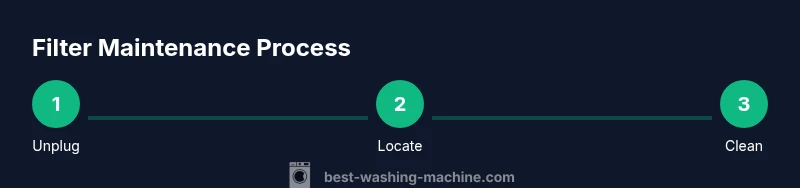
- 1
Unplug the washer
Unplug the washing machine from the outlet to prevent electrical shock and ensure safe access to the filter area. This step minimizes risk while you inspect and handle components near water and electrical controls.
Tip: Keep the cord and plug away from water and damp surfaces. - 2
Locate the filter access panel
Find the filter access panel based on your model: bottom front for many front-load washers or under the agitator for some top-load units. If needed, consult the owner's manual to confirm exact location.
Tip: Take a quick photo of the panel area before opening to help reassemble. - 3
Remove the filter
Carefully unscrew or lift out the filter housing and place a tray underneath to catch any residual water. Hold the filter steady to prevent dropping debris back into the cavity.
Tip: Brace the panel with one hand while removing the filter to prevent tipping. - 4
Clean the filter
Rinse the filter under running water to remove lint, hair, and fibers. Use a soft brush or old toothbrush to dislodge stubborn residue from corners and threads. Do not use harsh cleaners that could damage seals.
Tip: Avoid using strong chemicals; plain water and a soft brush are typically sufficient. - 5
Rinse and reinsert the filter
Rinse the filter cavity, then reinsert the filter until it sits firmly. Close the access panel securely to prevent leaks and double-check that the seal is flush with the housing.
Tip: Run a short empty cycle on a hot wash to flush any remaining debris. - 6
Run a test cycle and log
Plug the machine back in and run a small test cycle to confirm there are no leaks and that the drum spins normally. Note the date and outcome in your maintenance log for future cadence planning.
Tip: Set a reminder for your next filter maintenance and update the log after each cycle.
FAQ
How often should I clean my washing machine filter?
For many households, perform a quick check monthly and a deeper clean every 3–6 months. If water is hard or you have pets, increase the cadence. Adjust based on observed drainage and odor.
Most households should check monthly and deep-clean every few months. Increase cadence if you have hard water or pets.
Is the filter the same as the lint filter?
Not always. Some washers have separate lint, debris, or pump filters located in different spots. Check your manual for the exact type and location for your model.
Filters vary by model; check your manual for the exact lint and debris filters.
What should I do if my washer won’t drain after cleaning the filter?
A clogged filter is a common cause, but check hoses and the pump for kinks or blockages. If drainage remains slow, consider professional service.
If drainage is slow after cleaning, inspect hoses and the pump; call a technician if it doesn’t improve.
Can hard water affect filter clogging and cleaning frequency?
Yes. Hard water can accelerate mineral buildup that couples with lint, increasing cleaning needs. You may need more frequent checks or periodic descaling.
Hard water speeds up buildup, so you might clean more often.
Should I use bleach or cleaners on the filter?
Avoid harsh chemicals on filters and gaskets. Rinse with water and use a soft brush; if necessary, use a mild, manufacturer-approved cleaner according to instruction.
Don’t scrub with harsh cleaners; use water and a soft brush, or a manufacturer-approved cleaner.
Watch Video
The Essentials
- Inspect the filter cadence monthly as a baseline.
- Clean the filter thoroughly every 3–6 months for average usage.
- Hard water, pets, and high-load frequency increase how often you should check.
- Know your model’s filter location to minimize disruption.
- Keep a maintenance log and set reminders for consistency.