Is washing machine cleaner the same as detergent? A practical comparison
Is washing machine cleaner the same as detergent? Learn the differences, how each works, and when to use them with practical guidance from Best Washing Machine.


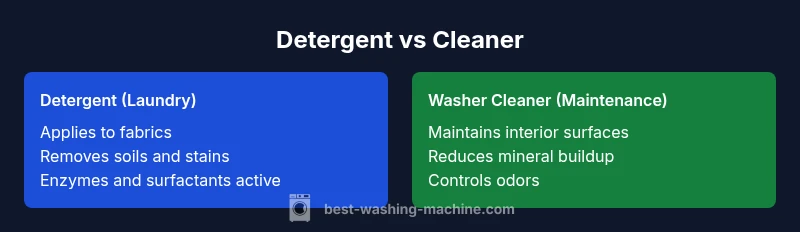
Is washing machine cleaner the same as detergent? In short, no. Detergents are formulated to clean fabrics, breaking down soils during wash cycles. Machine cleaners or descalers are designed to maintain the appliance itself, removing mineral buildup and odors. For laundry results, use detergent; for ongoing machine upkeep, apply a cleaner as directed by the manufacturer. This distinction is essential for maximizing both fabric care and machine longevity.
Is washing machine cleaner the same as detergent? Defining the terms
Is washing machine cleaner the same as detergent? The short answer is no, and understanding the distinction helps homeowners avoid common mistakes that can affect laundry results and appliance longevity. Detergents are formulated to remove soils, oils, and stains from fabrics during the wash cycle. They are optimized for water temperatures, soil types, and fabric care. In contrast, machine cleaners—often labeled as washer cleaners, tub cleaners, or descalers—are designed to maintain the appliance itself. They target mineral buildup, soap scum, and odors that accumulate in hard-to-reach places like the detergent dispenser, hoses, and the tub. According to Best Washing Machine, residents who separate these roles typically see cleaner clothes and a more reliable machine. Throughout this guide, we will use the term "is washing machine cleaner the same as detergent" to frame the distinctions while providing practical guidance for real-world use.
How detergents work in laundry day
Detergents are complex chemical formulations optimized for fabric care. They typically include:
- Surfactants that reduce surface tension and loosen soils.
- Builders or water-softening agents that enhance cleaning efficiency in hard water.
- Enzymes that break down protein, starch, and carbohydrate stains.
- optical brighteners that help fabrics look cleaner.
When you run a typical wash cycle with the appropriate detergent, mechanical action (agitation or tumbling) aids the cleaning chemistry. The goal is to lift soils from fabric fibers and suspend them in the wash water so they can be rinsed away. The exact formulation depends on whether you’re washing whites, colors, delicates, or heavily soiled items. In general, detergents are designed for repeated use across loads of laundry and are not intended to remove mineral buildup from your machine itself. This distinction reinforces why the question of is washing machine cleaner the same as detergent is a common point of confusion for new buyers and seasoned users alike.
How washers cleaners work
Washer cleaners are not cleaners for clothes; they are maintenance products. They work by:
- Dissolving mineral scale from calcium and magnesium in hard water that can deposit on the tub, heater, and sensors.
- Neutralizing odors caused by trapped residues and damp conditions inside the drum and hoses.
- Loosening soap scum that accumulates in the dispenser channels and door seals.
- Refreshing seals, gaskets, and interior surfaces to reduce mold growth.
Most manufacturers recommend using a washer cleaner at regular intervals—often monthly or quarterly—depending on usage and water hardness. The cleaner is run through an entire cycle without laundry to allow the product to circulate through all nooks and crannies. Importantly, cleaners are not substitutes for laundry detergents. They do not provide stain removal for fabrics and should not be used as a replacement for detergents in typical cleaning routines. In the context of our topic, is washing machine cleaner the same as detergent? The answer is no; they serve different purposes and should be used accordingly.
When to use detergent vs cleaner
Understanding when to use each product helps ensure optimal results. Use detergent for every laundry load, with considerations for load type, water temperature, and soil level. Here are practical guidelines:
- Regular loads (towels, everyday wear): use a standard detergent formulated for your water hardness and fabric type.
- Heavily soiled loads: consider a detergent with enzymes or a boost that targets tough stains; avoid overloading the washer.
- Routine maintenance: run a washer cleaner on an empty cycle every 1–3 months, depending on water hardness and usage, to prevent mineral buildup and odors.
- Detergent substitutes: never rely on a cleaner to substitute for laundry detergent in a washing cycle; is washing machine cleaner the same as detergent? They are not interchangeable for this purpose, and using a cleaner in place of detergent can leave fabrics less clean and cause residue buildup over time.
By separating their roles, you can keep your clothes fresh and your machine in good shape. Best Washing Machine’s guidance emphasizes that the right product at the right time yields the best outcomes for both laundry performance and appliance longevity.
Frequency and practical routines for ongoing care
A practical care routine blends regular laundry cleaning with periodic machine maintenance. The frequency of cleaner use depends on factors such as water quality, load frequency, and machine age. A typical schedule might include:
- Monthly or quarterly cleaner cycles if you have hard water or notice odors or soap scum.
- Quarterly cleaning if you have standard water or moderate usage.
- Immediate action if you notice reduced washing performance, unusual smells, or visible deposits on tubs or dispensers.
Couple these maintenance cycles with routine detergent use for laundry. The goal is to keep the interior surfaces, seals, filters, and hoses free of buildup that can compromise performance or sensor accuracy. The distinction between is washing machine cleaner the same as detergent remains essential for maintaining both fabrics and machinery in peak condition.
Reading labels and choosing products
Label literacy matters when selecting cleaning agents for laundry or appliances. Look for:
- Detergent labels that specify fabric types, water hardness compatibility, and recommended dosing per load.
- Cleaner labels that specify maintenance purpose, cycle instructions, and compatible machine models.
- Ingredient cautions, especially for sensitive skin or children, and any warnings about mixing with other products.
- End-of-life and environmental considerations, such as phosphorus-free formulations and biodegradable surfactants.
Avoid combining products in ways not recommended by the manufacturer. The question is is washing machine cleaner the same as detergent? Not at all; the two products serve different roles and cannot substitute for one another in most cases. Reading product labels helps you avoid mistakes and ensures safe, effective use.
Practical usage examples and scenarios
Consider a few common scenarios to illustrate practical differences:
- Everyday laundry: use a suitable detergent, appropriate for load size and fabric type, to remove soils.
- After a long weekend away: if smells linger in the drum, run a washer cleaner on an empty cycle to refresh the interior surfaces.
- High-efficiency machines: ensure you choose detergents formulated for HE washers to maximize rinse efficiency and fabric care; cleaners should still be used per manufacturer guidance for maintenance.
- Hard water environments: you may need a detergent with built-in water-softening agents or additional boosters, and you’ll still schedule periodic cleaner cycles to remove mineral buildup. Is washing machine cleaner the same as detergent in these contexts? No, but both can play important roles in overall laundry results and appliance upkeep.
Safety, health, and environmental considerations
Safety first matters for both product types. Keep cleaners and detergents out of reach of children and pets, avoid mixing products, and store according to label directions. Some formulations may include enzymes or surfactants; others emphasize descaling agents or mineral deposit prevention. Environmental considerations include choosing phosphate-free detergents and cleaners with eco-friendly packaging when possible. If you have sensitive skin or allergies, check fragrance-free options. In summary, use products as directed, and remember that is washing machine cleaner the same as detergent? They are distinct, and mixing their purposes is not advised for safe, effective results.
Maintenance plan for a healthy washer: a practical blueprint
A well-structured maintenance plan helps maximize appliance longevity and laundry performance. Here is a concise blueprint:
- Schedule regular wash cycles with appropriate detergent for fabrics.
- Run a washer cleaner cycle on empty loads at intervals dependent on water hardness and usage.
- Inspect seals, hoses, and dispensers during maintenance cycles and replace worn parts as needed.
- Clean the lint filter (if applicable) and the detergent dispenser to prevent buildup.
- Use HE-appropriate detergents in compatible machines to optimize rinsing and energy efficiency.
- Keep the machine in a ventilated area to prevent mold and mildew growth.
- Record maintenance dates to establish a predictable routine. Is washing machine cleaner the same as detergent? The answer is no, and a structured plan should include both product types at appropriate times.
Final notes on differentiating roles for cleanliness and durability
Understanding is washing machine cleaner the same as detergent? The short answer is no. Detergents and cleaners serve complementary but distinct roles. Detergents focus on fabric cleaning, while cleaners focus on keeping the machine itself free of deposits, odors, and buildup. A thoughtful approach combines regular detergent use for laundry with periodic cleaner cycles for machine maintenance. By following this approach, you’ll achieve cleaner clothes, fresher odors, and a longer-lasting washer.
Comparison
| Feature | Detergent (laundry) | Washing-machine cleaner (appliance maintenance) |
|---|---|---|
| Purpose | Cleans fabrics; removes soils, stains, and odors from clothing | Maintains the washer interior; removes mineral buildup and odors |
| Active ingredients | Surfactants, enzymes (in some formulas), builders, optical brighteners | Descalers, chelating agents, antimicrobial components (varies by product) |
| Typical usage | Used in every laundry load according to load type and fabric care | Used on an empty cycle for routine maintenance or as-needed based on usage |
| Frequency | With every load; frequency depends on soils and fabric types | Monthly or quarterly maintenance cycles or as needed |
| Impact on fabrics | Designed to protect fabrics and enhance stain removal | No direct fabric cleaning; impact is preserving machine efficiency and odor control |
| Cost per use | Varies by brand; generally low per load | Varies by product type and cycle frequency; typically higher upfront for cleaners |
What's Good
- Clear separation of roles helps optimize both laundry results and machine longevity
- Detergents improve stain removal and fabric care when used properly
- Machine cleaners reduce odors and mineral buildup for better performance
- Product labeling and guidance help users avoid misuse
Downsides
- Some users may forget to run maintenance cycles, leading to buildup
- Using cleaners in place of detergents can result in poor laundry results
- Availability and labeling can vary by region or brand
Detergent and cleaner serve distinct roles; use detergents for laundry and cleaners for appliance maintenance
The two products are not interchangeable. Following a routine that separates their uses yields better cleaning performance and longer-lasting equipment. Best Washing Machine recommends maintaining a clear schedule that includes both product types as appropriate.
FAQ
Is a washing machine cleaner the same as laundry detergent?
No. A laundry detergent cleans clothes, while a machine cleaner maintains the washer interior. They are not interchangeable for cleaning fabrics. Use detergent for laundry and cleaner cycles for maintenance as recommended by the manufacturer.
No. Detergent cleans clothes, cleaners maintain your washer. They’re not interchangeable for typical laundry. Use each as directed on the label.
Can I use a cleaner in place of detergent for everyday washing?
No. Cleaner products are designed for appliance maintenance, not fabric cleaning. Using a cleaner alone will not remove soils from clothes and may leave residue. Always use a detergent formulated for cleaning fabrics.
No. Cleaners are for maintenance, not for cleaning clothes. Use detergent for loads, and cleaners for periodic maintenance as directed.
How often should I run a cleaning cycle for my washer?
Frequency depends on usage and water hardness. Most households benefit from a cleaner cycle every 1–3 months, with more frequent cycles in hard-water areas or high-use homes. Always follow the product label for best results.
Most people run a cleaner cycle every 1 to 3 months, depending on usage and water hardness. Check the product label for specifics.
What signals indicate I need a cleaner cycle?
Odors, visible soap scum, reduced washing performance, and mineral deposits around the drum or dispenser are common signals that a cleaner cycle is due. If in doubt, consult your washer’s manual or manufacturer guidance.
If you smell odors, see soap scum, or notice reduced performance, it’s time for a cleaner cycle.
Are there safety concerns when using detergents and cleaners together?
Yes. Do not mix detergents with cleaners unless the product label explicitly states it’s safe to do so. Mixing chemicals can create dangerous gases or residues. Always use products as directed and avoid combining different brands unnecessarily.
Yes—don’t mix products unless the label says it’s safe. Stick to the instructions for each product.
Do front-load and top-load washers require different cleaners?
Most cleaners are designed to work with both types, but always check the label for compatibility with your machine design. Front-loaders can be more susceptible to mold and odors, so periodic maintenance may be more important for them.
Most cleaners fit both types, but check the label. Front-loaders often benefit from regular maintenance cycles.
The Essentials
- Detergent cleans fabrics; cleaners maintain the washer
- Use detergent with every load; run a cleaner cycle periodically
- Read labels to ensure compatibility with your machine
- Hard water may require special formulations for both products
- Establish a maintenance schedule to extend washer life