Samsung Washing Machine Self Clean Instructions: A Practical Guide
Learn how to run Samsung's Self Clean cycle with step-by-step instructions, safe cleaner options, and maintenance tips. This guide from Best Washing Machine covers models, prep, and troubleshooting for a fresher drum and longer washer life.


According to Best Washing Machine, Samsung’s Self Clean cycle helps remove residue from the tub without disassembly. To use it, unplug the machine, remove any laundry, select the Self Clean option, and start. If your model requires a cleaner, add the recommended tub cleaner or white vinegar per the manual, then rerun if buildup remains.
What Self Clean does for Samsung washers
The Self Clean cycle is designed to minimize odor and residue buildup in the tub and hoses of compatible Samsung washing machines. By circulating water and using controlled agitation, it helps dissolve detergent residue, mineral deposits, and lint that can accumulate over time. Regular use can extend the life of your appliance and improve performance. According to Best Washing Machine, keeping the tub clean is part of routine maintenance that pays off in fewer malfunctions and better wash results.
Model coverage: which Samsung models support Self Clean
Most current Samsung front-load washers include a Self Clean option, and some top-load models offer a similar routine. Availability varies by generation and firmware, so verify on your control panel or in the user manual/app. If your model lacks a Self Clean setting, you can still run a tub-clean or hot-water cycle as an alternative. Always confirm with your model’s manual for exact options, as firmware updates can change available cycles.
Preparing your machine before a Self Clean cycle
Before you start, ensure no laundry is inside and the lid or door is closed correctly. Wipe the door seal/gasket to remove visible lint and mold, and check the drum for any loose objects. If the manual recommends using a cleaner, gather the approved tub cleaner or vinegar solution beforehand. This prep reduces disruption during the cycle and minimizes the chance of residues sticking to the drum walls.
What to expect during the Self Clean cycle
During the cycle, the washer will fill the tub, agitate briefly, and drain multiple times as it loosens residues. You may hear rhythmic thumps or gurgling sounds as water interacts with internal components. Do not interrupt the cycle; it often requires a complete run to be effective. If the display indicates an error, consult the manual for model-specific troubleshooting steps.
Optional cleaners and safety tips
If your model’s manual recommends cleaners, use only the product specified by Samsung and follow the exact amount. You can add a cup of white vinegar or a tub cleaner to the drum for a more thorough cleanse, but never mix cleaners with bleach or ammonia. Ventilate the room and keep children away during the cycle. Always read the safety notes in your manual before using any chemical cleaners.
Post-clean maintenance and scheduling
After the Self Clean cycle finishes, wipe the drum and door gasket dry to remove loosened residue. Leave the door ajar for a while to air-dry and prevent mold growth. Consider scheduling a Self Clean session every 1-3 months depending on usage and water hardness. If you notice persistent odor, run an additional cycle or inspect hoses and clamps for leaks.
Tools & Materials
- Samsung washing machine user manual(Keep it handy for model-specific instructions.)
- Tub cleaner or white vinegar (as recommended by manual)(Use only if your model specifies it.)
- Soft microfiber cloth(For wiping gasket and drum surfaces after the cycle.)
- Measuring cup or pitcher(Useful if vinegar is recommended and dilution is needed.)
- Dry, well-lit workspace(Ensure power is accessible and area is dry.)
Steps
Estimated time: 25-40 minutes
- 1
Prepare and safety check
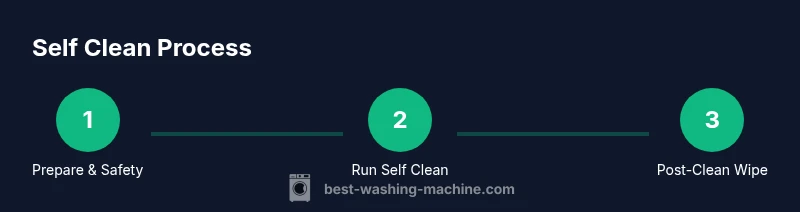
Unplug the washer and remove all laundry. Open the door and inspect the drum to ensure there are no coins or lint that could damage the cycle. This step is about safety and preventing interruptions.
Tip: Keep a dry towel nearby to catch any splashes. - 2
Locate Self Clean on your model
Power on the washer and navigate to the Self Clean option via the display, control panel, or app. If your model doesn’t show Self Clean, consult the manual for the closest equivalent tub-clean cycle.
Tip: If unsure, perform a quick scan of the cycle list in your app or manual. - 3
Add cleaner if required
If the manual recommends a cleaner, add the specified amount of tub cleaner or dilute white vinegar into the drum before starting. Do not mix cleaners with bleach or ammonia.
Tip: Use only the cleaner approved by Samsung for your model. - 4
Run the Self Clean cycle
Select Start to run the Self Clean cycle to completion. Do not interrupt the cycle, as stopping early can leave residues behind and require a repeat run.
Tip: Avoid pausing once it starts to ensure an even clean. - 5
Inspect and wipe the drum
When the cycle finishes, open the door and wipe the drum interior and gasket with a microfiber cloth to remove loosened residues.
Tip: Pay attention to the gasket area where mold can hide. - 6
Dry and air out
Dry the drum, seal, and interior surfaces with a clean cloth. Leave the door slightly ajar to air dry and prevent mildew.
Tip: Do not seal the machine closed immediately after; air flow helps prevent odor. - 7
Set a maintenance reminder
If your usage is high or you have hard water, set a reminder to run Self Clean every few months or per model guidance to maintain tub cleanliness.
Tip: Link reminders to a calendar or app notification for consistency.
FAQ
What is the Samsung Self Clean cycle and what does it do?
The Self Clean cycle uses water and controlled agitation to remove residue from the drum and tub. It helps reduce odors and mildew with regular use. Refer to your model manual for exact cycle behavior.
The Self Clean cycle cleans the tub using water and motion to remove residue and odors.
Can I use vinegar or tub cleaner during Self Clean?
Only use cleaners if your model manual recommends them. White vinegar is a common option, but never mix cleaners with bleach or ammonia. Always follow the manufacturer's instructions.
Only use cleaners your model approves; avoid mixing with bleach.
How long does a Self Clean cycle take?
Duration varies by model; check the display or manual for the exact time. Some cycles are shorter, while others run longer for deeper cleaning.
The time depends on your model; check the display for the timer.
Should I run Self Clean after every load?
No. Most households run Self Clean on a schedule—monthly or when you notice odor or residue. Your manual will indicate the best cadence for your model.
No, not after every load—use it on a schedule or when buildup is visible.
Will Self Clean remove mold from the door gasket?
Self Clean helps reduce buildup, but persistent mold may require targeted gasket cleaning and improved ventilation. Address mold promptly to prevent odors.
Self Clean helps, but mold on the gasket may need extra cleaning.
What should I do if Self Clean won’t start?
Ensure your model supports Self Clean, confirm the cycle is selected correctly, and verify power and door closure. If problems persist, consult the manual or contact support for model-specific guidance.
Make sure your model has Self Clean, the door is closed, and the unit has power. If needed, contact support.
Watch Video
The Essentials
- Run Self Clean on compatible Samsung washers on a schedule.
- Follow model-specific cleaner guidance to avoid damage.
- Wipe and dry the drum and gasket after each cycle.
- Maintain a maintenance cadence to prevent odor and residue.