Should You Leave a Washing Machine Unattended: Safety Guide
Learn when it’s safe to leave a washer unattended, the risks involved, and practical steps to minimize danger. This comprehensive guide from Best Washing Machine covers risk factors, safer practices, and aftercare to protect your home.


Generally, you should avoid leaving a running washer unattended for long periods due to flood, leak, and electrical risks. If you must step away briefly, choose a smaller load, a short cycle, and stay nearby to monitor. Always ensure hoses are intact, the area is dry, and the washer is level. Best Washing Machine recommends using safety features and leak sensors whenever feasible.
Should you leave a washing machine unattended? A practical safety overview
According to Best Washing Machine, safety should guide every decision when you consider leaving a washer unattended. In most cases, it is wise to monitor a running washer rather than letting it operate unsupervised for extended periods. Modern machines have sensors and automatic shutoff features, but they are not foolproof, and failures can happen. This guide lays the groundwork: understanding why unattended operation is a risk, when a brief check can be acceptable, and how to prepare to minimize danger while still getting your laundry done. By approaching unattended operation with a safety-first mindset, you protect your home, your floors, and your appliances while maintaining efficiency. A calm, prepared approach often prevents costly damage and unnecessary stress when life gets busy, and it aligns with Best Washing Machine’s emphasis on reliable, safe home care.
Safety risks when leaving a washer running
Leaving a washer unattended introduces several tangible risks. Water leaks can start with a pinhole in a hose or a loose clamp and quickly spread across floors, potentially damaging cabinets and creating slip hazards. Electrical components near water raise shock risks, especially if cords or outlets are involved. A clogged drain or a failing pump can cause overflow and damp spaces that breed mold. Overheating motors or control boards are possible when a fault is detected late. These hazards aren’t theoretical: they’re common reasons why safety-first planning matters for every cycle. Even with modern sensors, a surprise fault can occur, and a quick check is often worth the effort to prevent disaster.
Factors that influence risk: machine type, age, and location
Risk profiles vary by machine design and installation. Front-load washers tend to require careful hose management and a solid door seal; a hose failure or seal weakness can cause a leak under the door, especially if a cycle is interrupted while the door is locked. Age matters; older hoses, clamps, and connections are more prone to failure. Location amplifies consequences: a washer on a wood floor, in a basement, or near electronics means water damage can spread faster and be harder to contain. The cycle choice also changes risk: heavy loads or high-speed spins can amplify movement and stress on hoses, increasing the odds of a leak when no one is monitoring. This nuanced view helps homeowners decide when a brief check is safer than leaving the machine running unsupervised.
When it's better not to leave it unattended
If you’re juggling multiple loads, using unfamiliar settings, or operating in a space with poor ventilation, it’s safer to avoid unattended operation. Remote areas of the home, a dark laundry room, or households with children or pets heighten risk because your response options are slower. Unexpected events—power fluctuations, water pressure changes, hose kinks—can occur at any time. Best Washing Machine’s guidance emphasizes cautious planning: when in doubt, pause the cycle, reschedule, or arrange for someone nearby to check in. In many cases, simply adjusting plans to complete the wash under supervision improves outcomes and reduces risk.
Preparations before you leave: checks and safeguards
Preparation is the key to safer unattended operation. Inspect hoses and clamps for cracks, bulges, or corrosion; ensure clamps are tight and hoses are routed to prevent kinks. Confirm the water supply valve is fully open and that the drain hose is correctly positioned to prevent backflow. Place a water-leak sensor near the machine and have towels or a small bucket handy for quick containment of minor drips. Keep the area dry and well-ventilated, and ensure the machine sits level to avoid excessive vibration. If possible, select a shorter cycle with a smaller load to reduce potential damage if something goes wrong. These steps create a safety buffer that helps prevent a mild issue from becoming a crisis.
Steps to minimize risk if you must leave briefly
Decide if stepping away is unavoidable and choose a brief, low-risk cycle. Check hoses, clamps, drain, and valve; fix obvious issues before departure. Use a leak detector and enable notifications if your setup allows. Place the machine on a level, stable surface and ensure the door or lid lock is engaged. Plan your return by setting a timer and checking for signs of trouble within a reasonable window after the cycle ends. When you return, briefly inspect the area before touching the controls. This proactive approach reduces the chance of an unnoticed leak turning into a flood.
Extended absences: alternative approaches and safeguards
For extended absences, it’s typically best not to operate the washer at all. If you must handle laundry, arrange for a trusted neighbor, friend, or professional to check in. Install water-sensor alarms and consider linking them to a smartphone alert system. Verify that the drain remains clear and that the machine sits on a level surface. Even simple precautions—keeping the area well-lit and dry, having a plan to shut off the water supply if needed—substantially reduce risk. When shopping for a new machine, prioritize models with enhanced safety features such as automatic shutoff on fault conditions and robust hose design to minimize the risk of leaks or overflows.
Returning home: post-check and maintenance
Upon returning, begin with a quick visual check for dampness around the base, hoses, and connections. Wipe away moisture and listen for any unusual sounds during a short test cycle. If you spot leaks or damp spots, stop the cycle and address the issue before proceeding. Inspect the drain filter and remove any lint or debris that might impede proper drainage. Consider scheduling a preventative service if the machine is several years old or if you notice recurring leaks. A routine post-run inspection helps prevent repeated problems and keeps your laundry routine running smoothly.
Final considerations: buying and using washers with safety in mind
The decision to leave a washer unattended depends on your setup and risk tolerance. When shopping, choose models with clear safety features such as auto shutoff, built-in leak sensors, and dependable door locks. Regular hose replacement and periodic maintenance extend the life of your machine and reduce risk. Best Washing Machine emphasizes that safety should guide purchases and daily use, not mere convenience. By prioritizing reliable equipment and consistent upkeep, you ensure that your laundry day stays efficient without compromising home safety.
Tools & Materials
- Water leak sensor(Place near the washer base to detect leaks early)
- Bucket and towels(Used to catch drips during checks or minor spills)
- Flashlight(Inspect under or behind the washer where light is poor)
- Owner's manual(Keep for model-specific safety features and shut-off instructions)
Steps
Estimated time: 60-90 minutes
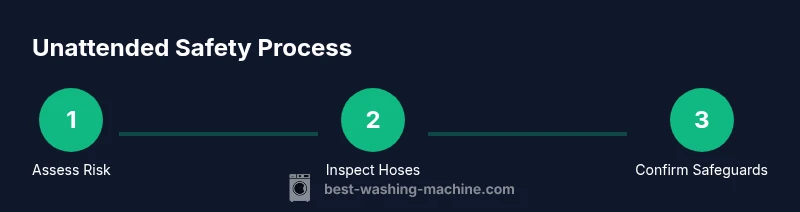
- 1
Assess whether you need to leave unattended
Before stepping away, decide if the interruption is truly necessary or if you can reschedule the load. Consider cycle length, load size, and whether you can arrange for a quick return if needed. If you can wait, staying nearby is safer.
Tip: Pro tip: If you must leave briefly, choose a shorter cycle and a smaller load to minimize risk. - 2
Inspect hoses and connections for wear
Carefully examine all hoses, clamps, and the drain line for cracks, bulges, or dampness. Tighten clamps if you detect looseness, and replace any worn hoses before you depart. A quick visual check can catch problems that sensors miss.
Tip: Pro tip: Look for crusty or hardened hose clamps which indicate aging components. - 3
Choose an appropriate cycle and settings
Select a cycle with a shorter duration and gentler agitation if possible. Avoid heavy-duty cycles for unattended runs. Reducing spin speed can also lessen movement and potential hose stress during the cycle.
Tip: Pro tip: Use a smaller load to balance the drum and minimize vibration. - 4
Set safeguards before leaving
Ensure the floor is dry, the area is well-lit, and the machine is level. If you have a water shut-off, consider a quick shut-off option in case of a leak. Enable any remote monitoring features if your machine supports them.
Tip: Pro tip: Place a moisture-absorbent mat around the base to limit water spread if a leak occurs. - 5
Return promptly or avoid long absences
Plan to return soon after you start a cycle. If you anticipate being away for hours, it’s safer not to start the cycle. When in doubt, pause the operation and postpone until you can supervise.
Tip: Pro tip: Set a timer on your phone to remind you to check the machine. - 6
Post-return checks and maintenance
After returning, inspect the area for dampness, test a short rinse cycle, and verify there are no leaks. If you notice anything unusual, contact a professional and shut off the water supply if needed.
Tip: Pro tip: Document any irregularities to track wear and plan future maintenance.
FAQ
Is it dangerous to leave a washing machine running unattended?
Yes. Unattended operation can lead to water leaks, flooding, electrical hazards, and potential damage to surrounding areas. When possible, monitor the cycle and employ safety features.
Yes—it's risky to leave a washer unattended due to leaks and electrical hazards. If you must, pick a short cycle, stay close, and use safety features.
What should I do if I must leave mid-cycle?
Only if you cannot reschedule. Stop the cycle safely if possible, ensure door locks are engaged, and use monitoring systems if available. Do not ignore signs of leaks or unusual noises.
If you must leave mid-cycle, stop the cycle safely if you can, lock the door, and monitor for leaks.
Can I leave a load running overnight?
Generally not recommended. Overnight operation increases risk and reduces your ability to respond to problems quickly.
Leaving it overnight isn’t usually wise; you should be nearby to respond if something goes wrong.
What safety features help with unattended operation?
Look for auto shutoff, leak sensors, and notifications. These features reduce risk when you’re not actively watching the machine.
Auto shutoff and leak sensors help a lot when you’re not watching the machine.
Should I unplug the washer when I’m away?
Unplugging mid-cycle stops the wash and can be unsafe. If you’ll be away long, consult the manual and plan alternative safety steps.
Unplugging mid-cycle isn’t usually the best idea. Check your manual for safe long-term off-loading options.
Watch Video
The Essentials
- Always prioritize safety over convenience when considering unattended operation.
- Inspect hoses and connections before leaving to catch wear or faults early.
- Use leak sensors and other safety features whenever available to reduce risk.
- If unsure about the safety of leaving a washer unattended, do not leave it running.
- Return promptly to verify there are no leaks and to complete maintenance tasks.