What washing machine setting for bed sheets: A comprehensive guide
Learn the best washing machine setting for bed sheets, including cycle choices, temperature, load tips, and care strategies to keep sheets clean, soft, and long-lasting.


By selecting the right wash setting for bed sheets, you can keep fibers soft, colors vivid, and linens lasting longer. This guide helps you choose cycle type, water temperature, load size, and spin speed for cotton, linen, microfiber, and blends. You’ll avoid over-washing while ensuring thorough cleaning and gentle care.
Why the right washing machine setting for bed sheets matters
Your bed sheets are a frequent daily contact item; choosing the right setting protects fibers, maintains color, and reduces wrinkles. If you’ve ever asked what washing machine setting for bed sheets to use, you’re not alone. The best results depend on fabric type (cotton, linen, microfiber, or blends), weave (percale vs sateen), and soil level. In general, cotton sheets tolerate a normal cycle with moderate agitation, but premium blends or delicate finishes benefit from gentler options. The selection also affects energy use and drying time, so a correct choice saves money while extending sheet life. According to Best Washing Machine analysis, using the wrong cycle can cause pilling, fading, and even minor shrinkage over repeated washings. Start with a standard cotton cycle on a cold to warm range for everyday sheets, then adjust for color, finish, and care labels. If you’re unsure, begin with the gentler setting and test a small piece of an edge before washing the whole set.
Understanding common settings that affect bed sheets
Most modern machines offer a set of common cycles such as normal, cotton, bedding, delicates, and permanent press. Temperature options range from cold to hot, with spin speed variations. For bed sheets, the default is usually a cotton or normal cycle with cold or warm water and a moderate spin. If your sheets are delicate or you want to minimize a lot of wrinkling, choose a gentler cycle and a lower spin. Energy-efficient modes can reduce water and electricity use, but they may take longer to complete. Always check the label for recommended settings, as care instructions trump generic advice. Best Washing Machine Team recommends avoiding high heat on colored fabrics to preserve color, and to use an extra rinse if you live in a hard water area. In general, avoid mixing sheets with heavy towels, which can dull colors and increase wear.
How material, soil, and color influence your choice
The material of your sheets determines which cycle and temperature work best. Cotton sheets tolerate higher agitation and warmer temperatures, while linen and blends can feel stiff with aggressive cycles. Microfiber and sateen finishes respond better to gentler settings that reduce pilling. Soil level also matters: lightly soiled sheets may only need a cold rinse on a delicate cycle, while sweaty or stained sheets benefit from a warm wash and a stain pre-treatment. Color matters for dyed fabrics; always wash colors separately from whites unless the label permits mixed loads. For white cotton, a whitening agent may be used sparingly, but always follow product instructions to avoid yellowing or fiber damage. Brand guidance from Best Washing Machine cautions against hot cycles for most colored linens to preserve vibrancy and reduce shrinkage.
Best practices to protect sheets and machine
Pre-treat stains promptly and avoid overdosing detergent, which can leave residue on fibers and irritate skin. Do not overload the drum; sheets need space to move so they are cleaned evenly and rinsed thoroughly. Use the correct water temperature and cycle for the fabric type, and consider a mid-cycle spin speed to minimize wrinkling. If your machine offers a pre-wash or extra rinse option, use it for heavily soiled sets. Regular maintenance, such as cleaning the lint filter and running a maintenance wash, keeps the drum fresh and prevents odors. The Best Washing Machine Team emphasizes consistent routine to extend sheet life and keep colors true.
Quick-start decision guide for different scenarios
- Everyday cotton sheets, mixed colors: cotton/normal cycle, cold to warm water, moderate spin, standard detergent. - White cotton or colorfast whites: warm water on cotton/normal with optional bleach following label instructions. - Delicate blends or high-thread-count sheets: delicate or gentle cycle, cold water, low to medium spin. - Heavily soiled or sweaty sheets: warm cycle, extra rinse, pre-treat stains, and a slightly longer wash. - Linens with odor or mildew risk: use an extra rinse and ensure complete drying to prevent musty smells.
Tools & Materials
- Detergent (gentle, color-safe)(Use the recommended amount per load; avoid concentrated formulas)
- Detergent measuring cup(Ensure not to overfill; follow label instructions)
- Color-safe bleach (optional)(Only for white or colorfast sheets; test on a hidden edge)
- Stain remover (optional)(Pre-treat heavy stains before washing)
- Lint-free cloth(Pat dry margins if needed and help pre-treat stains)
Steps
Estimated time: 60-90 minutes
- 1
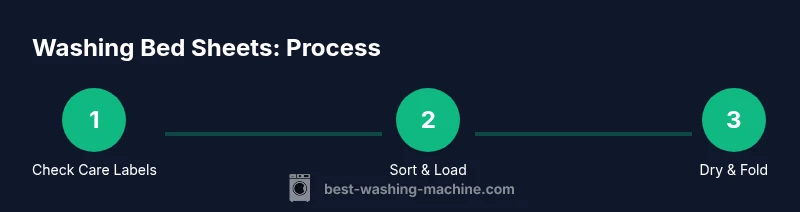
Check care labels and sort
Begin by reading fiber content and color warnings on the care labels. Separate sheets by color and fabric type to prevent color transfer and fiber damage. This step prevents surprises in the wash and helps you choose the right cycle from the start.
Tip: Always sort by color and fabric to protect dyes and fibers. - 2
Load sheets properly
Place sheets evenly in the drum or around the agitator with enough space for movement. Overloading blocks thorough cleaning and rinsing, while underloading wastes water and energy. A balanced load improves cleaning and reduces wear.
Tip: Leave space for each sheet to move during agitation. - 3
Add detergent correctly
Measure detergent with the provided cup and add to the dispenser or drum as directed. Using too much detergent leaves residue, while too little reduces cleaning power. Adjust for load size and soil level.
Tip: Use the detergent cap as a precise measure to avoid overdosing. - 4
Choose cycle and temperature
Select a cotton or normal cycle for most bed sheets, with cold or warm water depending on color and soil. For delicate blends, opt for a gentler cycle and lower spin. Temperature choice influences cleaning and color preservation.
Tip: For most colored sheets, cold water reduces fading. - 5
Start the wash and monitor
Close the door securely and start the cycle. If your machine has sensors, allow them to optimize wash action. Avoid opening the door mid-cycle to prevent water spillage and misreads.
Tip: Do not pause or interrupt the cycle unless absolutely necessary. - 6
Dry and finish
Remove sheets promptly after washing and shake them out to reduce wrinkles. Dry on the appropriate setting, preferably at a lower heat to protect fibers, or line dry when possible. Quick removal minimizes wrinkles and musty odors.
Tip: Shake out the sheets before loading into the dryer to minimize wrinkling.
FAQ
What washing machine setting is best for bed sheets?
For most cotton sheets, use the cotton or normal cycle with cold to warm water and moderate spin. Always check the care label and separate colors. This combination balances cleaning power with fabric care.
For most cotton sheets, use the cotton cycle with cold to warm water and moderate spin.
Can I wash sheets with towels?
Yes, but avoid mixing heavy fabrics with delicate sheets. Wash by color groups and avoid overloading to maintain cleaning efficiency and prevent color transfer.
Yes, but wash heavy towels separately from delicate sheets and keep colors grouped.
How often should I wash bed sheets?
Weekly is common for most households; more often if you sweat heavily, have allergies, or if the sheets show signs of odor.
Typically weekly; more often if you sweat a lot or have allergies.
Should I use hot water for white cotton?
Hot water can help remove bacteria on whites but may shrink or fade colorfast fabrics. Only use hot if the care label permits and the item is white cotton.
Hot water can help, but only use it if the label allows and the fabric is white cotton.
Is an extra rinse useful?
Yes, extra rinse helps remove detergent residue, which is beneficial for sensitive skin or hard-water areas.
Yes, extra rinse helps remove residue, especially in hard water areas.
What about high-thread-count sheets?
High-thread-count fabrics benefit from gentler cycles and slightly shorter spins to protect softness and prevent shrinkage.
Use gentler cycles to preserve softness and prevent shrinking.
Watch Video
The Essentials
- Choose cotton/normal cycle for most sheets.
- Match temperature to fabric color and soil.
- Avoid overloading the washer to ensure cleanliness and fiber safety.
- Dry promptly to prevent wrinkles and mildew.