Where to Put Washing Detergent in Your Washing Machine
Learn where to put washing detergent in machine, how to dose properly, and how to choose the right compartments for front-load and top-load washers. Practical, expert guidance from Best Washing Machine.


By the end of this guide, you'll know exactly where to put washing detergent in your machine for best results. You'll distinguish main wash vs pre-wash compartments, adjust dosing for load size, and choose liquid, powder, or pods with confidence. The approach works across front-load and top-load models, and aligns with Best Washing Machine's recommended practices.
Why detergent placement matters
Detergent placement matters because it dictates how evenly your soap reaches fabrics, how completely it dissolves, and how well it rinses away. The dispenser layout is not universal; top-load washers often provide a single main wash compartment, while many front-load models separate the main wash from a pre-wash chamber and a fabric-softener slot. According to Best Washing Machine, using the correct compartment for the detergent type and the correct dose for the load size improves cleaning performance and reduces residue on clothes and machine seals. When detergent ends up in the wrong place, you may see excessive suds, longer cycle times, and clothes that still look dull after washing. Conversely, placing detergent in the proper compartment can help you achieve a brighter clean with less waste. If your manual uses symbols or color coding, follow those cues to avoid second-guessing. Keep in mind that some models blend the detergent with water before it enters the drum, while others inject it directly; understanding your specific model reduces confusion and improves results.
Detergent types and their compartments
Detergent types include liquid, powder, and pods. Most modern machines provide separate compartments for the main wash, a pre-wash if your model supports it, and fabric softener. Liquid detergent is common in HE washers and typically goes in the main wash slot; powder detergent is often used in the same compartment, but some models require pre-dissolving powder. Pods are convenient but only if your machine’s dispenser is designed to accommodate them and the manufacturer approves their use. Always check whether your model’s drawer is labeled for “detergent” or has color-coded icons. If you’re unsure, start with the main wash compartment and follow the label. For best results, use a formula designed for HE washers and for your water hardness. Best Washing Machine notes that using the right formula and dose helps prevent buildup and ensures a thorough clean.
Front-load vs top-load differences in detergent dosing
Front-load and top-load washers often differ in how they distribute detergent. Front-load machines typically feature a separate main wash compartment and a softener slot; they rely on low-suds, high-efficiency formulas to avoid over-sudsing in a sealed drum. Top-load machines may combine detergent with water differently and sometimes require a pre-wash dose for extra-soiled loads. In both cases, avoid placing detergent directly on clothes; instead, use the designated drawer or cup. Using too little detergent reduces cleaning power, while too much can cause excessive suds and residue. When in doubt, consult your model’s manual, and choose a high-efficiency formula to maximize performance while protecting seals and hoses.
How to locate and use your detergent dispenser
Start by opening the detergent drawer or lid. Look for labels such as Main wash, Pre-wash, and Fabric softener. If the drawer is removable, take it out for a quick rinse to remove old residue. Decide whether your load requires a pre-wash or only a main wash; for most everyday loads, the main wash slot is sufficient. For many front-load washers, the detergent goes into the main wash compartment; for some top-load units, the main wash also handles pre-wash in a separate chamber. Use a measuring cup to pour the correct amount, then close the drawer firmly before starting the cycle. Check the user manual for your exact model to confirm compartment labels.
Common mistakes and how to fix them
Common errors include using too much detergent, using powder in an undissolved form, and pouring detergent directly into the drum. Always measure dose according to load size and water hardness; if you live in a hard-water area, you may need a slightly higher dose. Avoid mixing detergent types within the same load, and never pour liquid detergent into the fabric softener compartment. If you notice sticky residue around the dispenser, run a cleaning cycle or wipe the drawer with a damp cloth. Regular maintenance keeps the dispenser functioning well and reduces buildup.
Guidelines from experts and best practices
Experts from Best Washing Machine emphasize model-specific guidance and using HE detergent for efficiency. Always follow your model’s manual for the exact labeling and recommended dosage ranges. Use the dedicated compartments for detergent, softener, and any additives, and store detergent in a cool, dry place away from direct sunlight. For more authoritative guidance, refer to credible sources such as government energy and consumer advocacy sites.
Tools & Materials
- HE detergent suitable for your washer (liquid or powder)(Choose a formula designed for high-efficiency washers)
- Measuring cup or dosing scoop(Use to measure according to load size and water hardness)
- Owner's manual(Check dispenser labels and model-specific instructions)
- Pods (optional)(Only if your model supports pods and you choose pods)
- Fabric softener (optional)(If using, place in its designated compartment as labeled)
Steps
Estimated time: 15-25 minutes
- 1
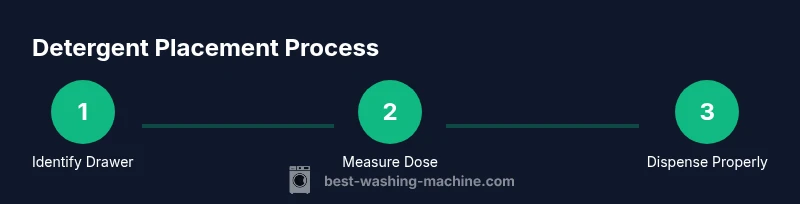
Identify the dispenser
Open the detergent drawer and locate the compartments labeled Detergent/Main Wash, Pre-Wash, and Fabric Softener. If the drawer is hard to read, remove it and check the labels on the underside and the manual.
Tip: If there is only a single compartment, use the main wash slot for all detergent and skip the pre-wash unless your load is heavily soiled. - 2
Measure the right amount
Using the measuring cup, pour the recommended amount for the load size. Consider water hardness and soil level. Avoid guessing—overloading can cause suds and residue.
Tip: Always start with the manufacturer's recommended range; you can adjust on heavier loads. - 3
Add to the correct compartment
Pour the detergent into the main wash compartment (and pre-wash if you’re doing a pre-wash cycle). Do not pour directly onto clothes. For liquid detergents, pre-dissolve in water if your model suggests it.
Tip: Never fill past the max line of the dispenser. - 4
Run a test cycle
Run a small load to ensure the dispenser releases detergent properly. Check the drum for even distribution and any suds on the door seal.
Tip: If you see excess suds, reduce the detergent amount slightly on the next load. - 5
Record and adjust
Note how well your clothes came out and whether residue appeared. Adjust dosing for future loads and verify model-specific instructions.
Tip: Keep a simple log until you’re confident with typical loads.
FAQ
Where should liquid detergent go in a front-load washer?
Liquid detergent in most front-load washers goes into the main wash compartment. Ensure it is compatible with HE detergents and do not pour into the fabric softener slot. Always follow the drawer labels and the user manual.
Liquid detergent goes in the main wash compartment, following the drawer labels and your manual.
Can I pour detergent directly into the drum?
Pouring detergent directly into the drum is not recommended for most machines. Detergent needs to be dispensed through the designated compartments to ensure proper dissolution and even distribution.
No, avoid pouring directly into the drum unless the manual specifically says so.
What if my washer has no detergent drawer?
If there’s no separate detergent drawer, detergent is usually added at the main wash inlet or in a dedicated cup. Check the manual for your model to locate the correct entry point.
Check your manual to locate the detergent entry point.
How do I know how much detergent to use?
Refer to the load size, soil level, water hardness, and the detergent label. Start with the recommended amount on the package and adjust slightly for hard water or heavily soiled loads.
Use the detergent label guidance and adjust for load size and water hardness.
Are washing pods safe for all washers?
Pods are safe only if your model supports them and the detergent drawer instructions permit their use. Do not place pods in fabric softener compartments or on clothes.
Pods are only safe if your washer supports them; follow the manual.
Do I need to run a cleaning cycle for the dispenser?
Regularly clean the detergent dispenser to remove residue and prevent buildup. Use a quick rinse cycle or run an empty wash occasionally.
Clean the dispenser occasionally to prevent buildup.
Watch Video
The Essentials
- Place detergent in the designated main wash compartment.
- Measure dose according to load size and water hardness.
- Avoid direct application to fabrics or mixing detergents in the same compartment.
- Follow model-specific labels for best results.