Washing Machine and Dryer Rental: A Clear Comparison
Explore a thorough, analytical comparison of washing machine and dryer rental options. Learn cost structures, maintenance, upgrade paths, energy implications, and practical scenarios to decide if renting fits your home, relocation, or business needs in 2026.


Renting a washing machine and dryer offers flexible, low-upfront-cost access with included maintenance and easy upgrades. It suits temporary homes, relocations, or test-driving models, but long-term ownership can be cheaper for steady, high-volume use. This guide provides a detailed comparison of plans, terms, and practical considerations to help you decide.
The Rise of Laundry Equipment Rentals in 2026
The concept of washing machine and dryer rental has moved from niche to mainstream as households seek flexible, low-commitment solutions for laundry needs. In rapidly changing renting markets, renters, homeowners, and small businesses increasingly choose rental plans to avoid upfront purchases, manage cash flow, and access the latest technology without long-term obligations. According to Best Washing Machine, the popularity of rental arrangements is driven by predictable monthly costs, included maintenance, and the ease of upgrading when circumstances change. For many, the idea of leasing appliances mirrors other service-based arrangements where convenience and service support are part of the bundle. In this guide, we examine the practicalities of washing machine and dryer rental, unpack typical contracts, and highlight the key factors you should review before signing a plan.
Key Considerations When Evaluating a Rental Plan
When you weigh a rental agreement for laundry equipment, several criteria determine whether it fits your situation. First, assess your expected usage: the longer you expect to need frequent laundry cycles, the more important your energy efficiency and load capacity become. Next, examine what is included in the plan: delivery, installation, venting for dryers, routine maintenance, and repair coverage vary by provider. Contract terms matter; month-to-month options offer flexibility but can cost more over time, while longer terms may reduce monthly payments but lock you in. Finally, consider upgrade opportunities: providers often let you swap to newer models or higher capacity machines without a full purchase. Keep in mind the total cost of ownership, including any penalties for early termination, hidden fees, and the provider’s service response times.
How Costs Are Structured in Washing Machine and Dryer Rental
Rental pricing usually combines several components: a base monthly rental fee, delivery and installation charges, and periodic maintenance or service visits. Some plans include replacement in case of breakdown, while others impose out-of-pocket costs for certain repairs. Because providers price plans differently and respond to regional demand, you will see a wide variety of cost structures. Avoid sticker shock by asking for a written breakdown that shows what is included in the monthly rate, how long the contract lasts, and what happens if you terminate early. In addition, verify whether there are late-payment fees, equipment upgrade opportunities, or fees for exceptions such as overtime service windows. In practice, the most transparent plans present a clear, all-inclusive monthly figure and document service windows, response times, and replacement policies.
What Is Included: Delivery, Setup, and Maintenance
Most credible rental providers cover delivery, professional setup, and initial testing as part of the package. For washers, this includes connecting cold and hot water lines; for dryers, venting or ventless installation and circuit checks. Maintenance is commonly bundled, with scheduled inspections and rapid repairs included within the contract period. Some plans also offer extended warranties or wear-and-tear allowances. Before you sign, confirm what constitutes normal wear and tear, whether parts replacement is included, and what the service window is for visits (e.g., 4–48 hours). Remember that availability varies by region, so a plan in one city might differ in scope from another.
Model Availability and Upgrade Paths
Rental fleets tend to emphasize models with robust parts supply and service networks. You may not get the absolute newest model immediately, but most programs offer upgrade opportunities during the contract or at renewal. Pay attention to the net effect of upgrading: a newer model may improve energy efficiency and capacity but could also alter monthly cost. If upgrade pathways exist, compare the incremental monthly cost against the projected energy savings and improved performance in your typical load. In multi-tenant or small-business scenarios, some renters bundle washers and dryers in paired packages to simplify budgeting and inventory management.
Energy Use and Water Use: What Matters in Rentals
Energy efficiency ratings matter for both operational cost and environmental impact. When renting, prioritize machines with Energy Star labeling and high spin speeds to reduce water usage and drying time. A newer model may reduce energy consumption significantly, but the key is how you use the machine: load sizes, detergent choices, and cycle selection influence total energy and water draw. Rental terms rarely guarantee a specific energy performance beyond model options, so read the spec sheets and verify that the plan supports replacements with higher efficiency units if your energy goals change.
Risks and Limitations That Renters Should Know
Every rental plan has potential downsides. You may be locked into a contract with penalties for early termination, or face limits on model choice and customization. Some providers impose strict guidelines on installation locations or use, and you may incur fees for service calls outside regular hours. If the service provider experiences delays or supply-chain interruptions, you could temporarily lose access to functioning laundry, which can impact households with high usage. Finally, ensure that you understand who owns the machine during the contract, what happens at the end of the term, and whether you can transfer the lease if you move.
Real-World Scenarios: When Renting Makes Sense
Consider a family relocating for work with a temporary home, or a small business such as a laundromat operator needing a spare washer/dryer during maintenance. College students in dorms, travelers, or households renovating a kitchen area also benefit from rentals. In each case, calculate the monthly cost against the alternative of purchasing and maintaining a unit. For households with unpredictable move schedules or frequent relocations, a rental solution reduces the friction of ownership and resale. For long-term stays in a single location, a cost comparison often supports buying, especially if you need high capacity or specific features.
When Buying Might Still Be the Right Call, Even If Rentals Are Available
Buying a washing machine and dryer in certain circumstances makes sense: when you expect to stay put for several years, require high capacity or specialized features, or want the asset for resale value. Ownership can yield lower long-term costs when utilization is consistent, and you gain complete control over maintenance, upgrades, and customization. If you anticipate frequent repairs or prefer avoiding ongoing rental contracts, evaluating the total cost of ownership against a representative rental plan helps you make a confident choice. Always factor in warranty length, resale value, and the opportunity cost of tying up cash in an asset versus keeping it liquid for other needs.
Trends and Practical Guidance for 2026
The 2026 rental landscape shows growing segmentation between short-term, flexible plans and longer-term, value-driven agreements. Providers increasingly bundle smart diagnostics, remote monitoring, and rapid replacement into premium plans, while budget offerings emphasize basic delivery and maintenance. As a shopper, prioritize plans that align with your anticipated residency, usage patterns, and energy goals. Best Washing Machine’s analysis indicates that renters value predictable budgeting, reliable service, and model upgrade options most; buyers prioritize ownership, long-term cost savings, and model customization. By comparing terms side-by-side and validating service coverage, you can choose a plan that reduces hassle while meeting your laundry needs.
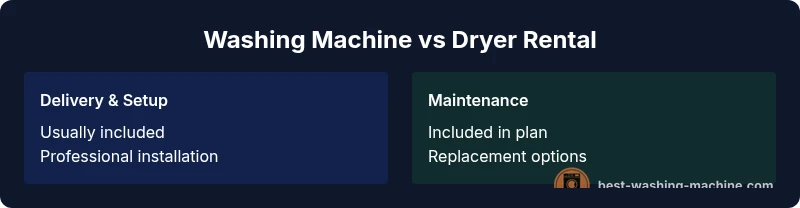
Comparison
| Feature | Washing Machine Rental | Dryer Rental |
|---|---|---|
| Delivery & Setup | Usually include installation and instruction | Usually include installation with venting/setup instructions |
| Maintenance & Repairs | Most plans include routine service | Most plans include routine service and vent/repair checks |
| Contract Length | Month-to-month or 12–24 months | Month-to-month or 12–24 months |
| Upgrade Options | Easy model swaps during contract | Easy model swaps during contract |
| Energy & Water Use | Depends on model; select higher-efficiency options | Depends on model; select higher-efficiency options |
| Best For | Flexible use, relocations, testing models | Flexible use, relocations, testing models |
What's Good
- Low upfront costs and fast access
- Maintenance and repairs often included
- Delivery, setup, and removal handled by provider
- Flexible model upgrades and term lengths
- Predictable monthly budgeting
Downsides
- Long-term costs can exceed purchasing
- Limited ownership and equity
- Potential restrictions on wear and tear or usage
- Dependency on service quality and provider stability
- Possible termination fees or upgrade penalties
Renting is a practical choice for short-term needs and mobility; buying remains preferable for long-term, heavy-use scenarios.
For temporary homes, relocations, or trying new models, rental minimizes upfront cost and simplifies maintenance. If you anticipate stable use over many years or require high capacity, compare the total cost of ownership to rental to decide between persistence and ownership.
FAQ
What is typically included in a washing machine and dryer rental plan?
Most rental plans include delivery, installation, basic setup, and routine maintenance. Some plans cover part replacements and emergency repairs, while others may charge for certain visits or premium response times. Always request a written list of inclusions and exclusions before committing.
Most rental plans include delivery, setup, and routine maintenance with options for repairs; ask for a written inclusions list before you sign.
How long can I rent appliances before I need to buy?
Rental agreements vary widely, from month-to-month to multi-year terms. Shorter terms offer flexibility, while longer terms can reduce monthly costs but limit flexibility. Review termination penalties and upgrade options when deciding the length.
Rentals vary from month-to-month to multi-year terms—choose based on how long you expect to stay.
Are installation and removal included in rental plans?
In most cases, installation and removal are included or available as add-ons. Verify whether venting for dryers, water supply connections for washers, and haul-away of old units are part of the package.
Most plans include install and removal; confirm venting and water hookup details.
Can I upgrade to a newer model mid-term?
Many plans allow model upgrades during renewal or at contract milestones. Compare incremental monthly costs against expected efficiency gains and better capacity to decide if upgrading makes sense.
Upgrades are common at renewal; weigh cost vs benefits before deciding.
Is there a cancellation fee if I move or change plans?
Cancellation or early-termination fees are common in longer contracts. Always check the fee schedule, any minimum service commitments, and whether you can transfer the contract to a new location.
Expect possible penalties for early termination; look for transfer options.
How does rental affect energy use vs buying?
Energy use depends on model efficiency and usage patterns, not rental per se. Choose Energy Star-rated models and optimize load sizes to minimize electricity and water usage, regardless of ownership.
Energy use depends on model and usage; pick efficient models and optimize cycles.
The Essentials
- Evaluate total cost of ownership before signing any rental plan
- Prioritize inclusive maintenance and clear upgrade options
- Assess contract length against your relocation or usage timeline
- Choose energy-efficient models to optimize long-term operating costs
- Understand end-of-term options: buyout, swap, or return