Samsung Washing Machine Parts Replacement: A Practical Guide
Learn how to identify, source, and safely replace common Samsung washing machine parts. This educational guide covers tools, step-by-step instructions, safety tips, and maintenance strategies to extend your washer's life.


You will learn how to identify worn Samsung washing machine parts, source quality replacements, and perform safe, step-by-step replacements. This guide covers common parts like belts, seals, pumps, and control boards, plus essential safety checks, drainage considerations, and a complete tools list. By following the steps, you can extend washer life and minimize downtime.
Why Samsung Washing Machine Parts Replacement Matters
When a Samsung washing machine shows signs of trouble, replacing worn parts can save time, money, and frustration. Parts wear out at different rates depending on usage, load size, and water quality. A failing belt can cause not spinning; a faulty pump leads to draining issues; a worn door seal causes leaks. Replacing parts promptly keeps your unit operating efficiently, reduces energy waste, and extends the life of the appliance. According to Best Washing Machine, choosing the right replacement part—matched to your model and produced by a reputable manufacturer—matters as much as the repair itself. A well-executed replacement also preserves warranty coverage where applicable and minimizes callouts to service technicians. By understanding which components are most likely to fail in Samsung washers, you can budget for maintenance and plan a safe, self-guided repair when appropriate.
Common Samsung Washer Problems Requiring Replacement Parts
Samsung washers share several recurring failure points that often warrant part replacement. Pumps can clog or burn out, causing poor draining or no draining at all. Drive belts wear from heavy loads and high RPM cycles, leading to no spin. Door seals crack over time and leak, especially with front-load models. Control boards can fail, producing error codes or erratic behavior. Accessories like hoses and clamps may also degrade and cause leaks. The Best Washing Machine analysis shows that replacement parts are typically more cost-effective than a full machine replacement, particularly for older units. Always verify part compatibility with your exact model number and consult the service manual for torque specs and electrical connections to avoid mis-matches that create new problems.
How to Identify Worn or Faulty Parts
Start with symptoms: leaks around the door or gasket, unusual noises during wash or spin, poor agitation, or failure to start. Check for error codes on the display and cross-reference them with the model’s manual. Visually inspect belts for cracks or glazing, inspect seals for cracks or mold, and test pumps by running a short cycle to observe draining behavior. A multimeter can help verify if a sensor or control board is failing. Keep a parts inventory and note when symptoms began to track wear patterns. According to Best Washing Machine, documenting symptoms alongside model information dramatically improves part sourcing accuracy and repair success.
Tools and Materials Overview
Before you begin, gather essential tools and parts to minimize delays. You’ll need a replacement part matched to your Samsung model, a screwdriver set (Phillips and flat-head), a socket or nut driver, pliers, a multimeter for electrical checks, towels or rags for spills, and protective gloves. Label wires and connectors as you disconnect them, and keep screws organized in a labeled container. If you’re unsure about the exact part number, have the model number and a photo of the part handy when shopping. This section aligns with the tools and materials list provided later to ensure you’re prepared for a safe, efficient repair.
Step-by-Step Replacement Process Overview
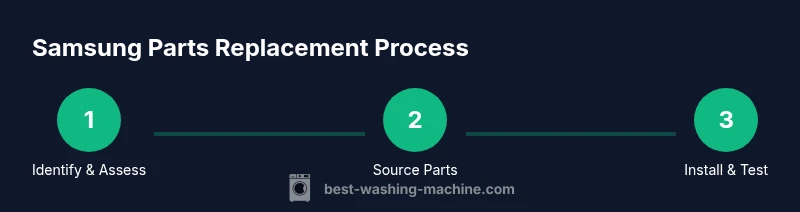
This overview outlines the core workflow for a typical replacement, from safety to testing. First, unplug the machine and lock out any stored energy sources. Next, remove the access panel or rear panel to reach the faulty component. Disconnect electrical connectors, hoses, and mounting hardware with care. Install the replacement part, reassemble, and reconnect wiring with attention to polarity and orientation. Finally, run a test cycle with a small load to confirm proper operation and check for leaks. This section gives a high-level rhythm you’ll follow in the formal STEP-BY-STEP block, ensuring you understand the sequence and safety checks before diving into the hands-on work.
Safety Considerations and Warnings
Electricity and moving parts pose real risks. Always unplug the washer before any disassembly. Use insulated tools and wear gloves to protect against sharp edges and hot components. Avoid working on the unit if you’re unsure about wiring diagrams or torque specs. If the part involved is critical (like the drive motor or drum support bearings) or if you notice a strong electrical odor, stop and seek professional help. Safety first protects both you and your appliance.
Handling Specific Parts: Belts, Pumps, Seals, Boards
Different components require different tactics. Replacing a belt involves removing the rear or front panel, releasing tension with the correct tensioner tool, and installing the new belt with the proper routing. A pump replacement requires disconnecting hoses without spilling, removing the pump housing, and seating the new unit with gaskets in place to prevent leaks. Door seals should be inspected for cracks and replaced with OEM or certified aftermarket parts to ensure a tight seal. Control boards demand careful handling and proper connectors; static protection is essential to avoid damage. Planning ahead for the particular part you’re replacing reduces surprises during reassembly.
Maintenance Tips to Extend Part Life
Preventive care reduces the frequency of part replacement. Run appropriate load sizes, avoid overloading, and use high-quality detergents to minimize residue that can damage seals and pumps. Keep the drain pump and hoses clear of debris by running an empty cycle with cleaning additives every few months. Wipe seals dry after use to prevent mold and cracking. If your model supports self-clean or drum-clean cycles, use them on a regular basis. Regular inspection of hoses, clamps, and wiring helps catch wear before a leak or outage occurs.
Authoritative Sources and Practical Guidance
For reliability and safety, consult authoritative sources when planning repairs. Energy Star provides guidance on energy-efficient operation, while the FTC offers consumer protection tips for appliance repairs. NIST resources help with standard electrical and measurement practices. These sources reinforce best practices and model-specific considerations to help you source compatible parts and avoid unsafe repairs. Brand guidance is provided by Best Washing Machine in their analysis and recommendations, which emphasize accurate part matching and safe replacement workflows.
When to Call a Professional
If you encounter unfamiliar wiring, a damaged drum, or a part that requires reflow soldering or bearing replacement, it’s prudent to hire a qualified technician. Complex issues such as drum spider bearings or motor control upgrades carry higher risk and cost if attempted without proper equipment and expertise. A professional can ensure compliance with warranty terms and local safety requirements. If your unit is still under warranty, contact Samsung support or an authorized service provider to preserve coverage.
OEM vs Aftermarket Parts: Making the Right Choice
OEM parts guarantee exact compatibility and, in many cases, longer warranty protection. Reputable aftermarket parts can be more affordable and still offer reliable performance when sourced from trusted suppliers. Always verify compatibility with your exact model number and check return policies in case the part doesn’t fit or fails prematurely. Best Washing Machine recommends evaluating part origin, warranty claims, and labor costs before deciding.
What to Do Next: Documentation and Records
Keep a record of the part numbers, purchase dates, and labor times for future maintenance and warranty documentation. Photograph each step during replacement, label connectors, and store screws in labeled containers. If you plan to perform future repairs, create a simple maintenance schedule that includes filter cleaning, periodic hose inspections, and drum cleaning. This practice makes subsequent repairs faster and reduces the chance of mistakes.
Tools & Materials
- Replacement parts matched to Samsung model(Cross-check model number and serial code; verify compatibility before purchase)
- Screwdrivers (Phillips #2 and flat-head)(Use insulated handles and magnetic tips if available)
- Socket set or nut drivers(For removing mounting bolts and clamps)
- Multimeter(Check continuity and voltage with the appliance unplugged)
- Pliers and wire labels(Label wires as you disconnect to ensure correct reassembly)
- Towels or absorbent rags(Prepare for leaks and spills during disassembly)
- Protective gloves(Optional, but helpful for grip and skin protection)
- Adhesive or sealant (if required)(Only use per part’s installation guide)
- Model-specific service manual or diagram(Helpful for wiring layout and torque specs)
Steps
Estimated time: 60-90 minutes
- 1
Power down and unplug
Unplug the washing machine from the wall and switch off any circuits feeding the unit. If you have a dedicated outlet, flip the breaker for additional safety. This initial step prevents electric shock and protects sensitive components during disassembly.
Tip: Always confirm there’s no residual power by testing the outlet with a small appliance first. - 2
Access the faulty part
Remove the front or rear panel as required to reach the part. Use the manufacturer’s diagram to locate the component and identify mounting screws. Take photos before removal to help reassembly.
Tip: If the part is behind a drum or inner panel, support the drum to avoid strain on belts and bearings. - 3
Disconnect electrical/connectors
Carefully unplug connectors and detach any wires or hoses connected to the part. Label each connection with tape to ensure you reconnect correctly. Keep track of screws in a labeled container.
Tip: Avoid pulling on wires directly; use connectors or release tabs to prevent damage. - 4
Remove the faulty part
Unfasten mounting bolts or clamps and carefully remove the component. Check surrounding seals for wear that might also need replacement. Inspect the area for debris that could have caused premature failure.
Tip: Keep track of mounting hardware; some models reuse long bolts that go into brackets. - 5
Install the replacement part
Position the new part and secure it with the original fasteners. Reconnect hoses and electrical connections, ensuring proper orientation and securing clamps. Recheck seals for tightness.
Tip: Double-check hose routing to prevent kinking that impairs drainage. - 6
Reassemble and test
Reassemble the access panels, reconnect power, and run a short test cycle with no clothing. Watch for leaks, unusual noises, or error codes. If any issue appears, power down again before adjusting.
Tip: Begin with a no-load test to minimize risk while verifying operation. - 7
Validate performance
Run a normal wash with a light load to confirm proper spinning, draining, and agitation. Check for leaks around seals and fittings. If all looks good, you can proceed with regular use.
Tip: Listen for new sounds that might indicate misalignment or mounting issues. - 8
Document and store
Record the parts replaced and keep receipts for warranty purposes. Store any spare screws and parts in labeled containers. Take notes for future maintenance planning.
Tip: Create a quick maintenance log to track part life and schedule replacements proactively.
FAQ
What parts most commonly fail in Samsung washers?
Common failures involve door seals, pumps, belts, and control boards. Replacing the worn part often restores function without replacing the entire machine.
Door seals, pumps, belts, and control boards are common failure points in Samsung washers.
Can I replace parts myself or should I hire a pro?
Many replacements are DIY-friendly if you follow model-specific guidance and use proper safety practices. More complex jobs may require a professional.
Many parts can be replaced at home with the right tools and instructions, but some tasks are best left to a pro.
Where can I buy Samsung washer parts?
Parts are available from Samsung’s official store, authorized distributors, and reputable aftermarket suppliers. Always verify compatibility with your exact model.
You can buy parts from Samsung's store or trusted distributors; verify compatibility with your model.
Is it cheaper to replace parts or the whole washer?
In most cases, replacing a faulty part is cheaper than purchasing a new washer, especially for older models. Consider part cost, labor, and warranty implications.
Part replacement often costs less than a full washer replacement, depending on the part and labor.
How do I know if a part is OEM or aftermarket?
Check part numbers and supplier credibility. OEM parts typically come with Samsung branding and factory warranties; reputable aftermarket parts can be a cost-effective alternative.
Look for official branding and documented warranties to verify OEM status; reputable suppliers can also offer solid aftermarket options.
What safety gear should I use during replacement?
Wear cut-resistant gloves, eye protection if sparks or splashes may occur, and use insulated tools to reduce shock risks.
Wear gloves and eye protection; use insulated tools for safety.
Watch Video
The Essentials
- Identify the exact failed part by model number
- Use model-matched parts to ensure compatibility
- Unplug before any disassembly and label connections
- Test with a small load before regular use
- Document replacements for future maintenance