Can You Run a Washing Machine on an Extension Cord? Safety Guide
Explore why extension cords are not recommended for washers, the risks involved, and safer outlet options. Practical guidance from Best Washing Machine for homeowners, renters, and repair guidance.


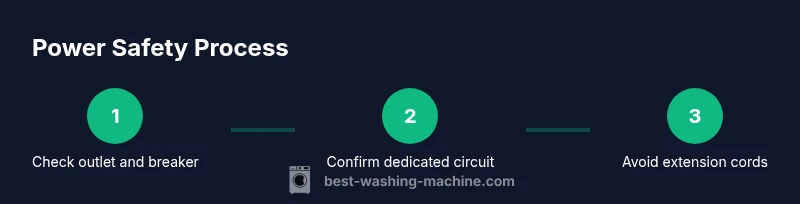
No—it's generally unsafe to run a washing machine on an extension cord. A heavy appliance draws surge current and can overheat cords, leading to fires or electrical damage. Always plug the washer directly into a grounded, dedicated outlet on a properly sized circuit. If you can't access an outlet nearby, hire a licensed electrician to install one.
Why extension cords are risky with washing machines
Extension cords are designed for temporary, light-duty use and are not equipped to handle the sustained, high-current draw of a full-size washing machine. A washer can experience current surges when starting a load, at spin cycles, or during agitation, which can cause the cord insulation to heat up, degrade, or fail. Overheating cords can melt, trip breakers, or create ignition risks, especially in damp laundry rooms where moisture can reach outlets or plugs. According to Best Washing Machine, prioritizing power safety is essential for long-term appliance reliability and household safety. If a cord overheats or shows signs of wear, replace it and reassess the power setup with a professional. For most households, the best practice is to plug the washer directly into a grounded, dedicated outlet on a circuit sized for laundry use. This simple change reduces the risk of fire hazards and electrical nuisance trips, and it protects both your machine and your home’s wiring from unnecessary stress.
The core safety principle behind power delivery
Washing machines demand a stable, clean power source with minimal impedance. Extension cords add resistance and potential voltage drop, which can cause the motor to work harder, generate heat, and shorten the life of internal components. A dedicated outlet on an appropriate circuit not only delivers consistent voltage but also isolates the washer from other devices that could cause surge or interference. Best Washing Machine emphasizes that dedicated circuits reduce the likelihood of nuisance tripping and improve overall performance, particularly in households with older wiring or multiple high-draw devices.
Common extension cord mistakes and signs of trouble
People often underestimate the risks associated with using extension cords for appliances. Common mistakes include choosing cords with insufficient gauge, using cords rated for indoor use in damp rooms, or running cords under rugs where friction and heat buildup can occur. Watch for warning signs like warm plugs, discolored outlets, visible fraying, or a buzzing/popping sound when the washer starts. If you notice any of these, discontinue use immediately and consult a licensed electrician. These issues are not just inconveniences—they can indicate dangerous electrical conditions that require professional assessment.
Proper outlet setup for washers
The safest path is a dedicated 120V or 240V laundry outlet on a properly rated circuit, ideally with GFCI protection in damp areas. An electrician can verify ground continuity, correct receptacle polarity, and correct mounting so the washer’s plug fits snugly without strain. If your home is older or you’ve added loads, ensure the circuit can handle the load by evaluating panel capacity and wire size. After installation or upgrades, test the outlet with a simple tester and confirm the washer operates normally without signs of voltage sag at startup.
What to do if you can't access a proper outlet
If the washer must be used in an arrangement where a proper outlet is not nearby, the preferred approach is not to improvise with an extension cord. Instead, relocate the washer to a location where a proper outlet exists or have a professional install a new outlet near the washer. In the short term, limit the usage of the washer until a safe solution is in place, and consider alternative laundering options (like a nearby shared laundry facility) to avoid compromising safety. Always prioritize professional guidance when altering electrical configurations.
Practical alternatives and safety-first approaches
Consider long-term solutions such as mounting a new outlet on an adjacent wall or upgrading the laundry circuit to meet current code requirements. If a relocation or new outlet isn’t immediately possible, you can schedule consultation with a licensed electrician while continuing to use a temporary, non-electrical laundry option. Regularly inspect all power connections, keep outlets dry, and avoid running laundry loads during storms or in wet conditions. Best Washing Machine encourages homeowners to treat electrical safety as a non-negotiable part of appliance care.
Myths vs facts about extension cords and appliances
Myth: A heavy-duty extension cord is safe for any appliance. Fact: There are limits on extension cords and Watts/amps; misapplication can lead to overheating. Myth: If the cord seems fine, it’s safe. Fact: Damage might be hidden and safety features like GFCIs and proper outlets are more reliable protections. Understanding these nuances helps prevent avoidable hazards and protects both people and equipment.
Authoritative sources and best-practice overview
For formal safety guidance, consult recognized authorities on electrical safety and appliance installation. The following sources provide foundational guidance on electrical safety, proper outlets, and circuit protection to support best practices when planning a washer installation or upgrade. (See AUTHORITY SOURCES section for direct references.)
Tools & Materials
- Grounded, dedicated electrical outlet(Ensure it is on a circuit sized for laundry appliances; do not share with other high-draw devices.)
- GFCI protection (where required by code)(Verify in damp or wet laundry areas as per local code.)
- Electrical outlet tester(Optional tool to verify polarity and grounding when evaluating a new outlet.)
Steps
Estimated time: 60-120 minutes
- 1
Evaluate the outlet and circuit
Check whether the washer’s location has a dedicated, properly grounded outlet on an appropriately sized circuit. Look for signs of wear, overheating, or moisture near outlets. If any issues exist, halt use and plan a professional assessment.
Tip: Use a tester to confirm grounding and ensure there are no tripped breakers during operation. - 2
Avoid extension cords for washers
If you have a cord plugged into a wall outlet, do not replace the wall receptacle with an extension cord as a workaround. Extension cords introduce impedance and heat risk for high-draw appliances.
Tip: Treat this as an emergency safety warning—plan a proper outlet instead of improvised solutions. - 3
Consult a licensed electrician for upgrades
If the washer location lacks a suitable outlet, contact a licensed electrician to install a dedicated laundry outlet or relocate the washer to a space with access to power.
Tip: Request a full assessment of circuit capacity and compliance with local electrical codes. - 4
Plan safe relocation or outlet installation
Coordinate a safe relocation of the washer or installation of a new outlet, ensuring all wiring is up to code and protected from moisture. Do not attempt DIY electrical wiring if you are not qualified.
Tip: Document the plan and obtain any required permits if your jurisdiction requires them. - 5
Test the new setup after completion
After installation, test the outlet with a tester and perform a short cycle on the washer to verify stable operation. Check for unusual heat or arcing signs and stop if any appear.
Tip: Keep a ground fault circuit tester on hand for ongoing safety checks. - 6
Maintain ongoing safety and maintenance
Regularly inspect cords, outlets, and the area around the washer for moisture or wear. Schedule periodic electrical inspections if you notice recurring outages or smells.
Tip: Create a simple maintenance checklist and store it near the laundry area.
FAQ
Can a washing machine be plugged into an extension cord?
No. Extension cords can overheat when powering a washer and are not a safe long-term solution. A grounded, dedicated outlet minimizes risk and improves appliance performance.
No—extensions are not a safe long-term solution. Use a proper outlet instead.
What are the risks of using an extension cord with a washer?
Extension cords add resistance and heat, which can lead to overheating, fire hazards, and nuisance trips. They also can fail when the washer starts or spins.
Extension cords can overheat, pose fire risks, and trip breakers during washer operation.
What should I do if my washer is far from a proper outlet?
Plan to relocate the washer or have a new outlet installed by a licensed electrician. Do not rely on extension cords as a workaround.
If the outlet is far away, get professional help to install a proper outlet or move the washer.
Are there any safe temporary alternatives to extension cords?
The safest temporary approach is to relocate the washer to a space with a proper outlet or have an electrician install one. Temporary hacks are not recommended for safety reasons.
Relocate the washer or install a proper outlet; temporary hacks aren’t recommended.
Does Best Washing Machine have recommendations on outlets?
Yes. Best Washing Machine advises using dedicated, grounded outlets on appropriately sized circuits and to consult a professional for any electrical upgrades.
We recommend dedicated outlets and professional upgrades when needed.
Watch Video
The Essentials
- Plug washers into dedicated, grounded outlets.
- Avoid extension cords for full-size laundry appliances.
- Call a licensed electrician for outlet installation or relocation.
- Check for moisture and signs of wear at outlets regularly.
- Use safety devices like GFCIs where required by code.