Dryer and Washing Machine Repair: A Step-by-Step Guide
A comprehensive how-to for diagnosing, safely repairing, and prolonging the life of your dryer and washing machine with practical steps, tools, and safety guidance.


By the end of this guide, you’ll be able to diagnose common dryer and washing machine problems, determine if the issue is electrical, mechanical, or drainage related, and perform safe, basic repairs. You’ll also know when to call a professional. Expect practical steps, checklists, and safety cautions to protect yourself and your appliances.
Why Dryer and Washing Machine Repair Matters
According to Best Washing Machine, timely repairs save money, extend appliance life, and reduce energy use. When you repair instead of replace, you gain control over costs and stay productive. This guide explains how to identify faults, prioritize safety, and perform sturdy, safe fixes for common issues that homeowners encounter in daily laundry routines. You'll learn to distinguish between simple, user-serviceable problems and faults that require professional service, so you can act with confidence and avoid safety hazards. Dryer-washing-machine repair skills also empower you to handle urgent leaks, strange noises, and unexpected shutdowns without panic. By building a routine around inspection, cleaning, and minor part replacements, you cut downtime and keep laundry day on track.
Common Problems to Troubleshoot
Washing machines: not draining, not spinning, vibrating excessively, leaving detergent residue, or making grinding noises. Dryers: not heating, drum not turning, emitting burnt smell, excessive lint buildup, or taking too long to dry. We'll discuss how to prioritize symptoms, check for obvious causes (clogs, tripped breakers, loose belts), and categorize issues as electrical, mechanical, or drainage-related. Understanding symptom clusters helps you form a hypothesis before testing components. Examples: a washer that stops mid-cycle may have a lid switch issue; a dryer that runs but does not heat might indicate a thermal fuse or heating element problem. Use a systematic approach to avoid chasing symptoms rather than root causes.
Safety Considerations Before You Start
Electrical and water hazards are real; always unplug, switch off the circuit, and shut off water supply before any work. Use a non-conductive mat, wear safety glasses, and keep children away. Avoid working when the area is wet; never reach into running machines. If you smell burning or see smoke, stop immediately. When in doubt, consult the model’s service manual for specific safety warnings and ensure you have a clear exit path in case of an emergency.
Tools and Materials You’ll Need
Having the right tools on hand reduces frustration and prevents accidental damage. Essential items include a Phillips and flat-head screwdriver, a multimeter, needle-nose pliers, a nut driver set, a small flashlight, a bucket and towels for spills, and model-specific replacement parts (filters, belts, seals) if you know you’ll be performing routine maintenance. Keep a non-conductive gloves and a service manual for your exact model on hand. If you’re repairing near the water supply, consider a shut-off wrench for quick valve operation and leak control.
Step-By-Step Diagnostic Flow
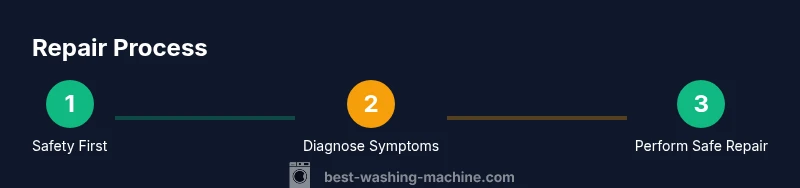
This section outlines a practical diagnostic flow you can follow in sequence. Start by ensuring power is disconnected and the machine is safe to inspect. Next, verify water supply and drainage conditions, because clogs or kinked hoses commonly trigger faults. Then test for faulty switches (lid/door) and inspect belt wear, pump operation, and drum seals. Finally, check internal safety devices (thermal fuse or high-limit switch) and perform a controlled test run to confirm the fault is resolved. Document observations as you test to avoid repeating steps and to track what works and what doesn’t.
When to Call a Professional
Some dryer and washing machine faults demand professional service, especially when you encounter high voltages, water leaks from sealed areas, or persistent failure after basic troubleshooting. If you lack the right tools, feel uncomfortable working near electrical or plumbing components, or the unit is under an active warranty that requires authorized technicians, it’s prudent to schedule a repair. A professional can perform load testing, component-level diagnostics, and safety checks that reduce the risk of injury and further damage.
Maintenance to Prevent Future Failures
Preventive care goes a long way. Regularly clean lint traps and pumps, inspect hoses for wear, and run an occasional diagnostic cycle to catch developing problems early. Keep the area around the unit dry and well-ventilated to prevent mold and corrosion. Use the correct detergent and avoid overloading the washer, which strains the drum and motor. Document any repairs and replacements to build a maintenance history you can reference later. With consistent maintenance, dryer-washing-machine repair becomes less frequent and less daunting.
Troubleshooting Quick Reference
For quick help, refer to symptom-based hints: if the machine won’t start, check the power and lid/door switch; if it won’t drain, inspect the pump and drain hose; if it’s not heating, test the thermal fuse and heating element; if there’s unusual noise, inspect belts and bearings. This quick reference serves as a starting point for deeper investigation without skipping essential safety steps.
Case Studies: Real-World Repairs
In real-world scenarios, homeowners often resolve simple issues like clogged pumps or worn belts with basic tools and a methodical approach. Case studies show how documenting symptoms, following a safety-first protocol, and using model-specific service manuals lead to successful, cost-effective repairs. When faced with unfamiliar components, refer to warranty terms and manufacturer guidance to decide whether a DIY repair is appropriate or if professional service is warranted.
Tools & Materials
- Multimeter(Voltage and continuity testing; set to appropriate range)
- Phillips screwdriver(For panel screws; vary by model)
- Flat-head screwdriver(For prying covers and clamps)
- Needle-nose pliers(Grip and clamp hoses or wires)
- Nut driver set(Common sizes; check your model)
- Towels and a bucket(For leaks and spills during testing)
- Replacement parts (filters, belts, seals)(Only if you know you need them)
- Model-specific service manual(Always refer to the exact model)
Steps
Estimated time: 45-60 minutes
- 1
Power down and secure
Unplug the unit from the wall and switch off the circuit breaker if accessible. This eliminates the risk of electric shock while you inspect. Confirm there is no residual power by attempting a brief press of the start button with the power disconnected.
Tip: Always verify power is off with a non-contact tester before beginning. - 2
Check for obvious blockages and leaks
Visually inspect hoses, drains, and seals for signs of wear, cracks, or clogs. Remove any debris from the pump filter or lint trap as applicable. Address leaks or cracks before continuing to avoid hidden water damage.
Tip: Take photos of hose routes before disconnecting anything to aid reassembly. - 3
Test the lid/door and drum components
Confirm the lid or door switch engages properly when closed. Inspect the drum belt for looseness or wear and check belt alignment. A faulty switch or worn belt is a common cause of non-start or non-spin conditions.
Tip: If the belt is loose, replace it with a model-specific belt and tensioner. - 4
Inspect pumps, hoses, and clamps
Look for a clogged pump, kinked hoses, or loose clamps. A blocked pump or collapsed hose prevents drainage, leading to standing water and cycle interruptions. Clean or replace parts as needed.
Tip: Keep a bucket handy to catch residual water during pump access. - 5
Assess electrical supply and fuses
Verify the outlet provides power and test internal fuses or thermal cutouts if accessible. Use the multimeter to check continuity on fuses and inspect wiring for loose connections or burn marks. Do not replace parts if symptoms point to a safety device designed to trip for protection.
Tip: Document resistance readings and replace only with identical or specified parts. - 6
Run a controlled test cycle and observe
Reconnect power and run a short test cycle with no laundry to observe operation. Listen for abnormal noises, check for leaks, and verify the drum rotates smoothly. If the fault persists, re-check the suspected component or escalate to professional service.
Tip: Keep hands away from moving parts during tests and step back if you hear grinding.
FAQ
Can I repair a dryer or washing machine myself?
Many minor issues can be fixed with basic tools, but some components pose safety risks. If you’re unsure about wiring, refrigerants, or high-voltage components, consult a professional.
Yes, you can repair some common issues yourself, but avoid high-risk tasks if you're unsure about wiring or electrical safety.
What safety precautions are essential before starting repairs?
Unplug the unit, shut off the water supply, and keep the work area dry. Wear safety glasses and non-slip footwear, and never work on a live circuit.
Always unplug, turn off water, and work on a dry surface with proper gear before you start.
When should I replace instead of repair?
If repair costs approach the price of a new unit or if reliability remains poor after fixes, replacement may be more economical.
If replacements keep coming or the unit is unreliable, it’s often wiser to replace.
Why is my washer not draining?
Common causes include a clogged pump, blocked drain hose, or a faulty lid switch. Check and clear these before assuming a motor fault.
A clogged pump or blocked drain hose is usually the culprit when water won’t drain.
Why is my dryer not heating?
Possible reasons include a blown fuse, faulty heating element, or a clogged vent. Inspect these areas and replace parts as needed.
Heater issues often come from a blown fuse or bad heating element; check the vent and fuse.
Watch Video
The Essentials
- Prioritize safety; unplug and de-energize before inspection.
- Diagnose by symptoms and use model manuals for accuracy.
- Keep parts organized and document each step of the process.
- Know when to stop DIY; call a pro for complex electrical or refrigerant issues.