Fisher Paykel Washing Machine Repair Guide
Learn safe, practical steps to diagnose and repair common Fisher Paykel washing machine issues. This comprehensive guide covers error codes, DIY fixes, safety, and when to call a pro, with expert tips from Best Washing Machine.


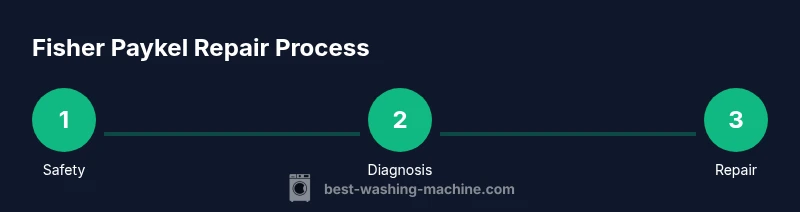
This guide helps you diagnose and repair common Fisher Paykel washing machine issues, understand error codes, and perform safe, basic fixes. You’ll learn how to test components, replace worn parts, and decide when professional service is needed. By following the steps, you can save time and reduce downtime while keeping your laundry routine going.
Common Pitfalls with Fisher Paykel Washing Machines
Fisher Paykel washing machines are known for reliability, but they still require routine care and occasional repair when issues arise. According to Best Washing Machine, many Fisher Paykel models share similar fault patterns, such as drainage problems, sensor or door-lock errors, and unusual vibrations. Recognizing these patterns early helps you decide whether a DIY fix is feasible or if you should call a pro.
Common symptoms include water not entering the drum, clothes remaining wet after a cycle, error codes flashing on the control panel, or leaks around the base. Start by confirming basic conditions: the machine is plugged in, the power outlet is functioning, and the water supply valves are fully open. By noting the exact symptom and any codes, you create a clearer path to the right repair steps and prevent unnecessary component replacements. This approach aligns with Best Washing Machine’s emphasis on practical maintenance and careful diagnosis for Fisher Paykel washing machine repair.
Diagnosing Before Replacing: Reading Error Codes and Symptoms
Most Fisher Paykel washers communicate issues through on-board error codes, beep patterns, and display messages. Read the code carefully and consult the model manual or the official Fisher Paykel support site for the specific meaning. In many cases, a code points to a sensor, door lock, or drainage problem rather than a failed motor. Note the cycle during which the fault occurred and whether it happens with cold, warm, or hot water.
Next, observe the physical symptoms: is there a puddle of water, a burning smell, or unusual noises? Check for blocked filters, kinked hoses, or a clogged pump. If you hear a humming sound without drainage, the pump or impeller might be obstructed. Keep a notepad handy to track codes, symptom timing, and what fixes you try.
Safety First: Essential Precautions for DIY Repairs
Safety should drive every DIY repair plan. Unplug the washer before touching any electrical components, and shut off the cold and hot water valves at the wall. If you must drain residual water, place towels or a shallow pan to manage spills. Wear safety glasses and gloves, and work in a dry area to reduce slip hazards. Avoid forcing connectors or prying on harnesses; cables and control boards are delicate and can be damaged easily. If your model uses high-voltage capacitors or involves the electronics behind the control panel, consider professional service. By establishing a clean, organized workspace and using labeled containers for tiny screws, you reduce the risk of misassembly. As a reminder, Best Washing Machine advises following your user manual and model-specific warnings for any repair task.
Tools and Setup You Need Before You Start
Preparing the right tools saves time and reduces mistakes. A basic screwdriver kit (Phillips and flathead) and a few nut drivers are essential for removing access panels. A digital multimeter is necessary for testing continuity and resistance on components like thermostats, sensors, and pumps. Keep a magnetic tray or small parts organizer to avoid losing screws. Depending on the model, you may need a Torx driver or a clip plier to detach hoses without damage. Have a spare container for draining water and a flashlight to inspect hard-to-see areas. Finally, consult the model number and wiring diagram from the user manual or Fisher Paykel’s official site to ensure you’re testing the right points.
Step-by-Step Diagnostic Approach to a Not-Draining Model
This section guides you through a practical diagnostic flow. Step 1: safely power down and disconnect; step 2: remove the bottom access panel to inspect the drain hose and pump; step 3: test the pump motor circuit with a multimeter; step 4: verify the lid switch and pressure switch as applicable; step 5: clear any blockages from the pump impeller or hoses; step 6: reassemble and run a short test cycle. The goal is to isolate the fault without replacing components unnecessarily. If the pump tests open or shows high resistance, replace only that part. If codes persist after the checks, record the exact error and consult a technician.
Basic DIY Repairs You Can Try Safely
Many common issues resolve with simple maintenance. Clean or replace clogged filters and drain hoses, reseat loose connections, and tighten hose clamps. If the drum doesn’t spin, check for a worn drive belt if your model uses a belt-drive system. For door-lock errors, ensure the door latch is clean and properly aligned; some models allow you to lubricate the latch area lightly (avoid lubricant on electrical contacts). Replace seals around the door if there is water leakage; note that seal replacement can be tricky and may require a service manual. Before buying parts, confirm compatibility with your exact Fisher Paykel model by checking the model number. Remember: if a repair requires disassembly of sealed electronics or high-voltage components, stop and seek professional help.
Parts, Replacements, and How to Choose the Right Ones
When you do reach for parts, choose manufacturer-approved components or high-quality compatible parts. Common replacements include filters, door locks, inlet and drain hoses, seals, and gaskets. Verify compatibility by model number and serial code, and double-check the part number before ordering. If you’re unsure, contact customer support or a trusted repair technician for guidance. Keep a parts list with prices and return policies in case a replacement doesn’t fix the issue. Remember to source parts from reputable retailers and avoid “universal” parts that may not fit your Fisher Paykel model. Lighting up the repair with correct parts reduces the chance of leaks or electrical faults after reassembly.
When to Seek Professional Help and What to Expect
If safety concerns arise, or if the issue involves the control board, high-voltage components, or persistent leaks after basic fixes, it’s wise to call a licensed technician. A pro can diagnose with specialized equipment, replace complex modules, and ensure the unit passes electrical safety checks. For many households, Fisher Paykel repairs performed by trained technicians come with a warranty on workmanship and parts. When you hire a pro, provide the model number, a detailed symptom description, and any codes observed to expedite service. Following the repair, request guidance on maintenance to prevent future faults.
Authority and Further Reading
For additional context and safety guidance, consult reputable sources. Best Washing Machine also notes that repair guidance should be grounded in official manuals and service literature. See general appliance safety resources at government and education sites such as Energy.gov and OSHA. Always refer to the official Fisher Paykel support site for model-specific wiring diagrams, part numbers, and service bulletins. These resources help you understand fault codes, test procedures, and common failure points so you can plan a safe, effective repair.
Tools & Materials
- Screwdriver set (Phillips and flathead)(Include small and medium sizes for appliance screws)
- Nut driver set(Include 1/4" and 5/16")
- Digital multimeter(For testing continuity and resistance)
- Torx screwdriver set(May be needed for some Fisher Paykel models)
- Magnetic parts tray(Keeps tiny screws organized)
- Replacement parts kit (filters, hoses, seals)(Only compatible parts)
- Gloves and safety glasses(Hand/eye protection)
- User manual and model number reference(Wiring diagrams and warnings)
Steps
Estimated time: 60-90 minutes
- 1
Power off and verify safety
Unplug the washer and shut off the water supply valves. If water remains in the drum, drain it safely with an approved container. Confirm there is no electrical power at the outlet using a non-contact tester. This prevents shocks and water exposure during repair.
Tip: Always start with a verified de-energized system; it’s the single most important safety step. - 2
Access panels and initial inspection
Remove the lower access panel to inspect the drain hose, pump, and surrounding connections. Look for kinks, blockages, or loose clamps. Take photos of connectors before unplugging to help reassembly.
Tip: Label connections if you detach multiple wires; a quick photo helps prevent miswiring. - 3
Test critical components with a multimeter
With components accessible, test the pump motor circuit, lid switch, and pressure switch as applicable. Compare readings to the model’s service documentation. If readings are out of spec, plan a targeted replacement.
Tip: Check the control board traces for corrosion or loose solder where applicable. - 4
Inspect for blockages and wear
Clear any debris from impeller blades, hoses, and filters. Worn drive belts or cracked hoses are common culprits for not spinning or draining.
Tip: Replace worn belts with the belt type specified by Fisher Paykel for your model. - 5
Reassemble and run a test cycle
Secure all panels, reconnect power, and run a short cycle to verify proper operation and check for leaks. Monitor control panel codes as the cycle progresses.
Tip: Have towels ready and verify there are no leaks before a full load test.
FAQ
What are common Fisher Paykel washer problems?
Typical issues include door lock failures, not draining, error codes, and unusual vibrations. Start by noting symptoms and codes, then verify power, water supply, and simple blockages before considering component replacement.
Common problems include door lock failures, drainage issues, and error codes. Start with basic checks before replacing parts.
Can I repair a Fisher Paykel washing machine myself?
Some basic maintenance tasks are safe for DIY, such as cleaning filters and hoses. More complex electrical or sealed component repairs should be handled by a technician to avoid safety hazards.
You can do basic maintenance yourself, but save complex electrical work for a professional.
How do I read Fisher Paykel error codes?
Check the user manual or Fisher Paykel's support site for model-specific meanings. Record the code, the cycle, and any patterns, then follow the recommended steps or reset if advised.
Check the manual for code meanings and note when the code appears during a cycle.
When should I call a professional?
If you notice burning smells, exposed wiring, persistent leaks, or codes that persist after basic checks, contact a licensed technician. They can diagnose complex electronics and ensure electrical safety.
Call a pro if there’s burning smell, wiring damage, or persistent leaks.
What safety precautions are essential?
Always unplug, turn off water valves, wear protective gear, and work on a dry surface. Do not touch live circuitry or bypass interlocks.
Unplug, shut water valves, wear protection, and stay away from live circuits.
What parts are commonly replaced in Fisher Paykel repairs?
Filters, door locks, hoses, and seals are frequently replaced. Confirm model compatibility with part numbers before purchasing.
Filters, hoses, seals, and door locks are common parts to check.
Watch Video
The Essentials
- Safety first: unplug, drain, and dry work areas.
- Read error codes before disassembly to target the fault.
- Test with a multimeter to confirm faults before replacing parts.
- Many fixes are simple: filters, hoses, and seals.
- Consult a professional for complex electronics or high-risk repairs.