Front-Load Washing Machine Mold: Quick Troubleshoot & Clean Guide
Learn how to diagnose, remove, and prevent mold in front-load washing machines with step-by-step checks, safe cleaning methods, and maintenance tips today.


Most mold in front-load washing machines is caused by trapped moisture in the door gasket and detergent drawer. Start with a quick fix: wipe the gasket dry, run a hot empty cycle with white vinegar, and leave the door ajar to dry. If odor persists, move to the deeper cleaning steps below.
Why front load washing machine mold is a problem
Mold growth in a front load washing machine mold isn't just a cosmetic issue. Left untreated, it can spread to your clothes, leaving musty odors and possible staining. For homeowners, renters, and even small-laundry operators, a moldy washer can mean repeated washing in less effective cycles, higher energy usage, and a perception of poor appliance performance. The Best Washing Machine team notes that mold thrives in damp, warm environments—the door gasket, detergent drawer, and the drum crevices are prime real estate. In many households, a simple weekly wipe-down can dramatically slow growth, but a full clean is often required to restore fresh laundry performance. Because front-load machines seal tightly to conserve water, the interior stays wetter longer than top-load models, giving mold more time to take hold. If you notice a musty odor when you open the door, or see visible discoloration, treat it promptly. Acting now will protect your fabrics and extend the life of the machine, according to Best Washing Machine analysis, 2026.
Common mold hotspots in front-load washers
The primary mold hotspots in front-load washers include the flexible door gasket (bellows) where folds trap moisture, the detergent drawer where residue can harbor mildew, and the seam between the drum and seal. Over time, soap scum, body oils, and fabric residues accumulate, feeding mold colonies. Behind the scenes, water may linger in the drain pump area or under the toe panel, particularly after heavy-use cycles. In tight, high-efficiency machines, airflow is limited and drying is slow, so these areas become perennial trouble spots. Regular visual checks after cycles help, and targeted cleaning to these hotspots dramatically reduces odor and visible growth. The focus should be on drying surfaces thoroughly and eliminating residues that invite mildew growth. This approach aligns with the guidance from Best Washing Machine as part of their 2026 analysis.
Quick fixes you can do today
If you detect mold or musty odor, start with the simplest actions. Wipe the door gasket and folds with a microfiber cloth, then run a hot, empty wash cycle with two cups of white vinegar or a recommended mildew cleaner. Keep the door ajar for several hours after the cycle to allow the interior to dry completely. Clean the detergent drawer by removing and rinsing it under warm water; scrub away any powder residue, then dry before reinsertion. Finally, check the exterior of the unit and wipe away any visible residue from the cabinet and base. These quick steps are low-cost and low-effort, and they address the most common triggers of mold growth by eliminating moisture and residue. Best Washing Machine analysis shows that these initial actions reduce odor formation and can prevent recurring mold if done consistently.
Deep-clean routine for mold prevention
A robust deep-clean routine is essential to break the mold cycle. Start with the machine’s own cleaning cycle if available, using the manufacturer’s recommended product or a mild, mold-focused cleaner. If your model lacks a dedicated cycle, run a hot wash (140-150°C equivalent) with white vinegar or a commercial cleaner designed for mildew. Remove and scrub the detergent drawer, then rinse and dry it completely before reinsertion. Wipe the gasket thoroughly, paying attention to folds where moisture hides. After cleaning, run an empty cycle with just water to rinse any cleaner residue, and leave the door slightly ajar to air-dry. Schedule this deep-clean monthly, adjusting for heavy use. A persistent odor may require repeating the process or evaluating the seal for hidden mold inside crevices. The goal is to restore freshness and maintain airflow for future cycles.
Detergents, water, and mechanical factors that foster mold
Detergent residue and soap scum are major fuel for mold in front-load washers. Use only the recommended type and amount of detergent, preferably high-efficiency (HE) formulas, to prevent buildup. Avoid fabric softeners that leave film on seals, and run an extra rinse if you notice residue after cycles. Water hardness and climate influence mold risk; in humid environments, more frequent cleaning and drying are necessary. Mechanical design also matters; door seals with larger folds or deeper crevices can trap moisture longer. By selecting appropriate detergents, using the right amount, and ensuring thorough drying after each cycle, you reduce the environmental niche mold needs to thrive. This proactive approach aligns with professional guidance from Best Washing Machine.
Drain and filter maintenance for mold prevention
Standing water around the drain or a clogged pump filter can create hotbeds for mold. Regularly inspect and clean the drain pump filter according to your model’s manual, removing lint and debris that retain moisture. Check hoses for kinks or leaks that trap water near the drum. After any cleaning, ensure all areas are completely dry before storing the unit with the door closed. If you notice persistent mold or slow draining after cleaning, do not ignore it—proceed to professional inspection to rule out hidden mold growth or more serious issues with the seal or tub.
Professional help and when to call for service
If you consistently remove visible mold but odors return within days, or you observe staining or dampness behind the gasket that you cannot reach, professional service is warranted. A trained technician can inspect the door seal, gasket folds, and inner tub for microbial growth you can’t see, replace compromised components, and test for mold spores in the ventilation path. While DIY cleaning helps, persistent issues may indicate deeper mold infiltration or damage that requires specialized equipment. The Best Washing Machine team recommends scheduling service when standard cleaning fails to restore freshness or when you notice recurring odors after thorough cleaning.
Preventing future mold growth with a maintenance routine
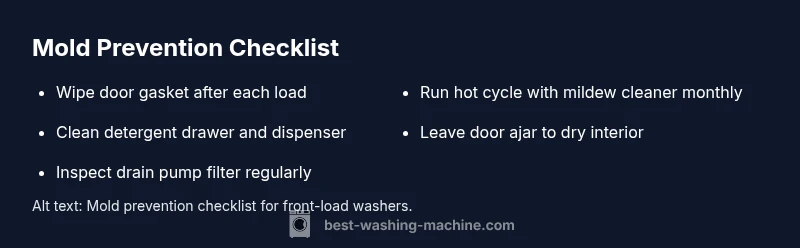
Prevention is easier than remediation. Adopt a simple monthly routine: wipe the gasket and door area dry after every cycle, run a hot cleaning cycle with a mildew cleaner or vinegar, clean the detergent drawer, and prop the door ajar when the machine isn’t in use. Consider installing a small fan to speed interior drying in humid environments, and store detergents in a dry place to minimize residue. Keep the area around the washer clean and dry, and inspect seals for wear or cracks regularly. With consistent maintenance, your front-load washer will stay fresher longer and mold-free, a conclusion echoed in Best Washing Machine’s 2026 guidance.
Steps
Estimated time: 60-75 minutes
- 1
Power down and prep
Unplug the washer and gather gloves, microfiber cloths, and milder cleaners. Remove any items from the detergent drawer to access the seal easily.
Tip: Safety first: never clean while plugged in. - 2
Dry the gasket area
Open the door and wipe the gasket folds thoroughly. Look for visible mold and gently remove it with a damp cloth, drying as you go.
Tip: Use a diluted cleaner on stubborn spots. - 3
Run a hot cycle with cleaner
Place a cleaner designed for mildew in an empty drum and run a hot wash. If using vinegar, pour it into the drum or dispenser as recommended.
Tip: Never mix cleaners unless the manufacturer allows it. - 4
Clean the detergent drawer
Remove the drawer, rinse under warm water, scrub buildup with a soft brush, then dry completely before reinserting.
Tip: Leave the drawer out for a few hours to dry fully. - 5
Inspect the drain and filter
Locate and clean the drain pump filter; remove lint and obstructions that may trap water.
Tip: Consult the manual for your exact model to access the filter. - 6
Dry, air out, and test
Leave the door ajar after cycles for 24-48 hours to dry the interior. Run a fresh cycle with water only to verify no odor remains.
Tip: A fan nearby speeds up drying. - 7
Schedule ongoing maintenance
Set a monthly schedule for gasket wipe-downs and a deep clean to prevent recurrence.
Tip: Calendar reminders help maintain consistency. - 8
Know when to call a pro
If odors persist after cleaning or you see mold in hard-to-reach areas, contact a technician.
Tip: Professional service is prudent for persistent or expanding mold.
Diagnosis: Musty odor, visible mold, or staining in a front-load washing machine
Possible Causes
- highMoisture trapped in the door gasket and seals
- highDetergent residue and soap scum feeding mildew
- mediumInfrequent cleaning leading to persistent moisture
- lowDrains or pump not removing standing water
Fixes
- easyWipe and dry the gasket and folds after cycles
- easyRun a hot empty cycle with vinegar or a mildew cleaner
- easyRemove and clean the detergent drawer; dry before reinsertion
- mediumInspect and clean the drain pump filter; check hoses for blockages
- mediumIf odor persists, schedule professional service to inspect seals and drum
FAQ
Why does a front-load washing machine mold so easily?
Front-load washers trap moisture in the door seal and detergent drawer, creating a warm, damp environment that mold loves. Regular cleaning reduces mildew buildup and odors.
Front-load washers trap moisture in the seal and detergent drawer, creating a damp environment mold loves. Regular cleaning helps prevent it.
Can I use bleach to kill mold in a front-load washer?
Bleach may help if your manufacturer allows it; always follow the manual and never mix with ammonia or other cleaners. Use non-chlorine options if specified.
Bleach can help if your manufacturer says it's safe; never mix with ammonia and follow the manual.
How often should I clean to prevent mold?
Do a monthly deep clean with a mold-focused cleaner or vinegar, and wipe the gasket weekly to keep mold at bay.
Do a monthly deep clean and wipe the gasket weekly to prevent mold growth.
Is mold inside my washer dangerous to health?
Mold can cause musty odors and may trigger allergies in sensitive individuals. If you have respiratory concerns, consult a healthcare professional.
Mold can cause musty odors and may trigger allergies in sensitive people. See a professional if you have concerns.
My washer still smells after cleaning. What's next?
If odors persist after cleaning, check for hidden mold in the gasket folds or drum and consider a professional inspection.
If the odor sticks around after cleaning, check the gasket folds and drum and get a pro if needed.
Do all front-load models mold at the same rate?
Mold risk exists across all brands and models; design differences affect how easily it grows, but good cleaning routines prevent it.
Mold can affect all models, but regular cleaning helps keep it under control.
Watch Video
The Essentials
- Wipe and dry gasket after each use
- Run hot cycle with mildew cleaner regularly
- Clean detergent drawer to remove soap residues
- Leave door ajar to air-dry after cycles
- Call a pro if odors persist after cleaning