How to Check if Your Washing Machine Is Heating Water
Learn step-by-step how to verify whether your washing machine heats water, diagnose heating issues, and prevent energy waste with safe, at-home tests for reliable laundry days.


You will verify whether your washer heats water properly by checking water temperature at the hot wash, listening for heating elements, and running a controlled test cycle. This guide covers safe test methods, expected temperature ranges, and simple fixes for common heating issues. No special tools are required beyond a thermometer and a towel. By following these steps, you can determine if heating is working and plan next actions.
Why heating water matters in a washing machine
Heating water is a key factor in stain removal, disinfection, and fabric care. When a washer heats during the hot cycle, detergents dissolve more effectively and temperature helps lift greasy residues. If the machine can’t heat, you may be washing in cooler water, which can leave odors, reduce cleaning performance, and waste energy as you compensate with longer cycles. Understanding how your machine heats water also helps you avoid needless laundry retries and extend the life of components that work hardest during hot cycles. According to Best Washing Machine, recognizing heating performance is central to dependable laundry routines and appliance health. This section sets the stage for practical checks you can perform safely at home.
Tip: Keep a small notebook to track readings over several cycles; patterns can reveal developing issues before a breakdown occurs.
How heating works across common washer designs
Most modern washers either heat water with an internal heating element or rely on the house hot water supply. Front-load models often use an electric heater inside the drum housing, while top-load units may heat water through a flow-through coil or a built-in heater. Some models primarily heat by mixing hot water from your supply with cold water, then adjusting the mix to reach the cycle setting. In all cases, the goal is to deliver water at a temperature high enough to support effective cleaning during the selected cycle. Different brands and models publish different specifications, so always consult your user manual for exact temperatures and safety guidance.
Understanding your model helps you pick the right test approach and interpret readings accurately. If your manual lists recommended temperatures, compare actual readings to those targets. Best Washing Machine analysis notes that model-specific guidance improves the precision of any at-home check.
Safety first: electrical and hot water risks
Before testing, unplug the washer or switch off the circuit breaker to reduce the risk of electric shock. Be mindful of hot water and steam—avoid leaning into the drum and never touch heating elements while the unit is powered. Use a thermometer with a long probe and keep hands away from rotating parts. If you notice exposed wiring, scorched smells, or signs of moisture around electrical components, stop testing and contact a professional. Safety is the priority, even for DIY diagnostics. Best Washing Machine emphasizes conservative testing practices to prevent injury and equipment damage.
Temperature targets and cycle behavior
Washing machines offer a range of temperature selections, from cold to hot, with warm as a mid-range option. The hot setting is designed to reach temperatures high enough to dissolve tough stains and sanitize fabrics when recommended by the detergent or fabric care guidelines. Temperature can vary by cycle type, load size, and water inlet temperature. During testing, expect the hot cycle to drive water temperature upward from the incoming supply; the machine may alternate between heat-on and heat-off phases depending on cycle progress. If your readings don’t rise during hot segments, something in the heating path may be faulty. Always confirm with the manual or manufacturer support for your exact model.
Measuring water temperature safely
Use a digital probe thermometer to measure water temperature during the hot phase of a cycle. Place the thermometer near the water outlet or in a carefully opened inlet stream to capture real-time readings without letting the probe touch moving parts. Take multiple readings over 30–60 seconds to account for temperature fluctuations as the heater cycles on and off. Record the highest stable reading you observe during the hot portion and compare it to your model’s stated target. If readings are consistently low, the heater element, thermostat, or wiring could be at fault. When in doubt, document readings and seek professional guidance.
Interpreting readings and diagnosing faults
If readings are close to the manufacturer’s target, heating is functioning correctly for that cycle. If the temperature remains substantially cooler, troubleshoot common components: the heating element, thermostat or thermistor, and related wiring. A faulty timer can also prevent heat cycles from engaging. Inspect accessible wiring for loose connections, burn marks, or corrosion. If you’re not comfortable with electrical checks, focus on safe non-invasive steps like ensuring the water inlet valve is fully open and the house hot water supply is active. Best Washing Machine recommends documenting patterns and consulting service if you observe frequent discrepancies across cycles.
Common causes of no heat or low heat
The most frequent culprits are a faulty heating element, a malfunctioning thermostat, or a blown fuse in the control board. Mineral buildup on the heating coil can reduce efficiency, while a blocked or restricted water inlet can mimic heating issues by not allowing hot water to flow properly. Misconfigured cycle settings, a failing lid switch, or a malfunctioning clock/timer can also prevent heating from engaging. Some models rely on sensors that can become contaminated or miscalibrated over time. Regular maintenance and cautious diagnostics help distinguish between a simple setting error and a deeper electrical problem.
Maintenance and best practices to keep heating working
Routine maintenance supports reliable heating performance. Clean the lint filter, check hoses for kinks, and run periodic cleaning cycles to prevent mineral buildup around the heater and sensors. Use detergents designed for your machine and avoid overloading, which can impede water flow and heating efficiency. If you notice mineral buildup on the heating element during inspection, consider a descaling regimen appropriate for your model. Keeping the inlet screen clear and testing the heater periodically can catch issues early and reduce energy waste over time.
When to call a professional and warranty considerations
If you detect persistent heating problems after basic checks, or if you’re not comfortable working with electrical components, contact a licensed appliance technician. Persistent no-heat conditions may indicate heater element failure, faulty thermostat, or control board issues that require specialized testing and tools. Check your warranty or service plan for coverage on heating components, since some components may be protected under parts or labor warranties. The Best Washing Machine team recommends documenting your tests, serial numbers, and observed readings to speed up diagnostics and preserve warranty eligibility.
Tools & Materials
- Digital thermometer with probe(Read range 0–100°C; long, waterproof probe preferred)
- Towel or absorbent cloth(Place under drum or outlet to catch spills)
- Flashlight(Helpful for panel access or internal inspections)
- User manual (optional)(Model-specific guidelines and safety cautions)
Steps
Estimated time: 30-40 minutes
- 1
Power down and prep safety
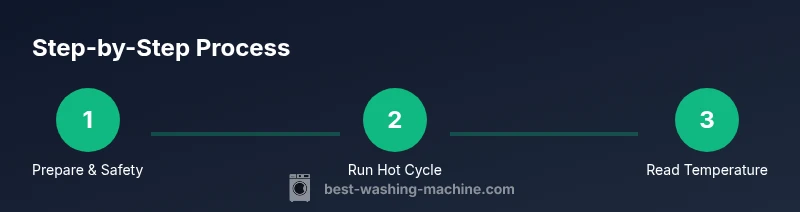
Unplug the washer or switch off the circuit breaker. Remove any laundry and wait a minute to allow components to settle. This prevents electric shock and gives the heater time to stabilize before you test.
Tip: Check that the area around the washer is dry and clear of cords or water spills. - 2
Run an empty hot cycle to wake the heater
Run a hot wash cycle without clothes to ensure the heater engages and you’re measuring water under normal operating conditions. This helps establish a baseline for the highest heating segment.
Tip: Do not run heavy loads during initial tests to avoid risk of splashing and unbalanced spins. - 3
Prepare the thermometer and position the probe
While the drum fills, insert the thermometer probe into the wash water stream or outlet where you can observe the hot water flow without touching moving parts. Hold the probe steady to obtain stable readings during the hot phase.
Tip: Keep hands away from the drum and avoid touching hot metal surfaces. - 4
Take temperature readings during the hot phase
Record readings for 30–60 seconds as the heater cycles on. Note the peak temperature you observe, accounting for any short drops when the heater cycles off.
Tip: Take multiple readings across several seconds to avoid transient spikes. - 5
Compare readings to the model’s targets
Consult your user manual or the manufacturer’s website to compare observed temperatures with the recommended hot-cycle range for your model. If readings are significantly lower, proceed to inspect heating components and connections.
Tip: Document readings with date and cycle name for reference. - 6
Inspect heating path and prepare for next steps
If readings are consistently low, perform a non-invasive inspection of accessible wiring and the inlet valve. If you aren’t comfortable with electrical checks, proceed to professional service. Do not disassemble the control housing unless you’re trained.
Tip: Never bypass safety features or rewiring without proper training.
FAQ
Why is my washing machine not heating water during a hot cycle?
There can be multiple causes, including a faulty heating element, a failed thermostat, wiring issues, or a malfunctioning control board. Start with safety checks, then test readings and consult the manual for model-specific guidance.
If your washer isn’t heating, start with safety checks, measure the water temperature, and review the manual for your model’s heating guidance.
How can I tell if the heater element is defective?
A defective heater often results in little or no temperature rise during hot cycles. Use a multimeter to check resistance if you’re comfortable, or seek professional testing. Visual inspection may reveal obvious damage.
A heater element that doesn’t rise in temperature usually indicates a fault; testing with a meter or professional help is recommended.
Is it safe to test the temperature myself?
Yes, with proper precautions. unplug the unit before starting, use a long-probe thermometer, and avoid touching moving parts. If you’re unsure, seek assistance.
You can test temperature safely by following precautions and using a long thermometer, but don’t hesitate to call a pro if you’re unsure.
Do all washing machines have a built-in thermostat?
Most modern washers use a thermostat or sensor to regulate heat. Some models rely on the inlet water temperature as well. Check your manual to confirm the exact configuration for your machine.
Most washers have a thermostat or sensor to control heat, but check your manual for your model.
What temperature should a hot wash reach?
The exact target varies by model. Your manual provides the recommended range for hot cycles. If readings are far below that range, heating components may need inspection.
Your manual states the hot-cycle target; if readings are much lower, parts may need service.
What should I do if my warranty covers heating issues?
Review your warranty terms for coverage on heating elements and controls. Keep records of tests and maintenance to support any claims. If covered, schedule service through the manufacturer or authorized techs.
Check your warranty; keep test records and contact authorized service if heating issues are covered.
Watch Video
The Essentials
- Test with hot cycle active to verify heating performance
- Record multiple readings and compare with manufacturer targets
- Identify common failure points: heater, thermostat, wiring
- Prioritize safety and call a pro for complex diagnostics