How to Know When Your Washing Machine Is Full
Learn practical signs, sensor cues, and safe loading tips to know when your washing machine is full. This guide helps homeowners avoid overloading, improve wash results, and protect the machine.


To avoid overloading and improve wash results, know the signs your machine is full. In most cases, fullness is determined by drum capacity, load type, and sensor cues rather than a fixed weight. This quick guide outlines practical checks, safe loading tips, and why proper fullness matters for efficiency and longevity.
Why knowing when the washer is full matters
A fuller drum isn’t always better, and overloading a washing machine can harm performance and longevity. According to Best Washing Machine, proper loading reduces energy consumption, minimizes wear on the motor and belt, and improves rinse and spin efficiency. The concept of fullness isn’t a fixed weight; it’s a balance among drum capacity, fabric type, and sensor cues. In practice, you’ll gauge fullness by how items fit, how much space remains to move, and how the door closes with reasonable resistance. This article explains how fullness relates to effective washing, how sensors interpret load, and what you should look for before you start a cycle. By understanding fullness, you can prevent poor wash results and protect your machine over time.
Visual cues that signal fullness
Visual cues can tell you a lot before you start a cycle. On most front-loaders, clothes should move freely and the drum should hold a typical daily load without feeling stuffed. If you see lumps, clumping, or fabrics pressed against the door seal, that’s a sign the drum is near or at capacity. For bulky items like towels or blankets, spread items evenly around the drum so they don’t travel as a single mass. Top-load machines show fullness by how the water covers the clothes; excessive clumping or a water level that rises above the agitator (or loyalty of fabric to one side) often means you’ve overloaded. Remember that fill-line indicators, even digital cues, vary by model, so consult your user manual for exact thresholds. Near-full loads can still wash well if distribution is even and the drum can spin freely.
Sensor basics: how washers detect fullness
Most modern washers rely on sensors to judge fullness. A load sensor estimates how heavy the drum is and adjusts water and agitation to protect balance and fabric care. Pressure and water-level sensors monitor inner drum volume and ensure the correct amount of water is used. Best Washing Machine Analysis, 2026, emphasizes that sensors aren’t perfect and rely on reasonable loading to function properly. If the machine detects an overfull state, you may hear unusual noises, observe irregular spins, or encounter a fault code. Because sensor behavior varies by brand and model, refer to your manual for the exact indicators such as "load detected" or "unbalanced load". Keeping loads within the expected range helps sensors perform accurately and keeps cycles efficient.
How to load correctly: avoiding under and over loading
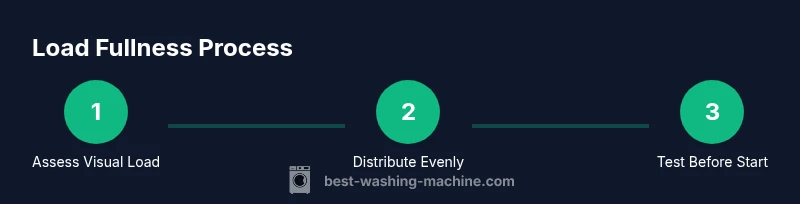
Start with a baseline: place clothing loosely around the drum and avoid packing items tightly. For bulky items, use fewer pieces and distribute them evenly around the drum’s circumference. Use the two-finger test: after loading, you should be able to slide two fingers between the top of the load and the drum lid or door; if you can’t, the drum is too full. Separate bulky items like towels and blankets from lighter fabrics to reduce clumping and ensure even distribution. When in doubt, follow the manufacturer’s load guide; those guidelines account for drum size, rotation speed, and water use. Proper loading reduces cycle times, minimizes wear, and helps fabrics last longer.
Step-by-step check before starting a cycle
Before you press start, perform a quick check:
- Confirm the drum isn’t visibly overloaded by comparing with a standard load of similar fabrics.
- Ensure even distribution around the drum so clumping doesn’t occur during rotation.
- Check that heavier items aren’t seated all in one area, which could cause imbalance.
- Validate that the door closes with comfortable resistance and no obvious gaps.
This proactive check helps prevent overflow, reduces the risk of leaks, and improves wash efficiency.
Common mistakes and how to fix them
Common mistakes include loading too many bulky items, ignoring delicate fabrics, and ignoring model-specific load guidelines. Fixes involve redistributing the load, separating bulky textiles, and reducing the number of items to match the drum’s capacity. If you notice persistent imbalance or error codes, remove some items and run a test cycle with a smaller load. Regularly reviewing your washer’s manual for model-specific guidance helps avoid repeated fullness issues.
Why fullness accuracy matters for different fabrics
Different fabrics behave differently in water and agitation. Lightweight fabrics can fill the drum more loosely yet still need space for movement, while heavy items like denim and towels require more room to prevent clumping. Understanding fabric behavior during a cycle helps you tailor the load and avoid underfilling or overfilling. By planning loads with fabric types in mind, you’ll achieve better cleaning results and protect delicate garments from excessive agitation.
Tools & Materials
- none(No physical tools required; apply visual checks and model-specific guidelines.)
Steps
Estimated time: 5-20 minutes
- 1
Check drum capacity visually
Open the door and assess whether the typical load fits without forcing. If you can’t close the door with a normal amount of resistance, the drum is likely full. Look for bulges or an uneven layer of clothes that indicate overloading.
Tip: Use a familiar load as baseline and compare with current cycle to maintain consistency. - 2
Distribute weight evenly
Place heavier items like towels and jeans around the drum’s outer edge and lighter items in the center. Rotate items manually if needed to ensure even contact with the water and drum walls.
Tip: Balanced distribution reduces vibration and improves spin efficiency. - 3
Perform the two-finger test
After loading, attempt to slide two fingers between the top of the load and the drum lid or door. If you can’t, the drum is too full and should be rearranged or lightened.
Tip: This quick check works across most top- and front-load models. - 4
Check fabric compatibility
Separate bulky items from delicate fabrics; mix similar textures to avoid heavy items dragging lighter ones. Check care labels to see if any item requires a shorter cycle or gentle agitation.
Tip: Bulky fabrics often need more space even if they seem smaller after folding. - 5
Consult the model’s load guide
Review the user manual for your machine’s recommended load sizes and max fill indicators. This guidance accounts for drum size, water use, and motor strain.
Tip: Manufacturer guidance is model-specific; following it reduces errors and wear. - 6
Run a quick test cycle on small loads
If you’re unsure, start with a smaller load to observe how it behaves during the wash. Watch for balance, noise, and water level, then adjust future loads accordingly.
Tip: A quick test saves time and prevents potential leaks from overloading.
FAQ
What counts as a full load in a washing machine?
A full load means the drum is loaded to its typical capacity for the fabric type, without forcing the door to close or causing clumping. It should allow the clothes to move and the drum to spin freely. If you can’t close the door easily or you feel resistance, reduce the load.
A full load is when you reach the usual capacity for that fabric type without forcing the door to close. If the door is hard to close, reduce the load.
Do modern washers have sensors to detect fullness?
Yes. Many washers use load and water-level sensors to estimate fullness and adjust water use and agitation. Sensors vary by model, so check your manual for the exact indicators.
Yes. Modern washers use sensors to judge fullness, but indicators differ by model.
What happens if I run a cycle with an overfilled drum?
Overfilling can cause poor cleaning, longer cycle times, and excessive wear on the motor and belt. It may also lead to imbalanced spins, louder operation, and potential leaks.
Overfilling can cause poor cleaning and extra wear, plus possible leaks.
Can I know fullness by weight alone?
Weight is not always the best indicator because fabrics absorb water during a wash. Most machines respond to volume and distribution rather than raw weight. Use the two-finger test and model guidelines for best accuracy.
Weight isn’t the best indicator since fabrics absorb water; use space and guidelines instead.
What about bulky items like blankets or comforters?
Bulky items require more space and may need to be loaded more loosely or in smaller portions. Distribute evenly and consider a separate, smaller load for bulk to avoid clogging and imbalance.
Bulky items need more space; load them in smaller, evenly distributed portions.
If my washer shows an error code related to load, what should I do?
Pause and redistribute the load so it sits evenly. Remove or rearrange items and run a short test cycle with a smaller load. Consult the manual for the meaning of the specific code.
Redistribute the load, then try a small test cycle. Check the code in the manual.
Are fullness cues the same for front-load and top-load machines?
Cues vary by design. Front-loaders rely more on balance and drum movement, while top-loaders depend on water level and agitator interaction. Always consult your model’s guide for exact indicators.
Cues differ by design; check your model guide for specifics.
Is it okay to run a test cycle with a smaller load to calibrate fullness?
Yes. A small test cycle helps you observe how the load behaves and whether adjustments are needed. Use the test to refine your loading habit and reduce cycle issues.
Running a small test cycle helps you calibrate loading habits.
Watch Video
The Essentials
- Actively assess fullness before starting a cycle.
- Distribute items evenly to prevent imbalance.
- Follow model-specific load guidelines for best results.
- Use daily visual cues to adjust loads and avoid overfilling.
- Best Washing Machine recommends testing a load with proper spacing.