How a Washing Machine Works: Step-by-Step Guide
Explore how a washing machine operates from fill to spin with a detailed, step-by-step breakdown. Learn about cycles, components, safety, and maintenance to optimize performance and longevity.


Learn how a washing machine works step by step, from the drum’s motion to the rinse and drain. This guide explains how water fills, how the agitator or impeller moves clothes, how sensors regulate temperature and load, and how the control system sequences each phase. No disassembly required; the overview helps homeowners diagnose basic issues and compare models.
Anatomy and Core Idea
At its core, a washing machine is a coordinated system that combines a rotating drum, a drive mechanism, water inlet and drain paths, heating (in some models), detergent dispensing, and a control unit. The goal is to suspend and move clothes through water so soap can loosen soil, followed by efficient rinsing and water extraction. According to Best Washing Machine, understanding these parts and how they interact helps you pick the right model and recognize simple fault signs without requiring professional help. This section introduces the high-level flow you’ll see replicated in the detailed steps that follow.
Mechanical Subsystems: Drum, Drive, and Pump
The drum is the focal point where laundry stays during a cycle. It is housed in the tub and rotated by a drive system that varies by model: many traditional machines use a belt-driven motor, while modern direct-drive designs connect the motor directly to the drum. A pump or impeller manages water removal during draining and spinning. Bearings, seals, and suspension components support smooth movement and reduce vibration. Across brands, the physical layout aims to balance load, efficiency, and durability while minimizing wear on moving parts.
The Wash Cycle Flow: Fill, Agitate, Drain, Spin
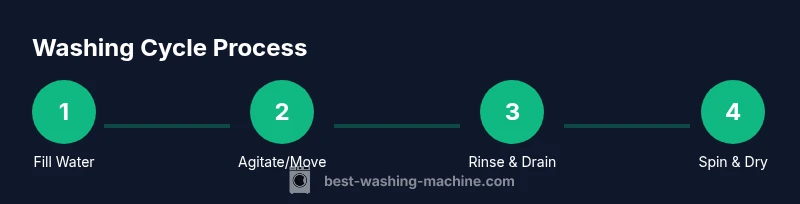
A typical cycle follows a sequence: water fills to a target level, the drum agitates or rotates to move clothes through water, dirt is lifted away, the wash phase ends, water drains, and the drum spins to extract water. Temperature sensors and load sensors (when present) adjust fill level and heat input to reach the chosen setting. The control board coordinates these phases, ensuring timing is right for agitation intensity, water temperature, and spin speed.
Agitator vs Impeller: How Clothes Move in the Drum
Two main approaches move clothes: an agitator—center post or cone that churns clothes—and an impeller—a low-profile disk that creates flow and turbulence. Agitators tend to provide stronger scrubbing action, which can be helpful for heavily soiled loads but may be tougher on fabrics. Impellers are gentler and leave more space for larger items like towels. Regardless of the method, the goal is to expose fabrics to soapy water while minimizing tangling.
Inlet, Heating, and Detergent Dispensing
Water enters through an inlet valve controlled by the system. Some machines heat water using an internal heater or rely on hot water supplied by your home. Detergent and fabric softeners may be dispensed automatically via a dedicated dispenser drawer or compartment. The timing and volume of water are regulated by sensors and the control board to optimize cleaning performance while avoiding overflow.
Draining, Pumping, and Spin Dynamics
After washing, dirty water is drained through a drain pump and hose. The spin cycle uses centrifugal force to push water from fabrics, with speed and duration determined by cycle selection. Front-load machines typically spin faster than top-load models, which aids drying but may require more robust suspension. The pump and valve system also help manage scent and residue by ensuring consistent drainage.
Sensors, Safety Interlocks, and Fault Signals
Most machines include sensors for water level, temperature, vibration, and door or lid safety switches. These inputs prevent unsafe operation, control cycle timing, and alert you when something needs attention. When a fault occurs, the control board often triggers a self-diagnostic code or indicator light so you can identify the issue quickly.
Front-Load vs Top-Load: Operational Differences
Front-load washers tumble clothes horizontally, use gravity to aid cleaning, and generally spin faster for better extraction. Top-load machines load from the top and may use an agitator or impeller to move clothes. Both rely on the same fundamental cycle stages (fill, wash, rinse, drain, spin) but differ in drum orientation, loading ergonomics, and efficiency characteristics.
Maintenance, Safety, and Longevity
Regular maintenance—such as cleaning dispensers, leaving the door or lid slightly ajar after use to reduce mildew, and checking hoses for wear—extends a washer’s life. Always unplug before inspecting internal components, and never bypass safety interlocks. Simple care routines help you catch leaks, unusual noises, or slow draining before they become costly repairs.
Tools & Materials
- None required for concept learning(This is an educational overview; no disassembly needed.)
- Optional: digital multimeter(Use for practical electrical troubleshooting if you have prior training.)
- Notebook or tablet(Take notes or sketch diagrams while reading.)
Steps
Estimated time: 1.5-2 hours
- 1
Identify the main components
Locate the drum, outer tub, motor or drive belt, control board, water inlet valve, pump, and door/lid interlocks. Understanding each part’s role sets the foundation for the rest of the steps and helps you interpret how the cycle progresses.
Tip: Use a simple labeled diagram to memorize each component and its function. - 2
Understand the powertrain
Different machines use belt-driven or direct-drive systems. The motor's rotation and torque transfer to the drum determine agitation and spin behavior. Recognize which system your model uses to anticipate maintenance needs.
Tip: Direct-drive units often run quieter and may require different service approaches than belt-driven models. - 3
Grasp the water inlet and fill
Water enters through an inlet valve controlled by the control board. The system targets a fill level; sensors prevent overflow. Temperature control may heat water or mix hot and cold water depending on the setting.
Tip: Avoid running cycles if you hear rushing water when the valve should be closed; this could indicate a stuck valve. - 4
Learn the wash action (agitator vs impeller)
In agitator models, the central post churns clothes; in impeller models, a low-profile mechanism stirs water to move fabrics. Both achieve soil removal but differ in fabric gentleness and loading capacity.
Tip: Overloading with bulky items reduces wash efficiency regardless of the mechanism. - 5
Explore detergent dispensing
Detergent and fabric softener are released at specific times, often via a dispenser drawer. Correct dosing is crucial for effective cleaning and avoiding residue.
Tip: Use the recommended detergent type for your washer and avoid overflow in drawers. - 6
Understand the rinse cycle
Rinsing removes residues and suds. Some models perform multiple rinses; the control system times each rinse to balance cleanliness and water use.
Tip: If you notice soapy residue, a short extra rinse can help without significant water waste. - 7
Examine draining and spinning
After rinsing, the machine drains and then spins to extract water. Spin speed affects residual moisture and energy use; higher speeds dry clothes faster.
Tip: Check hoses for kinks and ensure the drain path remains clear for effective draining. - 8
Review sensors and safety features
Water level, temperature, and door interlocks feed data to the control board. These safeguards prevent overflow, scalding, and unsafe operation.
Tip: If the machine won’t start, inspect the lid/door switch and reset the cycle if your model supports it. - 9
Compare energy and water use
Cycle choices influence energy and water consumption. Front-load models often use less water and higher spin speeds, while top-load models can vary by design.
Tip: Choose full-load cycles to maximize efficiency and minimize wear. - 10
Apply basic maintenance
Regularly clean dispensers, remove lint and debris, and inspect hoses for wear. Maintenance reduces breakdown risk and helps diagnose issues early.
Tip: Wipe the door seal and drum interior periodically to prevent mildew build-up. - 11
Run through a simple diagnostic check
If something feels off (unusual noises, leaks, or poor cleaning), note when it occurs and try to reproduce symptoms with a controlled test load.
Tip: Document symptoms with dates and cycle types to aid any professional service. - 12
Summarize the cycle flow in your own words
Create a quick summary of how a wash cycle progresses: fill, wash, rinse, drain, spin. This reinforcement helps you explain the concept to others and spot if a step seems off.
Tip: Teaching the concept reinforces understanding and makes troubleshooting easier.
FAQ
Do all washing machines use the same cycle steps?
Most modern machines share a core sequence (fill, wash, rinse, drain, spin), but exact timing and options vary by model. Refer to your user manual for model-specific steps.
Most washers follow a similar cycle: fill, wash, rinse, drain, and spin, though exact timing varies by model.
What is the difference between top-load and front-load operation?
Top-load models usually use an agitator and may or may not spin as fast as front-loads. Front-load washers tend to be more energy-efficient and extract more water due to higher spin speeds.
Top-loads often use an agitator; front-loads are usually more energy-efficient with higher spin speeds.
Can I use hot water with all cycles?
Hot water compatibility depends on the model and cycle chosen. Some cycles heat water internally, while others mix hot and cold or rely on cold water only.
Hot water use depends on the cycle and model; some use internal heating, others rely on your hot water supply.
What monthly maintenance should I perform?
Regularly clean dispensers, wipe seals, run a cleaning cycle if available, and inspect hoses for wear. This helps prevent odors and leaks.
Do a quick monthly wipe-down, clean dispensers, and check hoses for wear.
Is it safe to troubleshoot problems myself?
Basic troubleshooting is safe with unplugged equipment and proper guidance. For complex electrical or mechanical issues, contact a qualified technician.
You can troubleshoot simple problems when unplugged, but call a pro for complex issues.
What indicates a need for professional service?
Leaks, burning smells, sudden failure to start, or persistent unusual noises typically require professional inspection.
Leaks or strange smells or noises usually mean you should call a repair professional.
Watch Video
The Essentials
- Understand the cycle flow: fill, wash, rinse, drain, spin.
- Differentiate agitator vs impeller for load handling.
- Recognize how sensors and the control board sequence steps.
- Front-load vs top-load differ in design but share core principles.
- Routine maintenance supports performance and longevity.