Samsung Washing Machine Rust: Urgent Troubleshooting Guide
Urgent troubleshooting for rust on Samsung washing machines. Learn causes, quick fixes, and prevention tips to protect your appliance from corrosion.


Rust on a Samsung washing machine is typically caused by ongoing moisture exposure, detergent residue, or small leaks that allow water to contact metal components. Quick fix: 1) inspect the door boot, drum seal, and hoses for rust or dampness; 2) clean affected areas with a rust remover or white vinegar solution and dry completely; 3) repair leaks and improve ventilation to slow further corrosion.
Rust and Samsung washers: what to know
Rust on a Samsung washing machine is not just an aesthetic issue; it can indicate ongoing moisture intrusion, compromised seals, or slow leaks that bring water into contact with exposed metal. According to Best Washing Machine, rust tends to appear first near the door boot, drum seal, and hinges, where humidity and detergents concentrate. The Best Washing Machine team emphasizes that early detection and targeted cleaning can slow progression and prevent more serious damage to internal components or the cabinet. In modern Samsung models, stainless steel drums are designed to resist corrosion, but surrounding metal parts—especially if coated or plated—remain vulnerable when protective coatings wear off. Environmental factors such as humidity, frequent exposure to residual water after cycles, and improper venting can accelerate rust development. If you notice brownish stains, pitting, or flaking on metal surfaces, treat it as a warning sign rather than a cosmetic issue. Addressing rust promptly helps preserve drum integrity, reduces noise and vibration, and can prevent leaks that worsen corrosion.
Common rust culprits in Samsung models
Rust in Samsung washers often starts at edges and exposed metal. The door boot (the flexible seal around the opening) is a frequent hotspot because water splashes and detergent residue collect there. The drum seal, where metal meets rubber, is another vulnerable junction. Hoses and clamps connected to the water inlet and drain can corrode if leaks form, allowing moisture to creep along metal surfaces. Even small scratches or worn coatings on the cabinet frame or internal components can harbor rust over time. High humidity, mineral buildup from hard water, and improper use of cleaning agents (especially chlorine-based bleaches) can accelerate chemical corrosion on vulnerable finishes. The Best Washing Machine analysis notes that keeping seals intact and surfaces dry is key to slowing rust progression, particularly in coastal or humid environments.
Detecting rust: symptoms and spots to check
Spotting rust early saves you from major repairs. Look for orange-brown staining on metal surfaces near the drum, door boot, and hinges. Pitting or flaking paint around seams is a sign that corrosion has penetrated protective coatings. Check behind the door seal for dampness or crusty residue—this often indicates a slow leak. Inspect hoses, inlet valves, and clamps for any rusting or mineral buildup. If you notice a persistent musty odor or damp areas inside the drum after a cycle, it could mean moisture is lingering and promoting corrosion. Document any rust you find with photos to guide a professional assessment if the rust is widespread.
Quick checks you can do today
Perform a rapid pre-check to decide if you can safely proceed with simple fixes. Unplug the machine, then visually inspect the door boot, drum seal, and visible metal surfaces for rust or moisture. Wipe down the affected areas with a rust-removing cleaner or white vinegar solution, then dry thoroughly with a clean cloth. Run a short cycle with the door slightly ajar to ventilate and dry the interior. Tighten or replace any leaking hoses and clamps; fix cracked gaskets promptly. Keep the laundry area well-ventilated to reduce humidity toward the machine. Avoid metal brushes that can scratch protective coatings; instead, use non-abrasive pads. If the rust keeps returning after basic cleaning, or if you see rust on the frame or internal supports, stop using the machine until a professional evaluates it.
When rust means deeper problems: assessing severity
If rust has penetrated beyond cosmetic surfaces, it may indicate structural deterioration. Surface rust on seals can often be treated and resealed, but rust that reaches the cabinet frame, drum mounting, or inner metal supports can compromise safety and reliability. In such cases, replacing affected components (door boot, drum seal, hoses) or scheduling a professional inspection becomes necessary. If you notice water leaks, weakened performance, or unusual noise, treat these as signs to escalate care. The goal is to prevent rust from spreading to critical loads, wiring, or electronics, which would require more extensive repairs.
Preventive maintenance strategies to slow rust
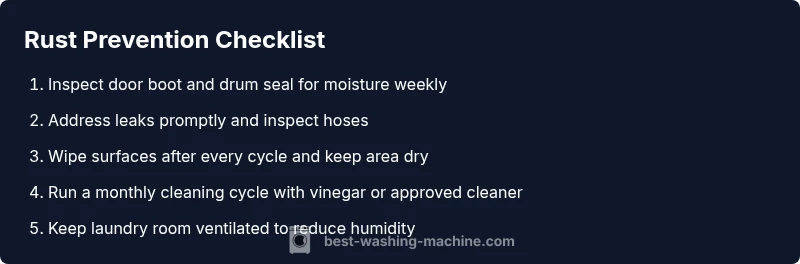
Prevention is more economical than replacement. Wipe the door boot and drum seal dry after each cycle, especially in humid homes. Schedule a monthly inspection of seals, hoses, and clamps for signs of moisture or corrosion. Use a rust-inhibiting cleaner or manufacturer-approved treatment on small spots, and avoid chlorine-rich cleaners that can wear coatings. If your water supply is hard, consider a demineralizer or water-softening approach to reduce mineral buildup that accelerates corrosion. Ensure the machine is placed on a dry, level surface with good ventilation and avoid storing water near metal edges. Keep the filter and panels free of moisture, and schedule professional servicing at the first sign of widespread rust.
What to expect from replacement parts and service options
When rust is localized to seals and hoses, replacement parts are often the most cost-effective fix with minimal downtime. Severe rust on structural components or cabinet framing usually requires professional assessment; you may need a service visit or, in some cases, a replacement machine if corrosion compromises safety. Ask for genuine Samsung parts or compatible high-quality equivalents, and request a detailed inspection report from the technician. If the rust is linked to a manufacturing defect or a coverage scenario, verify warranty or consumer protection options with the retailer or Samsung support. Document rust with dates and photos to speed up claims and repairs.
Safe practice and immediate safety steps
Safety comes first. Always unplug the machine before inspecting or cleaning. Wear gloves and eye protection when handling rust or cleaners. Avoid scraping rust with metal tools that could create sparks or damage coatings. If you suspect a leak or electrical fault, disconnect power and contact a qualified technician immediately. Never operate a visibly corroded appliance that shows signs of internal leakage or structural damage. Regular maintenance and prompt attention to rust can protect your home and appliance for years to come.
Final notes on ongoing protection and maintenance
Rust is preventable with consistent care. Set a routine to inspect seals, run periodic cleaning cycles with approved products, and keep the laundry area dry. Use approved detergents and avoid aggressive chemical cleansers near metal joints. If rust recurs despite your best efforts, consider replacing rusty components or scheduling a professional evaluation to prevent a bigger failure. With proactive upkeep, your Samsung washer can remain reliable and rust-free for longer.
Steps
Estimated time: 30-60 minutes
- 1
Power down and unplug
Before any inspection, unplug the washer from the wall outlet. Move the machine away from the wall only if safe, and turn off any nearby water supply. This reduces the risk of electrical shock during inspection and cleaning.
Tip: Always unplug first to ensure safety. - 2
Inspect obvious rust spots and leaks
Look at the door boot, drum seal, hoses, and clamps for rust, dampness, or crusty residue. Note any signs of staining or moisture near seams. Take photos to document condition for future reference.
Tip: Use a flashlight to catch hidden rust along folds and joints. - 3
Clean and treat small rust areas
Gently scrub rust spots with a soft non-abrasive pad. Apply a manufacturer-approved rust remover or white vinegar solution, then wipe dry. Allow surfaces to air-dry completely before testing.
Tip: Do not use harsh metal brushes that can scratch coatings. - 4
Address any leaks and secure connections
Tighten hose clamps, replace aging hoses, and replace worn gaskets or seals. Re-check the water inlet and drain lines for signs of moisture after a short run.
Tip: Run a quick test cycle with a towel underneath to catch any small leaks. - 5
Ventilate and dry the interior
Run an empty cycle with the door ajar to promote airflow and drying. If the area remains humid, use a fan or dehumidifier near the washer for several hours.
Tip: Keep the room well-ventilated to inhibit rust formation. - 6
Decide on replacement vs repair
If rust remains after basic fixes or appears on structural components, consult a professional to assess whether a component replacement or a full unit replacement is warranted.
Tip: Save all receipts and documentation in case of warranty claims.
Diagnosis: Visible rust on door boot, drum seal, or surrounding metal with occasional leaks
Possible Causes
- highProlonged moisture exposure around seals and hinges
- highLeaks or damp environments allowing water to contact metal
- mediumDetergent residue and chemical exposure accelerating corrosion
Fixes
- easyInspect and dry door boot, drum seal, and accessible metal surfaces; address leaks
- easyClean rust spots with a non-abrasive pad and approved rust remover; dry completely
- mediumReplace leaking hoses/clamps and reseal joints; test for leaks after cycle
- hardIf corrosion is extensive (frame or supports), call a professional for assessment/repair
FAQ
What causes rust on a Samsung washing machine?
Rust usually results from persistent moisture, leaks, and chemical exposure near metal components. Environmental humidity and worn coatings also contribute. Regular inspection helps catch issues early.
Rust on a Samsung washer typically comes from moisture, leaks, and chemical exposure; humidity and worn coatings also play a role.
Is rust on the drum dangerous?
Rust itself is not immediately dangerous, but it signals potential leaks or structural issues. Treat it promptly to avoid more serious damage to the appliance.
Rust isn't usually dangerous by itself, but it means you may have leaks or structural issues to fix.
Can rust be removed from a washing machine?
Surface rust can often be removed with gentle cleaners and rust inhibitors. Deeper rust may require part replacement or professional service.
You can usually remove surface rust with gentle cleaners; deeper rust may need parts replaced or a pro.
When should I call a professional?
If rust covers structural components, involves the cabinet frame, or leaks persist after fixes, contact a qualified technician. They can assess safety and determine replacement needs.
If rust affects the frame or leaks continue after basic fixes, get a professional to inspect.
How can I prevent rust in the future?
Keep surfaces dry, fix leaks promptly, and run regular cleaning cycles with approved products. Improve room ventilation to reduce humidity and mineral buildup.
To prevent rust, dry surfaces, fix leaks fast, and keep the area well-ventilated.
Watch Video
The Essentials
- Inspect seals and surrounding metal regularly.
- Fix leaks promptly to slow rust spread.
- Use approved rust cleaners on small spots and dry completely.
- Call a professional for structural rust or widespread corrosion.
- Maintain a dry, ventilated environment to prevent future rust.