Washing Machine Smell Burning: Urgent Troubleshooting Guide
Urgent, step-by-step troubleshooting for a washing machine that smells burning. Learn causes, safety actions, quick fixes, and when to call a professional.


A burning smell from a washing machine is a warning sign of overheating components or an electrical fault. The quickest fixes are to unplug the unit, inspect for obvious damage, and run a quick safety check (outlet, plug, and cord). If the odor returns, stop using the machine and call a professional immediately.
Why burning smell from a washing machine is urgent
A burning odor during a wash cycle is not normal. It signals overheating, electrical stress, or a mechanical issue that could escalate to a fire risk if ignored. According to Best Washing Machine, the most common culprits are overheating motors, worn belts, blocked filters, or damaged wiring. Early recognition matters: quick action can prevent damage to your washer and protect your home. In this guide, you’ll learn how to assess the risk safely, what to check first, and how to separate harmless smells from dangerous ones. Always err on the side of caution—when in doubt, stop the cycle, unplug, and keep you and your family away from the appliance.
Common causes of a burning smell
Burning odors from a washing machine typically fall into a few broad categories. A stuck or overheating motor or drive belt can generate heat that you can feel and smell. Electrical faults—such as frayed cords, melted insulation, or a failing control board—are serious and require careful inspection. Debris like lint, hair, or stuffed towels around the pump or motor can also overheat and produce a burnt scent. Additionally, residues such as detergent buildup or mineral deposits in heating elements can create acrid smells once heated. Understanding these helps you prioritize checks safely.
Immediate safety actions you should take
If you notice a burning odor, act quickly but safely. Unplug the washer from the outlet and switch off the circuit breaker if you can safely access it. Do not touch hot components or attempt to disassemble live equipment. If you see smoke, evacuate, call emergency services if needed, and contact a licensed technician. Keep a fire extinguisher accessible and avoid using water on electrical systems. These steps minimize risk while you diagnose the issue.
Quick checks you can perform in under 10 minutes
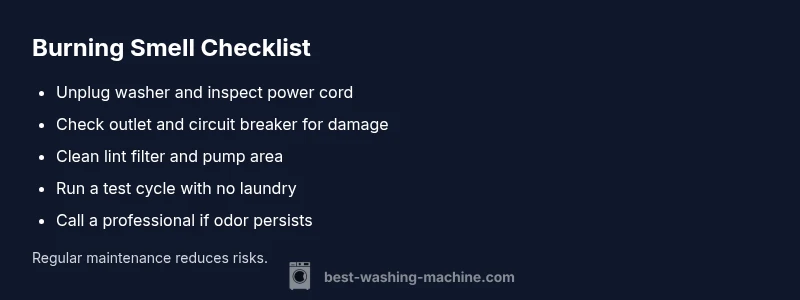
Start with non-destructive checks. Inspect the power cord for cracks or scorch marks and test the outlet with another device. Look for visible damage to the plug or cord and ensure the machine is level and seated correctly. Examine the door seal and gasket for signs of damage or debris that might trap fabric near heating elements. Clean the lint filter and reachable areas around the pump to remove built-up debris that could overheat during cycles.
Diagnostic path you can follow (textual)
Symptom: Burning smell during a wash cycle. Diagnosis may point to motor or belt overheating, electrical fault, or debris-induced overheating. Solutions range from simple clean-and-retest (lint removal, filter cleaning) to cord/wiring inspection or professional diagnostic as needed. If you’re unsure at any step, stop and call a pro—electrical faults can escalate quickly.
Step-by-step: how to address the most likely cause
- Power off and unplug the machine to prevent further risk. 2) Inspect the power cord, plug, and outlet for scorch marks or melting; replace components if damaged. 3) Clean lint filters, pump housing, and any accessible drum-area debris. 4) Run a test cycle with no load to observe whether the burning odor recurs. 5) Check for belt wear or motor overheating if the unit is belt-driven. 6) Inspect wiring harnesses and terminal blocks for signs of damage. 7) If the smell persists, disconnect power and book a professional inspection. 8) Document any visible damage with photos for the technician.
Tip: Take clear photos of any scorch marks or melted parts to show your technician.
When to call a professional and what to expect
If the odor returns after basic checks, or you notice melted insulation, smoke, or buzzing noises, stop using the washer and call a licensed appliance technician. A pro will safely test electrical circuits, inspect the control board, motor, belt, and wiring, and check the heating elements if present. Expect a diagnostic visit to include system checks, target testing, and a written repair plan. Safety is the priority; attempting major electrical repairs without proper training is not advised.
Long-term prevention and maintenance
Regular maintenance minimizes the risk of burning smells. Clean the lint filter and pump area monthly, run a maintenance wash with a gentle cleaner or vinegar-based solution to prevent residue buildup, and avoid overloading the drum. Inspect hoses for wear and replace any cracked sections. Keep the area around the washer dry and free of clutter to reduce moisture-related corrosion. Scheduling periodic professional checkups can catch issues before they become hazardous.
Steps
Estimated time: 60-90 minutes
- 1
Power off and unplug
Immediately disconnect the washer from the power supply. If the outlet feels warm or shows signs of damage, do not plug back in until inspected. This prevents further risk while you diagnose.
Tip: Take a photo of the outlet before touching anything. - 2
Inspect for obvious damage
Look for melted cords, scorch marks, or damaged plugs. If you see any damage, do not attempt to repair; replace components or call a professional.
Tip: Do not use damaged cords or outlets. - 3
Check lint and debris
Open accessible panels and clean lint around the pump and motor area. Remove any fabric fibers that could clog vents or filters and retest after cooling.
Tip: Keep a small flashlight handy to spot hidden debris. - 4
Run a test cycle with no load
With the washer unplugged, replug and run a short test cycle empty to observe whether the odor reappears. If it does, stop immediately and call a pro.
Tip: Monitor closely for any signs of sparking or burning. - 5
Inspect belts and motor (if accessible)
If your model uses a drive belt, check for fraying, cracking, or glazing. A worn belt can overheat the motor and produce a burning smell.
Tip: Only inspect belts if you have the model's service manual and proper tools. - 6
Check wiring and terminals
Look for loose connections, melted insulation, or corrosion at terminal blocks. Loose wiring can cause arcing and heat buildup.
Tip: Do not tug on wires; use appropriate tools and disconnect power before handling. - 7
Document and decide
If you can’t identify a safe fix, document symptoms and contact a professional. Do not run the machine until a qualified tech confirms it’s safe.
Tip: Record model number and any recent repairs for the technician. - 8
Professional inspection if needed
A licensed technician will test electrical insulation, motor windings, and safety interlocks to isolate the root cause and recommend replacement if needed.
Tip: Ask for a written quote before any major repairs.
Diagnosis: Burning smell during wash cycle
Possible Causes
- highOverheating motor or drive belt
- mediumElectrical short or damaged wiring
- lowLint/debris buildup around motor or pump
Fixes
- easyUnplug the washer and inspect for scorch marks on cords, plugs, and outlets; replace damaged components
- easyCheck outlet and circuit breaker; test with a known-good outlet
- easyClean lint filter, pump area, and accessible drum regions; remove any trapped debris
- mediumIf odor persists after basic fixes, arrange a professional inspection to test wiring and motor components
FAQ
Why does a washing machine smell burning?
Burning smells usually indicate overheating, an electrical fault, or debris overheating around the motor or pump. Quick checks and safe shutdown reduce risk, followed by professional inspection if the odor persists.
A burning smell usually means overheating or an electrical problem. Stop using the machine and get it checked if the odor continues.
Is it safe to operate the washer if I smell burning?
No. Stop the cycle, unplug the unit, and inspect for obvious damage. If damage is present or the smell returns, do not use it until a professional inspects it.
No—stop and unplug. If the smell comes back, call a professional.
What should I check first when I smell burning?
Unplug the washer, inspect the power cord and outlet for scorch marks, and look for melted insulation. If you find damage, replace affected parts before using again.
First, unplug and check the cord and outlet for damage.
Can lint cause a burning smell in a washing machine?
Yes. Lint or fabric debris around the motor or pump can overheat the components. Clean lint filters and accessible areas to prevent odor formation.
Yes, lint buildup can overheat parts—clean the lint filter and pump area.
When should I call a professional?
If the smell persists after basic checks or you see melted parts, smoke, or signs of electrical damage, stop using the machine and arrange a professional inspection.
If the odor sticks around after checks or you see damage, call a pro.
How can I prevent this in the future?
Regular cleaning, proper loading, avoiding overloading, using the correct detergent, and scheduling periodic service help prevent burning smells and extend washer life.
Keep your washer clean, load wisely, and service it regularly.
Watch Video
The Essentials
- Stop and unplug at first sign of burning odor
- Identify whether the smell is mechanical, electrical, or debris-related
- Prioritize safety; call a pro for electrical faults
- Use routine maintenance to prevent future smells