Why Is My Washing Machine Draining Instead of Filling? A Practical Troubleshooting Guide
Urgent troubleshooting guide for why your washing machine drains during fill. Safe DIY checks, step-by-step fixes, and when to call a pro to stop water loss and protect your machine in 2026.


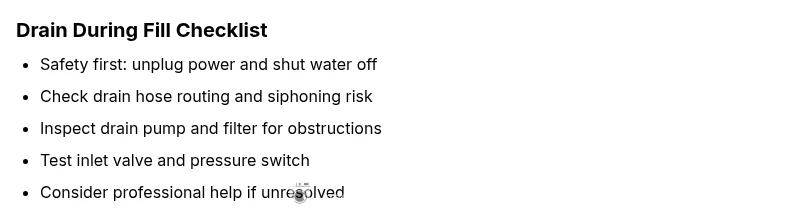
Most likely, a control or valve fault makes the washer drain during fill. Common culprits are a stuck drain valve, a faulty water inlet valve, or a faulty pressure/level switch. Quick checks: unplug the machine, inspect the drain hose for kinks or siphoning, and test the water inlet hoses and fittings. If it still drains during fill, contact a professional.
Why is the washer draining during the fill cycle?
When you ask why is my washing machine draining instead of filling, you are describing a symptom that surfaces in the middle of a wash. In most homes, the tub begins to fill and water should remain inside the drum. Instead, the drain pump or valve activates and starts pulling water out. This odd sequence is a red flag that one of two systems has a fault: the inlet system that feeds water in, or the drain system that removes it. Best Washing Machine analysis emphasizes starting with the simplest checks: ensure the controls are not in a drain-only mode and rule out obvious blockages or misrouting. If you catch this early, you may prevent a cascade of water loss and potential flood risk in 2026.
Quick checks before you dive deeper
- Unplug the machine and shut off the hot and cold water supplies to rule out a live valve issue.
- Inspect the drain hose for kinks, crimps, or siphoning that could draw water during fills.
- Confirm the drain hose is routed correctly and not inserted too deeply into a standpipe or sink causing reverse flow.
- Look at the inlet hoses for signs of wear or leaks and verify taps are fully open.
- Listen for the drain pump during a fill cycle; if you hear it, there is likely miswiring or a valve issue to investigate further.
Diagnosing the symptom: how to think about the problem
A drain during fill points to either a stuck valve, a valve sequencing error, or a level-sensing fault. Pressure or float switches tell the machine when to stop filling and start draining. If a switch is stuck or a sensor reads incorrectly, the system may think it needs to drain even while water is entering. Wiring or control board faults can mimic this behavior as well. Document what you observe: when the drain starts, how long it lasts, and whether it happens with cold or hot water. This data helps you or a technician trace the root cause more quickly and safely in 2026.
Step-by-step: most common causes and how to test them safely
- Drain valve or drain circuit stuck open: This is a hardware fault; test by cycling power and observing whether the drain activates during the fill phase.
- Faulty water inlet valve: If the valve sticks open, water flows but the circuit may also activate the drain. Inspect hoses and feel for water leaks around the valve.
- Pressure/level switch issue: A defective switch can trigger the drain unexpectedly. You can attempt a simple test by listening for abnormal sounds when the drum fills with water.
- Drain hose routing: Improper routing or siphoning can pull water out during fill. Re-route the hose to an appropriate height and distance from the drum.
- Control board or timer fault: In rare cases, the electronics miscommand the valve sequence. If the above checks fail, professional diagnostics are recommended.
Safety first: tips and warnings you should follow
- Always unplug the machine before touching any internal components or removing panels.
- Do not attempt to bypass safety interlocks or defeat the pressure switch; this can cause flooding and electrical shock.
- If you are unsure about how to safely perform tests or disconnections, stop and call a professional technician.
Key maintenance steps to prevent future drain issues
- Clean the pump filter or debris trap if your model has one, as clogs can mimic valve faults.
- Inspect inlet screens to ensure they are free of sediment that could affect valve operation.
- Keep the drain hose clear of blockages and ensure proper routing to avoid siphoning.
- Schedule regular professional checkups if your unit is out of warranty or showing intermittent issues.
Steps
Estimated time: 45-60 minutes
- 1
Power down and safety check
Unplug the machine and shut off the water supply. This prevents shocks while you inspect hoses and components. Remove access panels only if you are comfortable and sure you can avoid further risk.
Tip: Always start with safety: power off and water off before touching internal parts. - 2
Inspect the drain hose and pump filter
Look for kinks, crimps, or a partially blocked pump filter. Clear any debris you find and ensure the hose is free of obstruction and properly secured. A clogged path can force the machine to drain unexpectedly.
Tip: If you must access the pump, photograph connections first to aid reassembly. - 3
Check the water inlet valve and hoses
Examine inlet hoses for wear, leaks, or misconnection. A valve stuck in the open position could create abnormal drain behavior. If you find any signs of wear, replace the valve and re-seat all fittings.
Tip: Check the valve electrically only if you have the proper tools and knowledge. - 4
Test the pressure/float switch
If your model uses a pressure or float switch, test whether it registers the drum fullness correctly. Clean connectors and look for cracks or corrosion. Replace if the unit reads out of spec.
Tip: Some models require a simple air tube test; follow the service manual for your exact model. - 5
Evaluate the control board and timer
If all hardware tests pass, the issue may lie in a faulty control board or timing sequence. This step generally requires a professional with diagnostic tools to avoid further damage.
Tip: Document all symptoms and tests to streamline professional service.
Diagnosis: Machine drains during the fill cycle
Possible Causes
- highStuck drain valve or faulty drain circuit
- mediumFaulty water inlet valve
- mediumPressure/level switch malfunction
- lowDrain hose siphoning or incorrect routing
- lowControl board or timer fault
Fixes
- hardCycle power and reseat connections; replace the drain valve or repair the drain circuit if stuck
- mediumTest and replace faulty inlet valve; inspect wiring to the valve
- mediumTest the pressure/level switch; clean or replace as needed
- easyRe-route drain hose to recommended height and remove siphoning paths
- hardIf none of the above resolve the issue, diagnose or replace the control board
FAQ
Why does my washing machine drain when I try to fill it?
This is usually caused by a valve or control fault. Begin with safety checks, inspect the drain hose, then test the inlet valve and pressure switch. If the issue persists, professional help is recommended.
A drain during fill is typically a valve or control fault. Start with safety checks, inspect hoses, and test the inlet valve and pressure switch. If unresolved, contact a professional.
Can siphoning cause draining during fill?
Yes, improper drain hose routing or siphoning can pull water out of the drum during filling. Re-route the hose and ensure it sits above the standpipe height as recommended by your model’s manual.
Siphoning can cause draining during fill. Re-route the hose and follow your model’s height guidelines.
How do I check if the inlet valve is stuck open?
Access the valve area with the power off and listen for continuous water flow or feel for unexpected drips when the machine is off. If in doubt, replace the valve or have a technician test it with proper tools.
If you hear water flow when off, the inlet valve may be stuck. Consider replacement or professional testing.
Is it safe to DIY this repair?
DIY diagnosis can be done for basic checks, but many fixes involve electrical components and water systems. If you are not confident, call a qualified appliance technician to avoid injury or further damage.
DIY is risky with electrical and water systems. If unsure, hire a pro.
When should I call a professional?
If the problem persists after basic checks, or if you notice signs of leaks, electrical smells, or control-board failures, contact a licensed appliance technician. They can safely diagnose and repair valves, switches, and boards.
Call a professional if the issue persists after basic checks or you notice leaks or electrical smells.
Could the problem be related to the drain hose height?
Yes, incorrect hose height or routing can cause siphoning or backflow. Review the manual for the correct routing and ensure a proper standpipe distance.
Hose height can cause backflow. Check the manual for correct routing.
Watch Video
The Essentials
- Identify whether the issue is valve or valve-sequencing related
- Follow a safe, stepwise approach before any disassembly
- Check drain routing and hose health to rule out siphoning
- Call a pro if you suspect control board or complex electrical fault