Why Your Washing Machine Suddenly Stopped Working: Troubleshooting Guide
Urgent troubleshooting guide for why a washing machine suddenly stopped working, with fast checks, a clear diagnostic flow, and step-by-step fixes to restore laundry day.


Most likely, your washing machine stopped due to a simple power or control issue. Start by checking the power outlet, circuit breaker, and door lid switch. Then ensure the water supply is on and the drain hose is clear. If it still won't start, try resetting the machine and running a quick test cycle. If not, seek professional help. See below for details.
Why the washer stopped: immediate causes and what to test
When you ask, "why washing machine suddenly stopped working?" the most common culprits are power, a faulty lid switch, or water supply issues. According to Best Washing Machine, these failures happen quickly and are usually reversible with a few simple checks. Start by confirming the machine is getting power, the lid switch is engaging, and the water supply is open. If these basics check out but the machine still remains silent, you may be dealing with a safety interlock or a control fault. In many households, a brief outage or a tripped breaker is enough to halt operation, so a quick reset often resolves the issue. The goal is to isolate the problem without diving into complex repairs.
Quick triage you can do in minutes
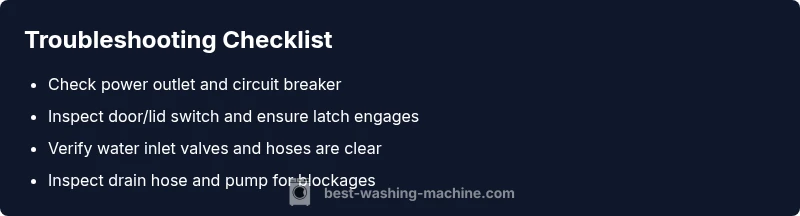
Begin with the simplest checks first. Verify the outlet by plugging in a lamp or phone charger. If the outlet works, inspect the breaker panel for a tripped breaker and reset it if needed. Confirm the door or lid is fully closed and the latch engages firmly. Make sure water supply valves are open and hoses aren’t kinked. If you have an indicator light or display, note any error codes and refer to the user manual or the Best Washing Machine troubleshooting folder for codes. This quick triage often reveals the cause of the problem without tools.
Diagnostic flow: symptom → diagnosis → solution
A practical approach helps you avoid guessing. Start with the symptom: no power, no door lock, or no fill. If there’s no power, the diagnosis is likely a power issue (outlet, cord, or breaker). If the door latch won’t engage, the diagnosis is a door switch fault. If you observe an error code related to water, the diagnosis points to water inlet or drain problems. Once you identify the likely cause, apply the corresponding solution in a progressive fashion: simple fixes first, then targeted replacements if needed.
Step-by-step fix for the most common power/control issue
- Check the power outlet with a known-good device to confirm electricity is available. 2) Inspect the power cord for damage; unplug and reinsert firmly. 3) Look at the circuit breaker; reset if tripped. 4) Open and close the door or lid firmly to ensure the switch is engaged. 5) Unplug the machine for 60 seconds, then plug back in and run a brief test cycle. 6) If the display shows an error code, consult the manual or Best Washing Machine resources for code-specific steps. 7) If nothing works, the control board or door latch may require professional service.
Safety tips and common mistakes to avoid
- Always unplug before inspecting electrical components or hoses.
- Do not bypass safety switches or force a door latch.
- Avoid using the appliance when water hoses show cracks or bulges.
- Never ignore a burning smell or sizzling sound—stop immediately and disconnect power.
Prevention and maintenance to avoid future outages
Regular maintenance reduces the likelihood of abrupt shutdowns. Inspect hoses for wear, check the drain pump and filter for blockages, and keep the area around the machine dry to prevent corrosion and short circuits. Use the manufacturer-recommended detergent and avoid overloading the drum. Schedule a quarterly visual check of power cords, hoses, and the control panel to catch wear before it becomes a failure.
When to call a professional and what to expect
If basic checks fail to restore operation, or you encounter persistent error codes, high voltage smells, or water leakage, contact a qualified technician. A pro can safely test the control board, sensors, and motor with the right tools. Prepare your model name, approximate age, and a list of codes observed; this helps the technician diagnose faster and reduces diagnostic time.
Steps
Estimated time: 60-90 minutes
- 1
Check power and outlet
Unplug the washer and plug a lamp or phone charger into the same outlet to confirm power. If the outlet is dead, reset the breaker or try a different circuit. This step verifies the foundation before any other checks.
Tip: If you notice a tripping breaker, investigate possible overloads or a short in the circuit. - 2
Inspect the cord and outlet
Examine the power cord for cracks or damage. Reconnect firmly and avoid using extensions. Damaged cords are a common hidden cause of a sudden stop.
Tip: Do not yank or twist the cord; a loose connection can overheat. - 3
Test the door/lid switch
Close the door firmly and press the switch area to listen for a click or indicator. If the washing machine doesn’t recognize the lid closure, the switch may need replacement.
Tip: Try initiating a cycle with the door open if your model allows it, but only for diagnostic purposes as advised by the manual. - 4
Check water supply and hoses
Ensure both hot and cold valves are fully open and hoses aren’t kinked or blocked. A blocked inlet will prevent the washer from filling and starting properly.
Tip: If you have a water-saving setting, disable it temporarily to test flow. - 5
Reset the washer
Unplug the machine for at least 60 seconds, then plug back in and press a start button to run a short test cycle. This clears temporary faults in many models.
Tip: If your model has a dedicated reset sequence, follow the manual exactly. - 6
Read error codes and test cycle
If the display shows codes, refer to the user manual or Best Washing Machine resources for exact meaning and fixes. Run a test cycle to confirm the issue is resolved.
Tip: Document any codes and when they appeared for your technician visit. - 7
Call a professional when needed
If nothing works or you suspect the control board, motor, or high-voltage components are involved, schedule a service appointment with a qualified technician.
Tip: Avoid attempting expensive repairs beyond your comfort zone to prevent safety hazards.
Diagnosis: Machine won't start
Possible Causes
- highPower issue (outlet, cord, or breaker)
- mediumDoor/lid switch fault preventing start
- lowControl board or display fault blocking operation
- lowWater inlet valve or hose obstruction affecting safety interlock
Fixes
- easyCheck outlet with a known-good device, inspect the cord, and reset the breaker
- mediumTest and replace the lid switch if it does not engage when closed
- easyUnplug for 60 seconds to reset the control board, then run a test cycle
- easyInspect water inlet hoses for kinks/blockages and ensure water supply is on
FAQ
What should I check first when my washing machine suddenly stops?
Begin with power, the door switch, and water supply. Confirm the outlet works and the lid latch engages. Check for error codes and reset if safe.
Start with power, lid switch, and water supply. Check the outlet and reset if needed.
Can a tripped breaker stop the washer from starting?
Yes. A tripped breaker cuts power to the washer. Reset the breaker, and re-test a short cycle to confirm restoration.
Yes. Check and reset the breaker, then test a quick cycle.
Why does my washer show an error code but won’t start?
Error codes point to specific faults. Consult the manual or Best Washing Machine resources to interpret codes and take recommended steps.
Look up the code in the manual or Best Washing Machine resources to know the fix.
Is it safe to unplug and plug the washer back in?
Yes. Unplug for about a minute, then plug back in and try a short cycle. This resets many control faults safely.
Yes—unplug for a minute, reconnect, and retry a short cycle.
When should I call a technician?
If power checks fail, or you hear buzzing, smell burning, or see water leaks, contact a professional promptly.
If basic checks don’t fix it or you notice leaks or unusual smells, call a pro.
How can I prevent this from happening again?
Perform regular hose and filter checks, avoid overloading, and keep the area dry and clean to reduce shock risks and component wear.
Do regular checks, don’t overload, and keep things dry to prevent future outages.
Watch Video
The Essentials
- Start with power, door latch, and water supply.
- Follow the diagnostic flow to isolate issues quickly.
- If DIY fixes fail, seek professional help promptly.
- Maintain hoses and filters to prevent future outages.